

|
| |
|
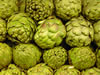
Artichokes are the unopened flowers and stems of a kind of thistle. You cook them, then peel off and eat the bases of the thick green petals (called leaves). At the center is the heart, the choicest portion of the artichoke, covered by the choke, a hairy pad that should be peeled off and discarded. Their peak season is early summer. Substitutes: Jerusalem artichokes (crisper; consider blanching or roasting first) OR salsify OR burdock OR hearts of palm. See a recipe |
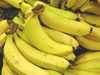
| Most of the bananas you and I have eaten in our lifetimes are the yellow Cavendish bananas. Yellow bananas are ripe and ready to eat, while green ones will ripen at room temperature in just a few days. Refrigerating ripe bananas will keep them from getting softy and mushy, though the peels will darken. Substitutes: plantain (for baking, mashing, and frying) OR mango (different flavour). See a recipe |
|
|
The family of stone fruits includes
cherries, plums, apricots, nectarines, and peaches. They all arrive in the
summer, though you can sometimes find pricey imports during the off-season.
Stone fruits don't become sweeter after they're picked, but growers often
harvest them while they're still a bit underripe so that they won't bruise
during transit. At the market, select specimens that have the color, if
not the softness, of fully ripened fruit, then take them home and let them
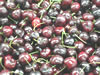
soften at room temperature for a few days. cherry Notes: There are three main categories of cherries: sweet cherries, which are for eating out of hand, sour cherries, which are best suited for making pies, preserves, and sauces, and tart chokecherries. See a recipe |
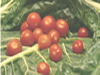
| These are less than an inch in diameter, perfect for adding to salads or crudité platters, or grilling on skewers. There are both red and yellow varieties. Substitutes: teardrop tomato OR slicing tomato (for salads).See a recipe |
|
|
aubergine = berenjena = brinjal = garden
egg = egg apple = patlican = melongene = melanzane = Guinea squash This is a spongy, mild-tasting vegetable that's meaty yet low in calories. It's never eaten raw, but it can be baked, grilled, or sautéed. The best eggplants are firm and shiny eggplants with unbroken skin. Male eggplants tend to have fewer seeds, and are therefore less bitter than female eggplants. To sex an eggplant, look at the indentation at bottom. If it's deep and shaped like a dash, it's a female. If it's shallow and round, it's a male. Smaller eggplants also tend to be less bitter. Freshness is important, so don't store them for very long. See a recipe |
| Crisp, juicy apples are great in lunchboxes,
but they can also be made into pies and tarts, pressed into cider, or baked
with sugar and spices. Select apples that are firm, deeply colored, and
of average size. Reject those that have soft spots or broken skins. They're
available throughout the year, but they're usually better and cheaper in
the fall. Granny Smith apple This is a firm, tart apple that's good for baking, making pies, and eating out of hand. They tend to have thick skins, so you might want to peel them before serving. See a recipe |
|
|
white mushroom = button mushroom = white button mushroom = supermarket mushroom .These are the mushrooms you're most likely to find in supermarkets. They're good raw, but more flavorful if cooked. Substitutes: cremini mushrooms (more flavorful than white) OR oyster mushroom (cooks faster). See a recipe |
| Grapefruit is a large, slightly tart kind of citrus fruit. The rind is mostly yellow, and often tinged with green or red. Grapefruits are categorized by the color of their pulp: red, pink, or white (which is more honey-colored than white). The color of the pulp doesn't affect the flavor. When buying grapefruit, select specimens that are smaller, thin-skinned, and heavy for their size. Some varieties are seedless. They're best in the winter and spring. See a recipe |
|
|
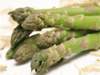
Asparagus has a wonderfully distinctive flavor and a meaty texture. It's often served as a side dish, after being steamed or briefly boiled. Better cooks insist that it be peeled first, but many people skip this step. To remove the tough base, simply snap the asparagus in half with your hands. The stalk should break right about at the point where it starts getting too tough to serve to company. Asparagus is often available year-round, but the best time to buy it is in the spring. See a recipe |
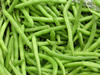
| With most beans, you eat only the seeds, usually after they've been dried. But you can eat snap beans pod and all. Until a century ago, the pods had tough strings that cooks had to pull off before cooking (hence the name "string beans") but the snap beans you'll find in markets today are almost all stringless. See a recipe |
|
Glen from Byron Bay:
“I’m a chef at Fins Restaurant and we’ve always worked
with Joes products because it is the best!”
Suzanna from Brunswick head:
“I am the mum of a bid family and I’m proud to say that my kids
have grown up on Joes best veges!”