There are five types of navigational buoys.
 Cardinal
 Lateral
 Isolated Danger Safe Water Marks
 Special Marks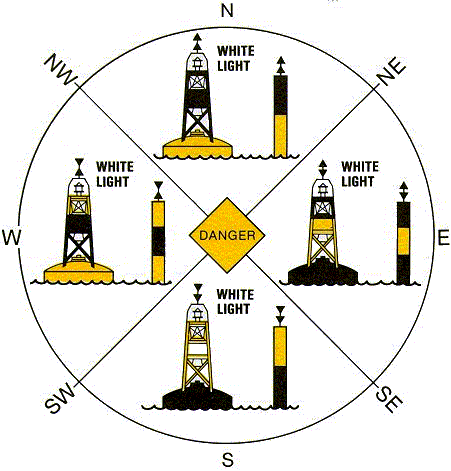
Light Characteristics
Navigational Aids The Signposts of the sea
Navigational Aids include lighthouses, buoys, lightships and beacons. They are there to aid safe navigation and provide a recognisable point on which to obtain lines of position. They are shown in 'Pilot' books and clearly on charts with their characteristics, ie colour of construction, light details and fog horn type ect.
Lighthouses
Lighthouses are
positioned on important headlands and strategic points along the coasts of the
world; some are on or near offshore shoals and reefs such as the Royal Sovereign
Light (southeast coast of England). Details of the height of the light above sea
level taken at high water mean springs (see the page on tides) with flashing
characteristics and fog horn information as applicable. All this is shown in an
abbreviated form on charts (sea maps) adjacent to the feature.
Buoyage and Sea Marks
There are five types
of navigational buoys.
Cardinal
Marks are placed relative to the danger that they guard as shown
below. Cardinal Lateral Isolated Danger Safe Water Marks Special Marks
Light
Characteristics
North mark; Very
Quick or Quick flashing East mark; Very Quick
(3) every 5seconds or Quick (3)
every 10s South mark;
Very Quick (6) +Long flash every 10s or Quick (6) +
Long flash every 15s West
mark; Very Quick (9) every 10s or Quick (9)
every 15s 
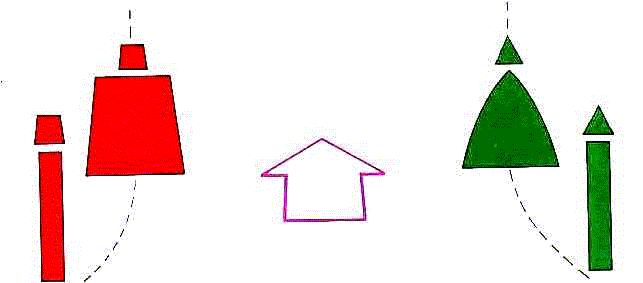
Lateral Marks are placed either
side of a channel such as harbour approaches or entrances..
Green Buoys
are passed or 'taken' on the starboard side of the boat on entering the harbour
in the direction of the flood tide and the Red buoys on the port side. The
reverse on leaving.
Green = Starboard = Right.
Red = Port =
Left.
P.S.in some areas such as
America the buoyage is reversed!
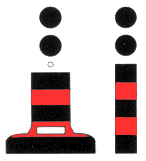 Isolated Danger
Marks With horizontal stripes indicating Danger.
Isolated Danger
Marks With horizontal stripes indicating Danger.
Pass well clear on either side, Refer to the chart for more
information!
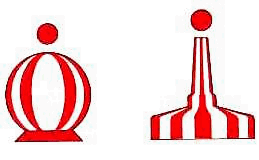 Safe Water
Marks, used for marking the begining of the fairway (landfall buoys) or start of
Harbour approach with red and white vertical stripes indicating safe
water
Safe Water
Marks, used for marking the begining of the fairway (landfall buoys) or start of
Harbour approach with red and white vertical stripes indicating safe
water
Yellow
Special Marks, have no significant navigational properties and are used for
Leisure areas, and specially defined areas ect.
Buoys can usually be seen in
daylight with the naked eye at a distance of upto 2 miles but at night, their
lights , in good visibility may be seen at much greater distances.
| Navigation | Weather | Tides | Top of Page | Safety | Waypoints | Home Page |
�keith matthews2001