| Home | Pastors | Photos | History | About | Contact | Cemetery |
|
125 YEARS OF HISTORY (The following excerpted from the Workman-Sutherland Family Web Site on Rootsweb.com - Sharon Workman)
MARTIN DENLINGER, farmer, Sec. 36; P.O. Zwingle; was born in Huntingdon Co., Penn., in 1827; came to Dubuque Co., Iowa in 1854. Was married March 5,1848, to Elizabeth Wortz; his children are John B., Main, David C. and the twins, Anna Maria and Jane Elizabeth, Isaac L., Mary D., Samuel L., Albert, Aden H. and Sarah M.; Mr. D. owns 240 acres of land in Dubuque Co. Is a Republican in politics and belongs to the Reformed Church. pg. 922 Daniel Cort and John Wallace came in the forties; the former was prominent in politics. Zwingle is located on the Cort place. Three Wallaces served in the Union army. Other settlers were the Carpenters, Gaggarts and Cheenys around Buncombe, Dr. I. S. Bigelow, Robert Kennedy, Ulric Leffert, Martin Denlinger, U. S. Deahl, Jacob Wolfe, Mathew Powers, Daniel DeKoven, William Gaul, the Earlys, Watchs, Cotas, Timmins, Kinsellas, Donahues, Stranes, Henry Hunter, Nathan W. Dobon, Michael Malony, Thomas Hurley, Thomas Donohue, Ambrose Meeker and Walter Baker. Christian Denlinger came with Dr. I. S. Bigelow and Robert Kennedy. George Salot had a store in the township very early.At a meeting of the Democrats of Washington, held at Buncombe September 29, 1858, the following persons were present: Daniel Cort, Joseph Musey, J. R. Foster, C. Denlinger, William C. Simpson, Dr. I. S. Bigelow, D. Kifer, M. D. Cune, R. Kennedy, Jonathan Higgins, John Dunn and Mathew Powers. A big bridge over Otter creek at Zwingle was built in 1863. In I864 the residence of Daniel Cort was burned to the ground. In 1892 a sudden flood nearly carried Zwingle away; stores, elevator, wagon shop, blacksmith shop, etc., were washed away. Considerable live stock was drowned. A serious railroad accident occurred near Zwingle in 1907. Two persons were killed and eleven injured. In December, 1900, the village petitioned to be incorporated, and the next year was duly made a town, with mayor and other necessary officers. Source: http://www.rootsweb.com/~iadubuqu/towns/townhist.html#wash The early years of these pioneers were busy ones with breaking up the prairie sod in summer and the chopping of timber, and hauling of logs for homes and farm buildings during the winter months.Soon these families of Protestant faith who had come to this vicinity began to feel the need of a church home, and in June of 1849, Casper Leffert, Sr., Casper Leffert, Jr., Jacob Wolf, Lebbeus Allshouse, Casper Luchsinger, and Daniel Cort met at the home of the latter and after consultation, Mr. Cort was directed to write to Rev. Hacke, his former pastor in Greessburg, Pa., for direction. Rev. Hacke referred him to Rev. E, V, Gerhart, then of Cincinnati, Ohio, but who shortly thereafter was called to the presidency of Heidelberg College, which was being established at Tiffin, Ohio. Through Rev. Gerhart, Rev. Daniel Kroh of Orangeville, Illinois, was sent as "ex ploring missionary" to investigate the field, Rev. Kroh arrived on December 20, 1851, preached the next day and on the 25th, at a meeting called at the home of Daniel Schultz, an organization was effected and the following officers elected: Elders: Daniel Cort and Ulrich Leffert, Sr.; Deacons: Jonathan Allshouse and David Kifer. On December 28th Rev, Kroh preached in the Higgins School House and the above officers were installed and forty-three communicants enrolled as members, with fifty-two unconfirmed children. The sermon was in the English language and an offering for missions was taken which amounted to eight dollars and five cents. The names of the initial members are as follows:
|
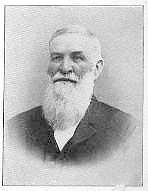
REV. FREDERICK CHRISTIAN BAUMAN - PASTOR FOR FIFTY FIVE YEARS
To read Frederick Bauman's autobiography click here.
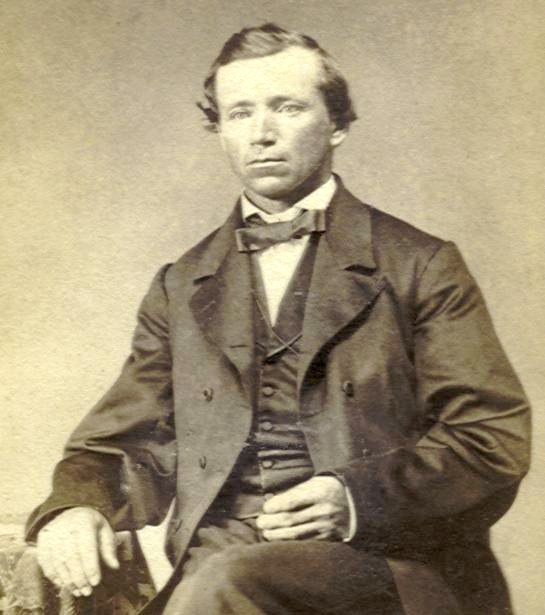 In the spring of 1853, F, C, 'Bauman, then a student at Heidelberg College, was commissioned to supply during the summer months. He left Tiffin, Ohio, April 12th by train which took him as far as Rockford, Illinois, and from there by "stage" to Dubuque, where he arrived about noon on the 14th, but was unable to locate Mr. Cort's home until Sunday morning, April 17th. He preached his first sermon Sunday morning, April 24th, in a log school house one and one-fourth miles north of Zwingle (later moved to what is now known as the Marshall School), As Mr. Bauman was as yet a licentiate, Rev. Kroh was called to confirm a class of four which Mr. Bauman had instructed in the Catechism, and to conduct the first communion service October 18, 1853. It is reported that for this summer's service Student Bauman
received $75,00, Before leaving for Tiffin, Ohio, in the fall to complete his studies,
Mr. Bauman was elected and given a call to the pastorate of the congregation. This was
accepted and Rev. Bauman, who was ordained by the Tiffin Classis June 28, 1854, returned to
the scene of his life's ministry July 22, 1854,
In the spring of 1853, F, C, 'Bauman, then a student at Heidelberg College, was commissioned to supply during the summer months. He left Tiffin, Ohio, April 12th by train which took him as far as Rockford, Illinois, and from there by "stage" to Dubuque, where he arrived about noon on the 14th, but was unable to locate Mr. Cort's home until Sunday morning, April 17th. He preached his first sermon Sunday morning, April 24th, in a log school house one and one-fourth miles north of Zwingle (later moved to what is now known as the Marshall School), As Mr. Bauman was as yet a licentiate, Rev. Kroh was called to confirm a class of four which Mr. Bauman had instructed in the Catechism, and to conduct the first communion service October 18, 1853. It is reported that for this summer's service Student Bauman
received $75,00, Before leaving for Tiffin, Ohio, in the fall to complete his studies,
Mr. Bauman was elected and given a call to the pastorate of the congregation. This was
accepted and Rev. Bauman, who was ordained by the Tiffin Classis June 28, 1854, returned to
the scene of his life's ministry July 22, 1854,
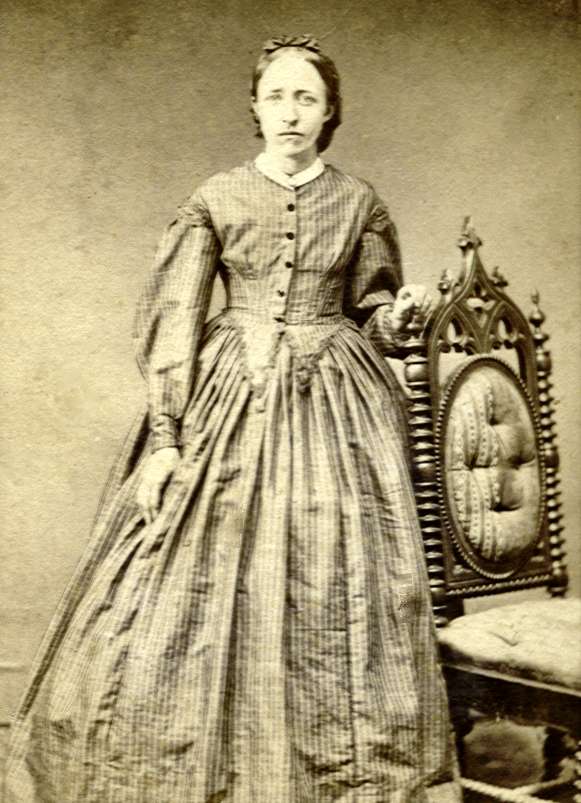 Rev. Bauman was the first settled pastor of the Reformed Church in the United States west
of the Mississippi River, He had much to do with the work of organizing the church in the
middle west. Through his labors this field was the mother of `many early churches here in
Iowa. Securing names of families moving to Iowa, he would call upon them, aid them in
organizing or in securing the services of a missionary. These journeys of from twenty to
seventy or more miles were made on horseback, or on foot over uncharted prairie roads, On
October 13, 1854, he helped organize Illinois Classis, with Rev, D, Kroh, president and Rev.
F, C. Bauman stated clerk, On September 17, 1859, he helped organize Iowa Classis, Rev,
Bauman, president, Rev. J. Rial, stated clerk.
Rev. Bauman was the first settled pastor of the Reformed Church in the United States west
of the Mississippi River, He had much to do with the work of organizing the church in the
middle west. Through his labors this field was the mother of `many early churches here in
Iowa. Securing names of families moving to Iowa, he would call upon them, aid them in
organizing or in securing the services of a missionary. These journeys of from twenty to
seventy or more miles were made on horseback, or on foot over uncharted prairie roads, On
October 13, 1854, he helped organize Illinois Classis, with Rev, D, Kroh, president and Rev.
F, C. Bauman stated clerk, On September 17, 1859, he helped organize Iowa Classis, Rev,
Bauman, president, Rev. J. Rial, stated clerk.
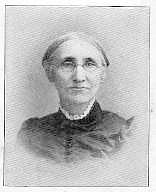
Frederick C. Bauman married Elizabeth Jane Cort on Oct 29 1854 in Zwingle, Jackson County, IA
They made their home in Zwingle until his death Sept. 25, 1909. She died Aug. 6 1921 in
Miamisburg, Ohio and is buried in the Harmony Church Cemetery in Zwingle.
The Baumans had nine children, all born and raised in Zwingle:
(This link requires connection to the Internet.)
Samuel Henry Bauman b: 14 Aug 1855 in Zwingle, Jackson County IA
Daniel Theodore Bauman b: Oct 1858 in Zwingle, Jackson Co. IA
John Nevin Bauman b: 31 Jan 1860 in Zwingle, Jackson Co. IA
Margaret Sarah Bauman b: 30 Mar 1863 in Zwingle, Jackson. IA
Albert Bigelow Bauman b: 17 Jun 1866 in Zwingle, Jackson, IA
Meta Elizabeth Bauman b: 27 May 1870 in Zwingle, Jackson, IA
Bertha Ann Bauman b: 8 Apr 1873 in Zwingle, Jackson. IA
Blanche Estella Bauman b: 1875 in Zwingle, Jackson, IA
Mabel Christina Bauman b: 12 Jul 1879 in Zwingle, Jackson, IA
(Excerpted from the Workman-Sutherland Family Web Site on Rootsweb.com)
A note about Samuel Henry Bauman:
BIOGRAPHIES OF STATE OFFICERS From Iowa Official Register 1909-1910 SAMUEL H. BAUMAN Representative from Van Buren county, was born in Dubuque county, Iowa, August 14, 1855. He was the eldest son of Rev. F.C. and E.J. Bauman, and grandson of Hon. Daniel Cort, who was a Democratic member of the House from Dubuque county in 1856 and in 1865. He was educated in the public schools of Dubuque county and took the classical course at Blairstown Academy, Blairstown, Iowa, and also Henry Seminary, Henry, Illinois. Taught school four terms, serving as principal of the Zwingle graded school. In 1880 accepted a position as station agent and operator for the Chicago, Milwaukee & St. Paul railway at Bernard, Iowa, and followed that occupation until 1890, when he resigned to take a course at the Chicago Veterinary College, graduating there in 1892, receiving the degree of D.V.S. After graduating formed a partnership with Dr. T.A. Shipley, opening an office in Dubuque, Iowa, under the name of Shipley & Bauman. In 1897 moved on a farm near Birmingham, Van Buren county, where he has since lived, conducting the farm and following his profession. Was married to Miss Myrtle G. Morse of La Motte, Iowa, June 23, 1881, and has one son and four daughters living. Is a member of the National Veterinary Medical Association, the Iowa Veterinary Medical Association and the Missouri Valley Association. Elected Representative in 1906 and re-elected in 1908. A Democrat in politics. (Excerpted from the Workman-Sutherland Family Web Site on Rootsweb.com)
A note about Daniel Theodore Bauman:
Source Information:
Census Place Otter Creek, Jackson, Iowa
The 1900 federal census lists him as D. T. Bauman, single, living alone in South Fork, Jackson County, Iowa, and his occupation as lawyer. In 1920, he was living alone in Maquoketa, Jackson County, still practicing law. The same was true in 1930. Theodore or Ted as he was called died in 1931 at age 73 years. He is buried in the Harmony Church Cemetery, Zwingle, Iowa, along with his parents and sisters Blanche Estella Alspach died, 1952 and Meta Elizabeth Mathes died, 1958.
A note about John Nevin Bauman:
Graduated from Marshall College in 1883, from Theological Seminary at Lancaster in 1886. Was ordained by Westmoreland Classis in Jun 1886 and served at Delmont, PA 1886-1894, then to Jeanette, PA for 17 years. In May 1911 he became pastor of Shiloh Reformed Church at Danville, PA. John Nevin, the son of Frederick Christian and Elizabeth Jane (Cort) Bauman, received a public school education at Zwingle, Iowa, and later attended Mercersburg Academy at Mercersburg, Pennsylvania, Franklin and Marshall Academy at Lancaster, Pennsylvania, from which he was graduated in 1883, class valedictorian, and the Theological Seminary of Lancaster, from which he was graduated in 1886. At the age of sixteen Mr. Bauman engaged in school teaching, an occupation which he followed with success for several terms, teaching two terms in Iowa and one in St. Petersburg, Clarion County, Pennsylvania. For seven years after he was ordained into the ministry he served at the Salem church at Delmont, and since 1894 has served in Grace Reformed church at Jeannette, Pennsylvania. In political relations Mr. Bauman is a Democrat on state and national issues, while in local affairs he is independent, reserving the right to vote for the man who in his opinion is best fitted to the office. He is interested in educational affairs and is a member and director of the school board of Jeannette. He is also a director in the St. Paul's Orphans Home of Butler, Pennsylvania. Fraternall, he holds membership in Philanthropy Lodge, No. 225, F. and A. M., Greensburg, Pennsylvania; Unrania Chapter; Kedreon Commandery, K. T., Greensburg. November 26, 1891, he married Ada Alice Barnhart, of mount Pleasant, Pennsylvania. Her father was by occupation a farmer. She acquired her literary training in the Collegiate Institute of Mount Pleasant and the Indiana Normal School. Their children were: Frank, born October 28, 1896; John Nevin, born March 11, 1899, Paul Albert, born January 14, 1904. Source: History of Westmoreland County, Pennsylvania. Boucher, John N.. New York. Lewis Pub. Co.. 1906.
A note about Albert Bigelow Bauman:
Albert B. Bauman, A.B. Bauman, son of Rev. Frederick and Elizabeth J. Bauman, was born in Zwingle, Iowa, June 17th, 1826*; attended Epworth Seminary, College of Northern Illinois, Franklin and Marshall College, class of 1889, and Eastern Theological Seminary, class of 1892. Supplied St. Paul's Reformed church, Baltimore, Md., during the pastor's absence, the summer of 1892; licensed by Virginia Classis, October 28th, 1892, and was ordained and installed pastor of the Harrisville charge in St John's church, Harrisville, Va., October 30th 1892, by Rev J. A. Hoffheims, D. D., and Rev. H. St. John Rinker. Pastorates: Harrisville, Va., eight years and three months; Pitcairn, Pa., six years and eight months; St. Luke's, Baltimore, Md.,two years and eight months; Greenville. Pa., since May 1st, 1910. Source: The History of the Pittsburgh Synod of the Reformed Church in the United States by David B. Lady, 1920, page 430.
*Clearly an error. That was his father's birth year. Albert was born in 1866. Never married.
Newpaper article about Albert:
Resignation as pastor from St. Paul's reformed Church, Park Avenue, Moxem. [PA] Served almost 14 years. Resignation for extended rest. Active in ministry for more than 40 years. First pastorate: Harris Charge - Shenandoah Valley. Also served in Reformed pastorates in Pitcarin, PA and Baltimore, MD. Almost 14 years at Greenville, PA and from Greenville to Moxem. Was one of the founders of Massanutten Academy in Woodstock, Virginia. On the Board of Directors of Hood College, Frederick, MD for six years. Board of Directors of St. Paul's Orphans Home in Greenville, PA and a member of a board of Foreign Missions of the General Synod of the Reformed Church and treasurer of the Johnstown Ministerial Association. In addition to preaching, he has been a member of the choir. In the latter part of his life, Rev. Bauman lived with a niece, Mildred Dauer Gelvin in Rockville, MD. "There was a family gathering maybe 1952 or 1953 in Zwingle, Jackson County, Iowa. Rev. Bauman was in a wheel chair at this time." (Excerpted from the Workman-Sutherland Family Web Site on Rootsweb.com - Sharon Workman)
A note about Blanche Estella Bauman:On December 26th, 1870, the congregation, under Rev. Bauman's leadership, considered raising the pastor's salary to $400. It was here revealed that there was no temporal contract between pastor and congregation, and that this year Rev. Bauman had received $208 which was insufficient for supporting a family of six children. No decision was reached at this meeting. At no time do the records show that the Rev. Bauman received more than $300 in cash in any one year of his entire pastorate. However, many necessities were given him, which enabled him to make a bare living.
BLANCHE ESTELLA BAUMAN married EDGAR EUGENE ALSPACH. Blanche was my great grandaunt, one of the nine children of my great great grandparents, Eliza Jane Cort and Frederick Christian Bauman. I know that all nine children went through college but have no details about Blanche's studies. I have a little more on her husband: "Edgar E. Alspach, in June, 1889, graduated from the Thornville High School, and for some time was a student at Heidelberg University. On June 17, 1896, he married Blanche Estella Bauman, daughter of Rev. and Mrs. F. C. Bauman, Zwingle, Iowa. They have three children: Harold Theodore, b. June 15, 1900. Arthur Benjamin, b. Feb. 19, 1903, Ethel Estella. b. Jan. 25. 1905. They reside at Zwingle, Iowa, where Mr. Alspach is U. S. rural mail carrier. In 1892 he was a member of the Ohio National Guard, and a musician in the band of the 17th regiment, O. N. G" Blanche was born in 1875 and died in 1952. Edgar was born in 1869 and died 1933. Thy lived in Zwingle, Jackson County, Iowa. Source: from a genealogy forum on the Internet, author unknown. (May be Sharon Workman.)
The Rev. Mr, Bauman served this congregation as its pastor until the time of his death in September, 1909. Besides serving this congregation he also served a congregation for many years at Spring Valley, one at Boulder, and one at Iron Hill, and was instrumental in organizing the church at Maquoketa, Iowa, The congregation at Zwingle has had a checkered career. At the fiftieth anniversary of the congregation, December 25, 1901, there were 108 members on the roll. Many times it seemed that it was a question as to whether it could continue its existence.
THE FIRST CHURCH PROPERTY
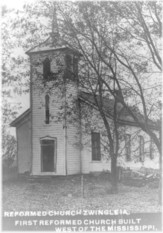 During the early years of Rev. Bauman's ministry, it was necessary to select a plot of
ground for the location of a church building, as well as a location
for the cemetery. For
this purpose, Mr. Cort donated a plot of three acres, the beautiful site upon which the
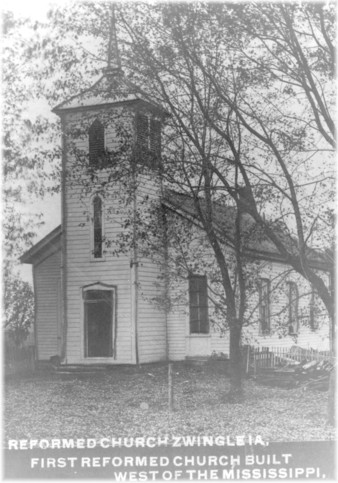
church now stands. The work of building was begun during the summer of 1855 and the frame
raised September 15, 1855. Illinois Classis held its second annual session in this
congregation October 12 to 14, 1855, before the building was completed. The first church
building was ready for dedication by May 11, 1856, Being 30 by 40 feet in dimension, it
cost $1,500 in cash exclusive of material and labor donated; of which all but $250 was paid
by the time of dedication. From Rev. Bauman's diary we cull the following:
During the early years of Rev. Bauman's ministry, it was necessary to select a plot of
ground for the location of a church building, as well as a location
for the cemetery. For
this purpose, Mr. Cort donated a plot of three acres, the beautiful site upon which the
church now stands. The work of building was begun during the summer of 1855 and the frame
raised September 15, 1855. Illinois Classis held its second annual session in this
congregation October 12 to 14, 1855, before the building was completed. The first church
building was ready for dedication by May 11, 1856, Being 30 by 40 feet in dimension, it
cost $1,500 in cash exclusive of material and labor donated; of which all but $250 was paid
by the time of dedication. From Rev. Bauman's diary we cull the following:
"On April 24, 1856, the church came near burning from a prairie fire, Daniel Cort, Simon
Highberger and I saved it with buckets of water and setting back fires."Rev. Mr, Baines of
Fairfield, Ohio, assisted in the dedicatory services and was given $7,00 of the day's
collection of $37,47 toward his traveling expenses.
The congregation adopted a constitution on June 7, 1856, whereby it officially subjected
itself to the "Synod of the German Reformed Church in the United States." On July 8,
1857, the graveyard was fenced. A new pulpit and chancel railing, made by Mr, A, Irwin,
together with a new organ, were placed in the church in March, 1869. In this connection we
quote an interesting incident from Rev. Bauman's diary, "On March 22, 1869, in the forenoon I walked to Cascade and paid for lamp posts for
the church at Zwingle, $15. Were too short and waited till 2 p.m. to have them lengthened.
Home by 6 p.m. Conducted services in evening," This same year in June the outside of the
church was repainted at a cost of $135.
It is interesting to note that on June 22, 1869, Rev, Bauman planted six evergreens in the
cemetery; and on March 27, 1879, he planted maple trees in the church yard. These trees are
still with us. On September 6, 1876, a committee was appointed to incorporate the cemetery.
Articles of incorporation were adopted November 30. In the spring of 1883 a bell tower was
built and a 1,000 pound bell hung June 18th. This bell cracked June 13, 1886, but was
replaced by a 1,432 pound bell hung July 31, 1886, On August 11, 1884, it was "resolved
that the place for the choir and organ be changed to the side of the pulpit and that the
entrance be made through the tower and windows in place of the two side doors," New pews
for the sanctuary and a furnace in the basement to replace stoves were installed during the
summer of 1904.To view the Bauman's 1880 census entry click
here. As one can see, the surname is spelled wrong.
Pastor Bauman died September 24, 1909. Click here to view the names of people living in Zwingle in 1909. From the Dubuque County Directory, 1909. This list of 106 names may not be complete due to the fact that the town of Zwingle lies in both Dubuque County and Jackson County. Many on the list may have been members of Harmony Church.
From Rev. Bauman's passing on September 25, 1909, until November, 1910, the congregation was without the services of a resident pastor. For Pastor's photos click here.
J. E. BOOMERSHINE
On November 23, 1910, a call was extended to Rev. J, E, Boomershine; upon acceptance of this
call, Rev. Boomershine was installed as resident pastor on January 6, 1911, During his
ministry, the east wing of the church was built for Sunday School purposes; in addition the
bell tower was moved, the pulpit arrangement changed and the basement equipped for social
functions. It appears that the first parsonage was also bought at this time. From the church
records it is evident that Rev. Boomershine worked hard and accomplished much during his
brief ministry of less than three years at Zwingle, Rev, Boomershine's ministry at Zwingle
closed in the year July 31, 1913, when a call was extended to Rev, Joseph Newgard.
REV. JOSEPH NEWGARD: A MINISTRY OF TWELVE YEARS
Rev. Jos. Newgard took over the work of the Zwingle congregation on July 1, 1914, being
installed in August 18th of that year. Under the leadership of Rev. Newgard, the congregation
was increased in membership and the work of the church prospered in many ways. The 70th
anniversary was observed on December 11 to 18, 1921, with Drs. C. E. Schaeffer, T,
P, Bolinger, and J, C, Horning as the speakers. At that. time a membership of 216 was
reported. During this time the financial conditions of the congregation were excellent.
Especially noteworthy was the emphasis upon and realization of systematic payments towards
benevolences, or the apportionment. The church was influential also in community activities.
During the last years of Rev. Newgard's ministry, the membership of the church declined
somewhat due largely to the fact that many rural folk moved to the larger cities in the
state. In 1926, the last year of Rev. Newgard's ministry, the average communion attendance
was 100. 25 marriage ceremonies were performed by Rev. Newgard.
After the termination of Rev. Newgard's pastorate, Mr. R, J. Carroll was engaged to preach
Sundays from October 17, 1926 to March 27, 1927, Mr. Carroll then went on to be a
successful superintendent of schools in Oskaloosa, Iowa. On December 19, 1926, the consistory
ordered electric lights installed in the church,
REV. MOHR BEGINS MINISTRY OF FOUR YEARS
A call was extended to Rev. Edward Mohr, who began his ministry on Dec. 15, 1927, Rev. Mohr
was ordained and installed on Jan. 29, 1928. It was under the ministry of Rev. Mohr that the
present parsonage was bought. On March 23, 1930, it was favorably voted by the congregation
to buy the McDermott property for a parsonage for $4,300 and to authorize the consistory to
sell the old parsonage. Considerable achievement was made also in the spiritual life of the
congregation. The records show that 110 communicant members attended the Lord's table at
Easter in 1929, This record was not again attained until ten years later under the pastorate
of Rev. Calvin Franz, Rev. Mohr terminated his ministry in Zwingle on August 16, 1931.
REV. WITMER ACCEPTS CALL
The ministry of Rev. M, C, Witmer began July 1, 1932 and was continued to the month of May,
1937, During Rev. Witmer's pastorate the memorial windows were placed into the sanctuary and
the interior was redecorated, with lighted cross and the building of the arch in the front
of the church. We notice also from the minutes of this time that Mr. E, E, Alspach resigned
as chorister, due to failing health, after having served in that capacity for 29 years.
Nineteen baptisms were held during Rev. Witmer's ministry; seventeen funerals were conducted
the work of the church with young people was emphasized and efforts were made to stimulate
the interest of the youth of the church,
REV. FRANZ MINISTRY - THE 90th ANNIVERSARY
Young people's work was continued under the ministry of Rev, Calvin Franz which began in
June, 1937, In addition to the work of the young people, benevolences were unceasingly
emphasized, the cemetery and church property was improved, and the membership roll was
re-written and a new constitution adopted. Outstanding perhaps is the improvement in the
financial support, in that members have been induced to bring their pledges and their
contributions. In the year 1941, the 90th anniversary of Harmony Church was observed,
Rev. Franz capably edited the 90th anniversary booklet which described in detail the
early history of the church. During the course of those ninety years, Harmony Church
had been fortunate in having long pastorates, always a blessing to a Christian congregation,
During these years only six pastors shepherded the congregation, Iowa Classis also
met many times at the church during these years, Rev. C, Franz nded his ministry on December
30, 1941, in order to accept the pastorate at Elkhart Lake, Wisconsin.
REV. GILLENEY SERVES AS STUDENT PASTOR
An interim of several months occurred during which time the congregation was served by
faculty members and students from the University of Dubuque. In fact, Harmony Church has
established many fine contacts at the University of Dubuque, and the services which were
given by the faculty members and students have served to enhance the spiritual life of the
church and of the community, Rev. K, Stratemeier, Rev. Kilper, and Rev. Schnucker from the
University of Dubuque were called upon often by student, Harold Gilleney, to serve at
baptisms and communion services. Mr, Harold Gilleney served as student pastor from the
years 1942 to 1945. Rev. C, E. Holyoke and Rev. Green assisted Mr. Gilleney on a number of
occasions, and established many friendly relationships among the membership of the
congregation, Rev. Gilleney's resignation was accepted on June 1, 1945,
THE STUDENT MINISTRY OF REV. HELMBOLD
Rev, A, Helmbold, student at the
Dubuque Seminary, began his work at Harnony Church during the summer of 1945, and his work
continued until 1947, Efforts were made to encourage members to continue their financial
pledges to the church; concern was also given to the men of the church serving in the armed
forces, Copies of the devotional book "The Upper Room" were sent to the men in the service.
Offerings received during the Lenten season in 1947 were allocated for purposes of
War Relief, Upon the resignation of Rev. Helmbold in May, 1947, efforts were made to have
regular services with students and supply pastors.
A CALL EXTENDED TO REV. BIRKNER
The consistory of the church extended a call to Rev, Birkner, Garber, Iowa, in November of
1947, This call was accepted, Rev, S, E, Birkner and family arrived in Zwingle, Iowa, the
first of January, 1948. The denominational emphasis was again brought to the fore, and an
attempt was made to strengthen the work of the organizations of the church. The Men's
Brotherhood held several meetings during the course of the year and an effort was made to
strengthen this arm of the church. Repairs and improvements both at the church and parsonage
were accomplished. Monies were received for the purchase and installation of the new oil
furnace in the church. The members of the congregation rejoiced over the gift of a beautiful
new altar given as a memorial to Dr. Ahlers and Rev. and Mrs. Bauman: The new altar added
beauty to the chancel and to the sanctuary of the church.
An important contribution to the
financial status of the church and cemetery was made in the establishment of a $1000 trust
fund by Mrs. Joe Goldthorp, Chicago, Ill. The monies of this trust fund will serve the
church and her activities for many years. The art glass window as a memorial to the Kemerer
family was also installed and dedicated during the ministry of Rev. Birkner. Emphasis was
given to the need of monies for World Service, and Lenten offerings were again allocated for
this purpose, A "God's Acre" program and sale developed during this time. The feeling
prevailed that gifts from the farms and gardens could be dedicated to the work of the church;
the first God's Acre sales were successful financially, and a spirit of good cooperation on
the part of church members was displayed. Rev. Birkner's work at Zwingle continued until
August 1, 1949, when he and his family accepted a new position at Perham, Minnesota.
REV. KEHL ACCEPTS CALL IN 1949
The Rev. H. Kehle came to Zwingle in the fall of the year 1949. It was the privilege of the
pastor to take a course of study at the University of Dubuque during the fail of 1949 and
spring of 1950; at the same time the activites of the church and organizations were
continued. During the year 1950 several important services of dedication were held. An
altar set, comprised of Cross and two candle holders, was presented in memory of Rev. and
Mrs. Bauman by their daughters. Memorial art glass windows were also placed in the sanctuary
in memory of Rev, and Mrs. Bauman. Mrs. Joe Goldthorp, Chicago, Ill. was responsible in
large part for the purchase and installation of these memorial windows; a memorial window
was presented by Mr, and Mrs. Sam Deahl in honor of their parents, Mr, and Mrs, Uriah Deahl;
it was the good fortune of the congregation to be able to purchase and present a new Hamnond
Electric Organ as a memorial to Mr. Wm. Chesterman, a son of he local congregation who gave
his life in the service of his country n World War II, An effort is beng extended to promote
the work of the Women's Guild by organizng the work of the ladies around he departments of
the national organization. During the year 1950 extensive repair and remodeling was accomplished
in the basement of the church, Monthly Family night gatherings have enjoyed the newly
completed social room of the basement, as well as the more modern equipnent of the kitchen.
Rev. Kehle terminated his pastorate at Harmony Church June 29, 1960 to accept a call to Rice
Lake, Wisconsin.
ARNO NEUHAUS
Rev, Arno Neuhaus accepted a call to serve the church September 1, 1960 and discontinued his
pastorate July 31, 1961.
NOTE: From 1961 to the present time our church has been served by student ministers from
the Theological Seminary at the University of Dubuque. It has been impossible to contact all
of them for photographs and information concerning them,
JACK NASH
Jack Nash began his student pastorate Aug. 1, 1961. On July 5, 1964 at a joint ordination
by the Presbytery of Northeast Iowa and the Eastern Iowa Association of the United Church of
Christ, he became an ordained minister at Harmony Church. This was the first joint installation by the two churches.
Rev. Nash continued here until August 1, 1965 During his pastorate we observed our 110th
anniversary on Sunday, August 27, 1961 with a one day celebration.
DOUGLAS HESLIP
The next student minister to serve the church was Douglas Heslip from November 1, 1965 to August 1, 1968. Mr. Heslip organized the first ecumenical meeting with all faiths in this area.
RAYMOND HEARN
Mr, Raymond Heasn and family moved into the parsonage in late August 1968 to take over the
duties of spiritual growth while attending the seminary. After graduating from the seminary
in May, 1971, he accepted a call to a Presbyterian Church in Mt. Vernon, Iowa. Mission
giving was again more emphasized during these years. During this time a new constitution and
by-laws which had been approved through the merger of the E & R Congregational Churches in
1961 was formally adopted by our own local church in 1970. Our church to be known as the
Harmony United Church of Christ. An ecumenical group was organized and semi-monthly meetings
were held. This group of 10 youths and 6 chaperones took a 10 day trip to Cedar Knolls, New
Jersey.
FRANK BOREMA
In August 1971, Frank Borema began his student ministry and in August 1972, after graduating
from seminary, accepted a call as pastor at Litchfield, N. Dak.
LARRY VERN NEWMAN
Larry Vern Newman was called to serve as our Pastor. In August of 1972 Pastor Newman,
his wife,Marlena, and their six children occupied the parsonage. He was the 16th pastor of
the church. He was attending the University of Dubuque Theological Seminary. Pastor Newman
cared for the yoked congregatons of Harmony UCC and Iron Hill Community Church from September
1972 to June 1974. Following graduation in 1974 he was called to the pulpit of Peace United
Church of Christ in Monticello, Iowa.
During his pastorate there was spiritual
renewal and growth. Also many matters relevant to our church facilities were tended to. Our
beautiful and historic stained glass windows were professionally restored and covered with
bullet proof storm windows. Also, The basement was paneled and painted by volunteer work.
The historic church bell was given a permanent home in the church cemetery. The congregation
was blessed at this time to receive into our fellowship, by letter of transfer,
Dr. Donald G. Bloesch. Dr. Bloesch is considered by many to be one of the foremost
evangelical theologians in this country. He is on the faculty of the Seminary at the
University of Dubuque where he is Professor of Theology. We welcomed this distiniguished
new member.
The fact that Harmony Church was the first Reformed Church built west of the Mississippi was
re-emphasized and the Consistory placed a 4' x 8' sign on the highway advertizing that fact.
The Cemetery Association which had been discontinued by the Consistory in 1949 was finally
disbanded and care of the cemetery devolved upon the Consistory. Ground work was laid for
the return of the control of considerable monies held in trust to the Consistory which
eventually resulted in the sale of the then parsonage and the building of a new one on the
church property, thus providing an attractive incentive to draw the best of candidates from
the Seminary to serve the church.
THOMAS BECK
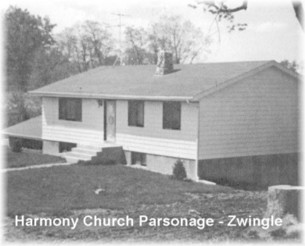 Our present pastor, Mr, Thomas Beck, came to Harmony Church in 1974. Again a new and stronger
emphasis was given to world missions and individual tithing. The past few years have seen
increased numbers in Sunday School and also Church services. A Bible Study class was also
organized and meet on Sunday evenings to benefit those people that cannot get to Sunday
School. At a special meeting of the congregation in July 1975 it was voted to sell the old
parsonage and property and build a new parsonage on church property. Ground was broken the
first week in August and the pastor and family moved into the new parsonage November 1, 1975
with some work yet to be done. Contractor for this building was J, W. Hanson & Sons, The
cost was approximately $42,000, with the sale of the old parsonage at $24,000, sale of
stocks and bonds, a gift of Mrs. Goldthorp, and individual contributions from our members in
money and work the debt is now $5,000. We as a congregation are very proud of the new
parsonage,
Our present pastor, Mr, Thomas Beck, came to Harmony Church in 1974. Again a new and stronger
emphasis was given to world missions and individual tithing. The past few years have seen
increased numbers in Sunday School and also Church services. A Bible Study class was also
organized and meet on Sunday evenings to benefit those people that cannot get to Sunday
School. At a special meeting of the congregation in July 1975 it was voted to sell the old
parsonage and property and build a new parsonage on church property. Ground was broken the
first week in August and the pastor and family moved into the new parsonage November 1, 1975
with some work yet to be done. Contractor for this building was J, W. Hanson & Sons, The
cost was approximately $42,000, with the sale of the old parsonage at $24,000, sale of
stocks and bonds, a gift of Mrs. Goldthorp, and individual contributions from our members in
money and work the debt is now $5,000. We as a congregation are very proud of the new
parsonage,
MEMORIALS
Though our church is not magnificent in architecture nor elaborately beautiful in detail,
yet the sanctuary, sunday school rooms, social rooms and kitchen are enriched by the beauty
and significance of memorial gifts which have been presented to our congregation in tribute
and memory of former members and pastors of our church. The art glass windows in the
sanctuary add much beauty and significance to our house of worship.
It would be impossible to mention all the money memorials that have been presented to the
church by various families of the church. Each of these add to the beauty and usefulness
that they have been designated.
125 YEARS OF HISTORY (Continued)
These are but a few of the achievements that measure the activities of a congregation's
life. All through the 125 years of the life of this congregation the property has been
improved, beautified and equipped from time to time for more efficient service.
There is another side, however, not so easily measured but more indicative of a congregation's vitality: namely, the quickening of the spiritual life and character in the minds and hearts of men and women boys and girls. That is a process like that of the growth of the body or the acquiring of an education. The former is measured not by the quantity of food consumed but rather by what can be assimilated and transformed into flesh and blood, bone and sinew for the performance of life's tasks. Education is more than the acquiring of certain facts.
It is rather the understanding of their meaning and the relating of these facts of the principles of everyday living. Jesus came to bring light to a sin-darkened world: He commissioned His Church to carry that light unto all the ends of the earth. Here that light has been kept shining throughout the 125 years of this church's history.
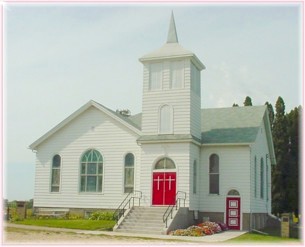 Harmony congregation has maintained a vigorous and stimulating influence for good upon this
community. Every enterprise for the betterment of the community has found leadership within
the fellowship of the church. In fact, the influence of the leadership of Harmony Church,
as well as the influence of the members of the church have come to be felt in the community
in several distinctive ways. The first pastor of Harmony Church was also the first postmaster
in Zwingle, sending out the first mail May 23, 1856, From May 23, 1856 until September of
1874, mail service had been weekly, carried on horseback; and from 1874, service was
tri-weekly. On February 6,1880, the first daily mail train was run through Zwingle. This
service was continued until March 14, 1936, when the narrow gauge railroad, which came to
Zwingle on October 28, 1879, was abandoned. It is interesting to note that the change in the
name of this commtnity, from Harmony, Ia. to Zwingle, was suggested by Rev. Bauman who had
been reading and studying the life of the Reformer, Ulric Zwingli and was impressed to the
point of suggesting this name for the village. As the first pastor, Rev. Bauman also
conducted singing schools in school houses within a radius of four or five miles. The
Independent School District was established and at one time a Normal Institute maintained
largely through subscriptions from the membership of Harmony Church, The residents of the
village built a steam flour mill in 1876 which functioned until 1887 when it was moved west
because corn and oats supplanted wheat as the principal crop. The efforts of pastors have
also influenced physicians to take up residence in Zwingle, Dr, F, W, Schwan, whose two
children are buried in Harmony cemetery, practiced here from April 3, 1874, till August 8,
1876, Dr, Loose came in 1877, followed by the Drs. Bertole one of whom died here; Dr.
Hunter also practiced in this community. Dr, Bigelow and Dr. Wheeler also served the
community of Zwingle.
Harmony congregation has maintained a vigorous and stimulating influence for good upon this
community. Every enterprise for the betterment of the community has found leadership within
the fellowship of the church. In fact, the influence of the leadership of Harmony Church,
as well as the influence of the members of the church have come to be felt in the community
in several distinctive ways. The first pastor of Harmony Church was also the first postmaster
in Zwingle, sending out the first mail May 23, 1856, From May 23, 1856 until September of
1874, mail service had been weekly, carried on horseback; and from 1874, service was
tri-weekly. On February 6,1880, the first daily mail train was run through Zwingle. This
service was continued until March 14, 1936, when the narrow gauge railroad, which came to
Zwingle on October 28, 1879, was abandoned. It is interesting to note that the change in the
name of this commtnity, from Harmony, Ia. to Zwingle, was suggested by Rev. Bauman who had
been reading and studying the life of the Reformer, Ulric Zwingli and was impressed to the
point of suggesting this name for the village. As the first pastor, Rev. Bauman also
conducted singing schools in school houses within a radius of four or five miles. The
Independent School District was established and at one time a Normal Institute maintained
largely through subscriptions from the membership of Harmony Church, The residents of the
village built a steam flour mill in 1876 which functioned until 1887 when it was moved west
because corn and oats supplanted wheat as the principal crop. The efforts of pastors have
also influenced physicians to take up residence in Zwingle, Dr, F, W, Schwan, whose two
children are buried in Harmony cemetery, practiced here from April 3, 1874, till August 8,
1876, Dr, Loose came in 1877, followed by the Drs. Bertole one of whom died here; Dr.
Hunter also practiced in this community. Dr, Bigelow and Dr. Wheeler also served the
community of Zwingle.
Besides what is visible in this community scores of members and families have gone out to become factors in other congregations. From this congregation have come legislators, lawyers, ministers, teachers, and others to fill honorable and useful stations in life. Four men, Rev. Barton Carnahan, Rev. J, N, Bauman and Rev. A, B, Bauman of Harmony congregation, and Rev. Luther Hassenpflug of Spring Valley congregation, entered the ministry of the Reformed Church, Thus both in the life of the community and in the life of the church, the influence of Harmony Church has been far reaching and most effective. Today the congregation functions with unabated zeal and gives promise of further fruitful service in the Master's Vineyard.
150+ YEARS OF HISTORY (Adapted from anniversary booklet)
These are but a few of the achievements that measure the activities of a
congregation's life. All through the 155 years of the life of this congregation the
property has been improved, beautified and equipped from time to time for
more efficient service.
There is another side, however, not so easily measured but more indicative
of a congregation's vitality: namely, the quickening of the spiritual life and
character in the minds and hearts of men and women, boys and girls. That is a
process like that of the growth of the body, of the acquiring of an education. The
former is measured not by the quantity of food consumed but rather by what
can be assimilated and transformed into flesh and blood, bone and sinew for
the performance of life's tasks. Education is more than the acquiring of certain
facts. It is rather the understanding of their meaning and the relating of these
facts of the principles of everyday living. Jesus came to bring light to a sin-
darkened world: He commissioned His Church to carry that light unto all the
ends of the earth. Here that light has been kept shining throughout the 155
years of this church's history.
Harmony congregation has maintained a vigorous and stimulating influence
for good upon this community. Every enterprise for the betterment of the com-
munity has found leadership within the fellowship of the church. In fact, the
influence of the leadership of Harmony Church, as well as the influence of the
members of the church, have come to be felt in the community in several dis-
tinctive ways. The first pastor of Harmony Church was also the first postmaster
in Zwingle, sending out the first mail May 23, 1856. From May 23, 1856, until
September of 1874, mail service had been weekly, carried on horseback; and
from 1874, servce was tri-weekly. On February 6, 1880, the first daily mail train
was run through Zwingle. This service was continued until March 14, 1936,
when the narrow gauge railroad, which came to Zwingle on October 28, 1879,
was abandoned. It is interesting to note that the change in the name of this
community, from Harmony, la., to Zwingle, was suggested by Rev. Bauman,
who had been reading and studying the life of the Reformer, Ulrich Zwingli and
was impressed to the point of suggesting this name for the village.
As the first pastor, Rev. Bauman also conducted singing schools in school houses
within a radius of four or five miles. The Independent School District was established
and at one time a Normal Institute maintained largely through subscriptions
from the membership of Harmony Church. The residents of the village built a
steam flour mill in 1876 which functioned until 1887 when it was moved west
because corn and oats supplanted wheat as the principal crop. The efforts of
pastors have also influenced physicians to take up residence in Zwingle. Dr. F.
W. Schwan, whose two children are buried in Harmony cemetery, practiced
here from April 3, 1874, till August 8, 1876. Dr. Loose came in 1877, followed by
the Drs. Bertolet, one of whom died here; Dr. Hunter also practiced in this
community. Dr. Bigelow and Dr. Wheeler also served the community of Zwingle.
The church grew to over 200 members, in those early years. Now in the year
2006, our membership is 60. It is not a large congregation, but, the members hold
claim to a rich heritage which dates back to the early pioneer days of the
state.
The church has since been served by a number of pastors, students from the
Theological Seminary of the University of Dubuque. From the call extended
to Dubuque Seminary student Harold Gilleney in 1942 to the present Harmony has been
pastored primarily by students and faculty from the school. The exception to that is
the year and a half tenure of Rev. S.E. Birkner -- January 1948 to August 1949, the
eleven years Rev. Kehle served and the years when Rev. Louis Jensen was pastor
when a student wasn't available.
OUR LIVING CHURCH
This is no dead pile of stones and unmeaning timber. It is a living thing - a living church.
Many of us have been associated with this church, some 50 years - some 25 - some 10 years
and some just recently. As our forefathers were pioneers of the faith in 1851, we still must
be disciples in 1976, We must never let our heritage be forgotten.
There have been many changes in our culture and society but the power of the Holy Spirit
still dwells in the hearts of each and everyone of us. The spirit of cooperation is
powerful and we must praise God for being so good. Our heavenly Father has a mission for
this church and in the years to come. This is a challenge and a goal for us and the future
generations.
| Home | Pastors | Photos | History | About | Contact | Cemetery |
� 2005, 2006 Larry Vern Newman, All Rights Reserved
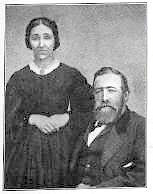 In the year of 1846, Daniel and Sarah Cort decided to leave Adamsburg, PA and "go west." To
many, this slogan meant gold, but this was not their impelling motive. Theirs was to seek a
home in the new territory. Government lands were being offered at a low purchase price, and
that gave promise of opportunity for the welfare of this family. So, with a team of horses
and a wagon loaded with all their possessions, they boarded a riverboat at Pittsburg, and
via the Ohio and Mississippi Rivers, they finally landed at Rock Island, Illinois. While
waiting to have his horses shod, Daniel noticed a young lad shaking violently. The
blacksmith noticed and said, "Oh, that's nothing. Lots of people around here have 'agee.' "
This made clear to Daniel Cort that a malarial infested region was not the place for him or
his family.
In the year of 1846, Daniel and Sarah Cort decided to leave Adamsburg, PA and "go west." To
many, this slogan meant gold, but this was not their impelling motive. Theirs was to seek a
home in the new territory. Government lands were being offered at a low purchase price, and
that gave promise of opportunity for the welfare of this family. So, with a team of horses
and a wagon loaded with all their possessions, they boarded a riverboat at Pittsburg, and
via the Ohio and Mississippi Rivers, they finally landed at Rock Island, Illinois. While
waiting to have his horses shod, Daniel noticed a young lad shaking violently. The
blacksmith noticed and said, "Oh, that's nothing. Lots of people around here have 'agee.' "
This made clear to Daniel Cort that a malarial infested region was not the place for him or
his family.