
 |
 |
 |
 |
 |
Issues of Authenticity |
|
Any publicly available digital image on the World Wide Web can be viewed, downloaded, edited, and disseminated, even if you don't want it to be. In fact, sometimes your images, or images of you, can end up on the web without you putting them there. If you email friends and family a picture of your baby, they can save it to their computer and do whatever they want with it, including putting it on their websites or forwarding it to other people. And if you are at a party, and someone takes a picture of you with a digital camera, they can post it to their MySpace or Facebook page, where anyone with an account can view it. While laws about copyright and image use still apply, they are often almost impossible to enforce. Imagine you are a digital artist, and you create a beautiful picture of a woman and put it on your website. A few weeks later, while searching for something similar, you see your image on someone else's site. It's smaller, and blurrier; it's named something completely different, and nowhere does the site say who created the image. It even has a different background than the one you had made. This image isn't exactly the same as the one you created—but it isn't much different, either. Is this image still “yours”, despite the alterations? Is this image “authentic”? Or imagine you are looking for a picture of a cat to use on your pet store's business card. You search Google Images for “cat” and find millions of pictures, but you can't find out who the one you like belongs to. The same image appears on different websites in different sizes and filetypes, and it's totally unclear which of them actually created it. How can you ask permission to use it if the image has been disseminated so widely that the original version is buried in among thousands of others, many identical? These are just a few of the issues that affect our daily use of digital images. Walter Benjamin, in The Work of Art in the Age of Mechanical Reproduction, says, “ Even the most perfect reproduction of a work of art is lacking in one element: its presence in time and space, its unique existence at the place where it happens to be.” This became the basis of discussions of the authenticity of images. However, when applied to digital images, it becomes much, much more complicated, as they have no physical location. Is the only authentic version of a piece of digital artwork the one on the author's hard drive? Is the only authentic version of a digital photograph the one in the photographer's camera? Digital images can be resized, compressed, uncompressed, composited, recolored, distorted, filtered, and edited in any number of other ways, many of which are invisible unless their code is compared to the code of the “original.” If the changes are not visible, does that make the image any less authentic? |
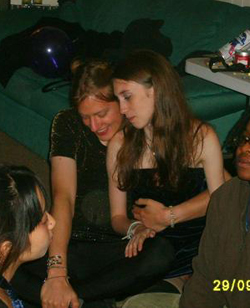 |
| This picture was taken at a party and posted on someone's MySpace page without my knowledge. The caption: "Danyn and ??? Not her boyfriend." Imagine how much trouble something like this could cause! | |
 |
|
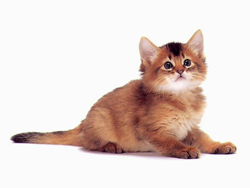
| This image, once a very high-quality, 3D rendered, photorealistic graphic, has been resized and compressed many times, resulting in the loss of much of the original data. Has its value changed proportionally? Is it still the same image? | |
 |
|
| Who took this picture? It is almost impossible to find out. |