
 |
 |
 |
 |
 |
Introduction |
|
Most of us have posted at least one photo of ourselves on the Internet, or circulated pictures through email, or downloaded an image to use for a project; all of these uses of digital images have associated problems of authenticity. What might happen to that picture of me? Whose cat is in this funny photo? Who should I cite if I want to reference this graphic? Issues of authenticity become especially important for photographers or artists who want to control the distribution of their work, and the Internet is a notoriously difficult place to police. Issues this website will discuss include the basics of how digital images are stored on your computer and how they can be altered by other people, as well as methods for controlling what others can do to your images on the Web and how to get around anti-download techniques. |
 |
| Most digital images you see are photographs taken with digital cameras, often shared via email, on photo sharing sites like Flickr, or on social networking sites like MySpace. | |
 |
|
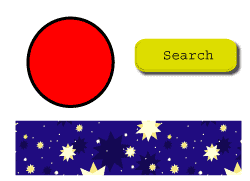
| Digital images can also be simpler objects, like geometric shapes, navigation buttons, or patterns. |