For 1989 Colt/Mirage Turbo,
1990-1994 Talon / Eclipse / Laser,
and Galant VR4s.
TURBO CAR - FREE TWEAKS
There are several things you can do at very low
cost to improve the performance of your Mitsubishi 2.0L/1.6L DOHC turbo
cars. These tips may also be applied to other similar vehicles. All
together
these actions will gain about 2psi of boost, and maybe 15hp. It's
enough
to pull away from a factory generic "stock" vehicle!
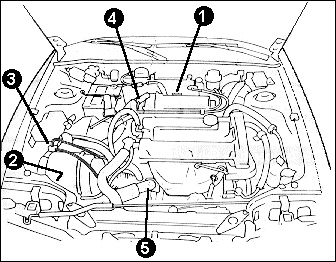
2.0L/1.6L Turbo Engine
1 - Verify that the Throttle is
Opening Fully:
With the engine off, press the gas pedal fully to the floor. Then check
for any additional travel in the linkage on the back side of the intake
manifold. To adjust, loosen the two screws on the gold bracket on top,
and shift it slightly to the right. The throttle linkage should just
contact
the stop on the throttle body.
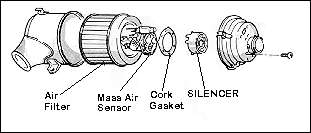
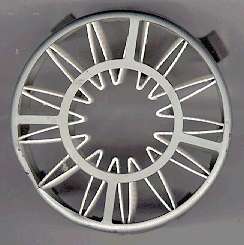
2 - Open Up the Air Intake Path: Remove the black plastic screen behind the passenger side headlight. Run a short length of clothes dryer ducting from this opening to the snorkel of the air cleaner canister. Remove the "silencer" between the mass air sensor and the turbo intake hose. It is a white, star shaped thing, mounted at the base of the air cleaner canister. Remove the air canister from the car, making note of the exact path it comes out. It only goes back in the same exact way. Then open it, remove the air filter, and carefully remove the mounting screws for the mass air sensor. Preserve the gasket between the sensor and the canister. The silencer is right there. Reassemble, reinstall. (This would be a good time for a new K&N filter...) You'll hear more turbo sounds after this, but that's part of the fun
2 - Open Up the Air Intake Path: Remove the black plastic screen behind the passenger side headlight. Run a short length of clothes dryer ducting from this opening to the snorkel of the air cleaner canister. Remove the "silencer" between the mass air sensor and the turbo intake hose. It is a white, star shaped thing, mounted at the base of the air cleaner canister. Remove the air canister from the car, making note of the exact path it comes out. It only goes back in the same exact way. Then open it, remove the air filter, and carefully remove the mounting screws for the mass air sensor. Preserve the gasket between the sensor and the canister. The silencer is right there. Reassemble, reinstall. (This would be a good time for a new K&N filter...) You'll hear more turbo sounds after this, but that's part of the fun
.
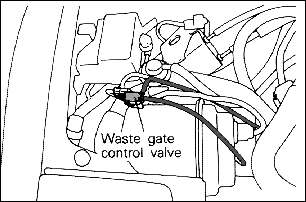
3 - Remove the Boost Control
Solenoid Restrictor:
This allows more pressure to bleed off back into the air cleaner, so it
won't push open the wastegate diaphragm as soon. It is inside the
nipple
that is oriented 90 degrees from the solenoid cylinder shape. It looks
like one piece of plastic, it's actually two. Use a small drill bit to
grab it and pull. Be careful, this little beastie is $55 if it
breaks....
Increasing the inner diameter of the hoses will also allow more
pressure
to flow off into the solenoid and air cleaner. Make sure the new hoses
are tight on all the nipples, maybe using small hose-screw clamps. Keep
the stock hose from the T to the wastegate diaphragm. Some folks will
wrap
a "zip tie" tightly around this last hose, to restrict flow. But don't
block it off entirely. Use your new boost gauge to verify results.
4 - Polish the Intake Elbow
Interior: This is
located between the intake / intercooler pipe and the throttle body. It
usually has a small ridge inside. This should be removed, working
carefully
with a Dremel tool or a small, very fine grit sanding flapper wheel.
The
leading edge of the elbow can be beveled for better airflow too. Then
polish
the inside surfaces with 600 grit sandpaper or a "ScotchBrite" pad. The
aluminum is soft, so don't get too carried away or gouge it.
5 - Bevel the Lead Edge of the Turbo Outlet Elbow: This is the black metal piece which attaches the rubber intake hose leading to the intercooler. The edge facing the turbo can be beveled and opened up slightly. Be careful to keep the turbo clean, and not to bend the pressure sensor hose nipple.
6 - Use Super Unleaded Fuel: These cars have a ping sensor built in. If it is activated, it will reduce boost levels and retard the timing to protect the engine. After about 200 miles it will allow the boost to increase again. But if it hears another ping, performance is again scaled back. So just don't let it happen! You know, over at DSM.org they have a schematic circuit you can build to monitor the activation of this sensor!
7 - Improve Your InterCooler: Over time, the fins may clog with bugs and leaves. The inside becomes coated with an oily film from the valve cover venting. Remove the intercooler from the car, and use paint thinner to rinse the inside clean. Straighten any bent fins. The stock fog lights impede air flow. They could be removed, or replaced with a smaller type. They can be located in another area instead. Use wire mesh to build a new screen and protect the intercooler fins from direct impact. Vents on the rear plastic cover, facing the tire, can be opened up a bit to improve air flow. Just remove the excess lip edge along the vent edges, and streamline their flow patterns.
8 - Verify Engine Ignition Timing: Timing should show as 8 degrees BTDC, when the engine is warmed and idle is at 650-850rpm, with all accessories turned off. Timing is totally controlled by the Electronic Control Unit, and starting from the proper setting allows a full range of control.
And there you have it! The car will be noticeably more responsive to throttle, build boost more quickly, and have a higher peak boost. Now you're ready for some serious performance modifications to the intake and exhaust systems. Then you'll need suspension upgrades to keep the big power under control.
5 - Bevel the Lead Edge of the Turbo Outlet Elbow: This is the black metal piece which attaches the rubber intake hose leading to the intercooler. The edge facing the turbo can be beveled and opened up slightly. Be careful to keep the turbo clean, and not to bend the pressure sensor hose nipple.
6 - Use Super Unleaded Fuel: These cars have a ping sensor built in. If it is activated, it will reduce boost levels and retard the timing to protect the engine. After about 200 miles it will allow the boost to increase again. But if it hears another ping, performance is again scaled back. So just don't let it happen! You know, over at DSM.org they have a schematic circuit you can build to monitor the activation of this sensor!
7 - Improve Your InterCooler: Over time, the fins may clog with bugs and leaves. The inside becomes coated with an oily film from the valve cover venting. Remove the intercooler from the car, and use paint thinner to rinse the inside clean. Straighten any bent fins. The stock fog lights impede air flow. They could be removed, or replaced with a smaller type. They can be located in another area instead. Use wire mesh to build a new screen and protect the intercooler fins from direct impact. Vents on the rear plastic cover, facing the tire, can be opened up a bit to improve air flow. Just remove the excess lip edge along the vent edges, and streamline their flow patterns.
8 - Verify Engine Ignition Timing: Timing should show as 8 degrees BTDC, when the engine is warmed and idle is at 650-850rpm, with all accessories turned off. Timing is totally controlled by the Electronic Control Unit, and starting from the proper setting allows a full range of control.
And there you have it! The car will be noticeably more responsive to throttle, build boost more quickly, and have a higher peak boost. Now you're ready for some serious performance modifications to the intake and exhaust systems. Then you'll need suspension upgrades to keep the big power under control.
