|
|
|
|
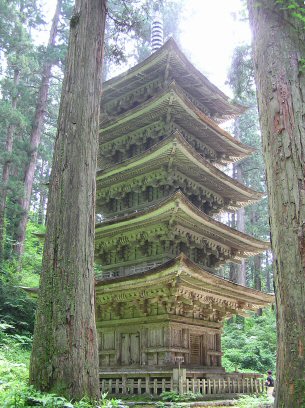
Built around 1200, Haguro-san's five story pagoda is at the base of 2466 steps to the top of the mountain.
|
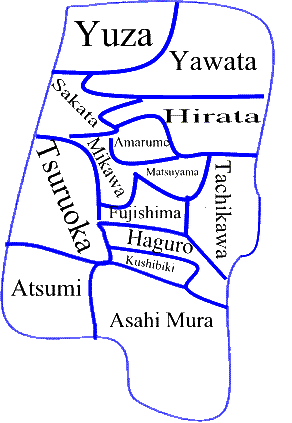
What is Shonai?Shonai means something different to everyone but it is a place that everyone can appreciate. Whether you want to experience the unforgettable sunsets from Matsuyama or the many ski slopes in the winter you can find it all. There are temples that can match some of Kyoto's finest and a religious walk that is famous throughout Japan. When you first arrive in Shonai you will be taken aback by the natural surroundings. The area is a flat plain that is surrounded by mountains including two volcanoes (that are fortunately extinct). The mountains form a horseshoe around the coast. The land within this horseshoe is perfectly flat and provides the ideal place for some of Japan's best tasting rice to be grown. This rice is also turned into a distinctive and well known sake. The area is also famous for its persimmons, which seem to be growing on every tree as autumn approaches. Autumn is one of the most unforgettable experiences. The mountains surrounding Shonai become awash with colour. The reds, browns and yellows are without doubt a memory you will stay with you forever. The spring will provide you with another memory to match this. Every park in every village and city becomes pink. The colour is due to the cherry blossoms blooming. The local people use this as an opportunity to consume some of their sake and meet up with friends and relatives under the trees.
There are two main cities in Shonai that can provide anything that may be needed. There is also the largest Jusco shopping mall in the north of Japan, that contains many foreign and local restaurants and a multi-screen cinema. The coastline is blessed with many fine sandy beaches that provide people from all over the prefecture with a place to enjoy the Sea of Japan. Just off the coast at Sakata, there is a small island called Tobishima. Day trips and weekend trips are available to this pleasant island which is famous for its fishing.
If you are the outdoor type, the mountains can provide you with many opportunities to indulge in outward bound pursuits. Whether you are interested in white water rafting, mountain biking, hill-walking or bungee jumping, all are available. The views from the tops of the mountains are incredible and are well worth the three or four hour climb. Even if you do not make it to the top there are crater lakes and many beautiful views on the way. Gassan mountain has one of the highest ski slopes in Japan. This allows skiers from all over Japan to ski or snowboard until the middle of June. There are also three more ski slopes spread around the mountains surrounding Shonai. If you take the opportunity to travel further into the mountains there are many waterfalls, dams and picnic places for those wanting to have a day out.
The area is famous due to the Dewa Sanzan. Dewa means place of feathers. In the past many hawks and eagles lived in Shonai and Akita. The feathers of these birds were important because they were used to make the tails of arrows. Sanzan means three mountains. This area became important because many years ago, a group of monks were travelling around Japan looking for the perfect place to train themselves to be strong. They visited many places and then came to Shonai. They realised that the mountains of Haguro, Yudonosan and Gassan were the ideal place for training. On the top of three of the mountains they built shrines and started training. The area became a very religious area. Within the Dewa Sanzen area there are smaller shrines as well that contain preserved human beings who are believed to be people who have reached enlightenment in their lifetime and who even after death can provide spiritual guidance. These living buddhas are on display to the public.
Even now the training is still carried out. Monks from all over Japan come to Shonai to complete the three mountain walk. When you take part in the training you must walk from Haguro to Yudonosan and then on to Gassan. The walk consists of many interesting places including the yellow rock that produces hot water at the top of Yudonosan, numerous waterfalls, and the pagoda at Haguro.
Shonai is definitely a fantastic place to visit and a wonderful place to live if you are fortunate enough to have the opportunity.
-Peter Swift-
|