| Brain Injury in Children | ||||||||||||||||
| Certain aspects of brain injury are unique to children. For example, it is more difficult to determine the measure of loss of brain function. In adults, there are academic records, I.Q. scores, and job histories to rely on. In children, some neurological deficits after brain trauma may not manefest for many years. Frontal lobe functions, for example, develop later in a childs growth, so that injury to the lobes may not become apparent until the child is well into adolescence. Also, injury to reading and writing centers in the brain may not become noticable until the child reaches school age and shows signs of delayed reading and writing skills. The frontal lobes are extremely vulnerable to injury due to their location at the front of the skull and their large size. The frontal lobes are considered our emotional center and home to our personality. There is no other part of the brain where injury can cause such a wide variety of symptoms. The frontal lobes are involved in motor function, problem solving, spontaneity, memory, language, initiation, judgment, impulse control, social and sexual behavior. Studies have shown that the frontal area is the most common region of injury following mild to severe traumatic brain injury (TBI). |
||||||||||||||||
| Home | ||||||||||||||||
| Classification of Head Injuries | ||||||||||||||||
| Guildlines/Symptoms | ||||||||||||||||
| How the Brain is Hurt | ||||||||||||||||
| The Injured Brain (Diagrams) |
||||||||||||||||
| Child Abuse | ||||||||||||||||
| Treatment | ||||||||||||||||
| References | ||||||||||||||||
| WEB~LINKS | ||||||||||||||||
![]() |
||||||||||||||||
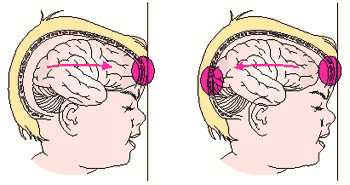
| Coup and contracoup injuries In a coup injury, a blow to the rear of the skull results in an injury to the anterior of the brain. In a contracoup injury (right), the brain recoils and strikes the posterior skull as well, injurying it twice. Recent studies show that children's skulls are only 1/8 as strong as that of adults. Thus, children are much more vulnerable to injury through deformation and fracture of the skull, which can injure the brain |
||||||||||||||||