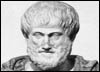
Aristotle’s
“Virtue Ethics”
 Ethical
relativism argues that there is no universal basis of
what is ethical and what is not and that is because
of the diverse differences in culture, and religion,
among others, that influences the judgment on morality.
On the other hand, ethical absolutism argues that there
must be only one basis of ethical standard. Ethical
egoism promotes action out of one’s own self-interest
while ethical altruism encourages action out betterment
of others. These are moral principles that are categorized
as “Preliminary theories” which have been
the objects of discussions because of some flaws each
theory contains. Ethical
relativism argues that there is no universal basis of
what is ethical and what is not and that is because
of the diverse differences in culture, and religion,
among others, that influences the judgment on morality.
On the other hand, ethical absolutism argues that there
must be only one basis of ethical standard. Ethical
egoism promotes action out of one’s own self-interest
while ethical altruism encourages action out betterment
of others. These are moral principles that are categorized
as “Preliminary theories” which have been
the objects of discussions because of some flaws each
theory contains.
And then we have the “Finalist
theories” of John Stuart, Immanuel Kant and Aristotle.
For Stuart, he claims that morality is dependent to
the degree of happiness that can be obtained from a
certain action. On the other hand, Kant’s Categorical
Imperatives states that the act is considered good if
it is done because of the intention to do good per se,
without any exemptions. Lastly, Aristotle’s
Nicomachean Ethics is basically according to
the “virtues” of life. I personally consider
it as the most interesting among the finalist theories
since, for me, it covers many aspects of life. According
to Aristotle, “virtue ethics” is further
classified as moral virtues and intellectual virtues.
A moral virtue, also known as virtue of character, pertains
to generosity and temperance. According to these virtues,
one should only aspire everything in moderation. Through
temperance also, one can control his “bodily pleasures”
and be able to deviate oneself from wicked things such
as pornography. The intellectual virtue, on the other
hand, consists of wisdom, intelligence and understanding.
Aristotle gave importance to these virtues since it
is necessary to enable man to think and decide through
his analysis and understanding to certain action or
activity and behave according to what is just.
Aristotle also believes that
misfortunes of man are not and should not be a hindrance
in the attainment of happiness in life. In fact, according
to him, such experience would make man a stronger person
that will help him withstand any foregoing trials in
life. Aristotle's concepts of ethics encourage man to
aspire in doing good deeds and have a better character.
He also elucidates that true happiness cannot be attained
overnight but through the righteous deeds in your entire
duration of existence on earth.
Reference:
Albacea, E. A., Payongayong,
T. T, Pinpin, A. V. (2003). Computer Ethics. UPOU.
|