Early astronomers used the term "nebula" to refer to almost any extended astronomical object other than planets and comets. The etymological root of "nebula" means "cloud". More strict modern usage reserves the word "nebula" for gas and dust clouds, and not for groups of stars such as galaxies. Different types of nebulae exist, and are classified as emission nebulae, reflection nebulae, dark nebulae, planetary nebulae and supernova remnants. Nebulae are among the most beautiful objects in nature.
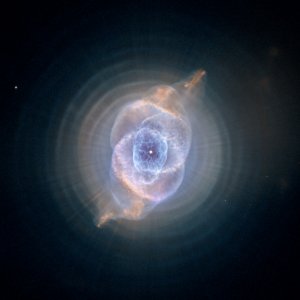
Cat's Eye Nebula (NGC 6543), a planetary nebula. Credit: NASA, ESA, HEIC, Hubble Heritage Team (STScI/AURA)
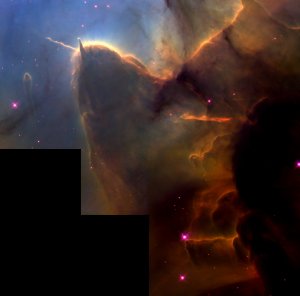
Emission nebulae are clouds of high temperature gas. Ultraviolet light from a nearby star energizes the atoms in the cloud, which then emit radiation as they fall back into lower energy states. These nebulae are usually red because this is the predominant emission line of hydrogen. Other atoms produce different colors, but they are less abundant than hydrogen. Emission nebulae are usually the sites of recent and ongoing star formation.
Reflection nebulae are clouds of dust which are simply reflecting the light of a nearby star or stars. They are usually blue because the scattering is more efficient for blue light. Reflection nebulae are usually sites of star formation.
Dark nebulae are clouds of dust which are simply blocking the light from whatever is behind. They are physically very similar to reflection nebulae. However, they look different only because of the relative positions of the light source, the cloud and the Earth.
(Emission, reflection and dark nebulae are often seen together in various combinations, and are sometimes referred to as diffuse nebulae. A typical diffuse nebula is a few hundred light-years across.)
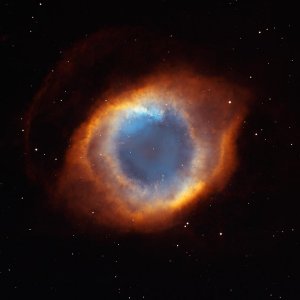
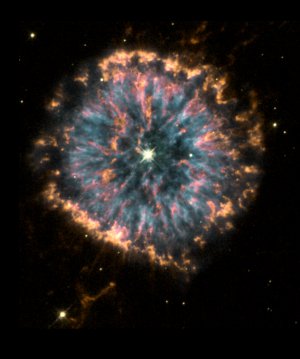
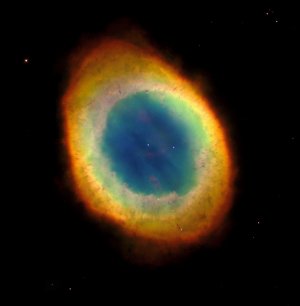
Planetary nebulae are shells of gas thrown out by some stars near the end of their lives. This name originated because they often look a little like planets in small telescopes, but in fact they have nothing to do with planets. A typical planetary nebula is less than one light-year across.
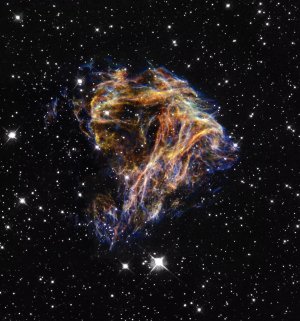
Supernova remnants are the remains of supernovae. Supernovae occur when a massive star ends its life in an amazing blaze of glory. For a few days a supernova emits as much energy as a whole galaxy. When it's all over, a large fraction of the star is blown into space as a supernova remnant. A typical supernova remnant is at most few light-years across.
Supernova remnant N 49 or DEM L 190. Credit: NASA, Hubble Heritage Team (STScI/AURA)
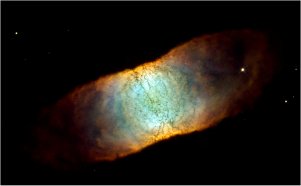
Planetary nebula 6751. Credit: NASA, Hubble Heritage Team (STScI/AURA)
Part of the Trifid Nebula (M20, NGC 6514), an emission nebula.. Credit: NASA, J. Hester
Retina Nebula (IC 4406), a planetary nebula. Credit: NASA, Hubble Heritalge Team (STScI/AURA)
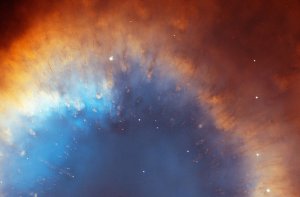
Helix Nebula (NGC 7293), a planetary nebula. Credit: NASA NOAO, ESA, Hubble Helix Nebula Team, M. Meixner (STScI), T.A. Rector (NRAO).
Ring Nebula (M57). Credit: Hubble Heritage Team (STScI/AURA/NASA)
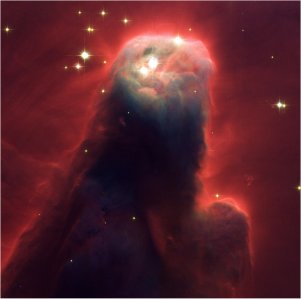
Cone Nebula. Credit: NASA, H. Ford (JHU), G. Illingworth (UCSC/LO), M. Clampin (STScI), G. Hartig (STScI), ACS Science Team, ESA
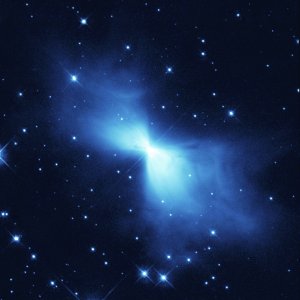
Boomerang Nebula, an exceptionally cool object (temperature 1 degree above absolute zero). Credit: NASA, ESA