We arrived in Brno after a 7 hour
bus ride and passing through the border check. I didn't sleep one
bit; I was playing Big 2 almost the entire time with Miranda, Sarah
and David. We rehearsed with the choir for our concert in the
Špilberk Castle that evening and again the next morning. After the
second rehearsal some of us went down the wrong path down the
mountain from the castle but we managed to navigate our way through
the city streets back to our hotel. That afternoon it was colder and
rainy, but that didn't stop us from walking through Brno. We must
have gone down every street we could within a radius of several
blocks from the hotel. If I remember correctly, this was where Ryan
bought the fedora and shades of his. Before our concert there was a
formal reception with the mayor of Brno. Brno and Dallas are sister
cities, and as arts ambassadors from Dallas, we're part of the
connection. I remember that at dinner I had the first decent
conversation with Jules in a long time. We carpooled to rehearsals
during the regular season but we almost never talked. Then there was
the concert....
 I could go on and on about Prague -
it's such a beautiful and historical city, and a few days is not
enough to get to know it thoroughly. When we first checked into the hotel,
though, there were at least 50 people waiting to use two elevators.
I didn't want to wait so I ended up hauling my suitcase up nine
flights of stairs. Anyway, during our tour our guide
I could go on and on about Prague -
it's such a beautiful and historical city, and a few days is not
enough to get to know it thoroughly. When we first checked into the hotel,
though, there were at least 50 people waiting to use two elevators.
I didn't want to wait so I ended up hauling my suitcase up nine
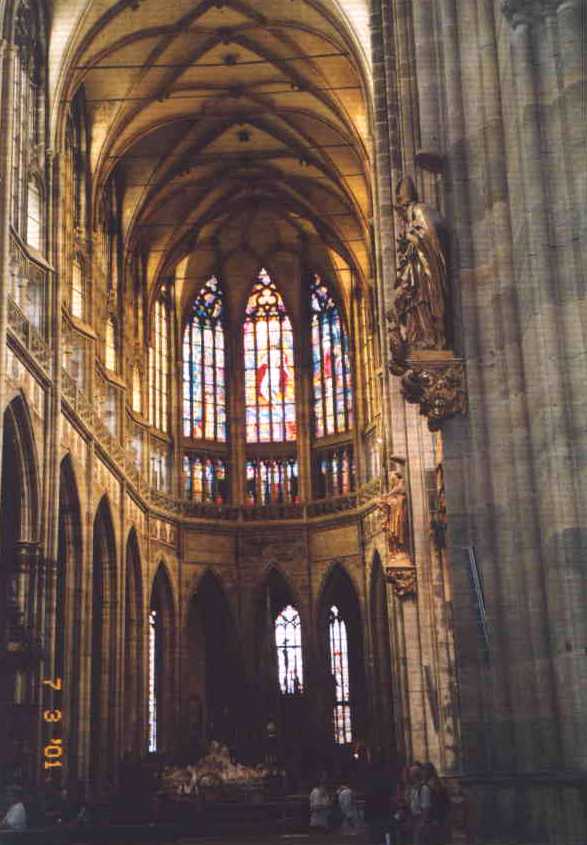
flights of stairs. Anyway, during our tour our guide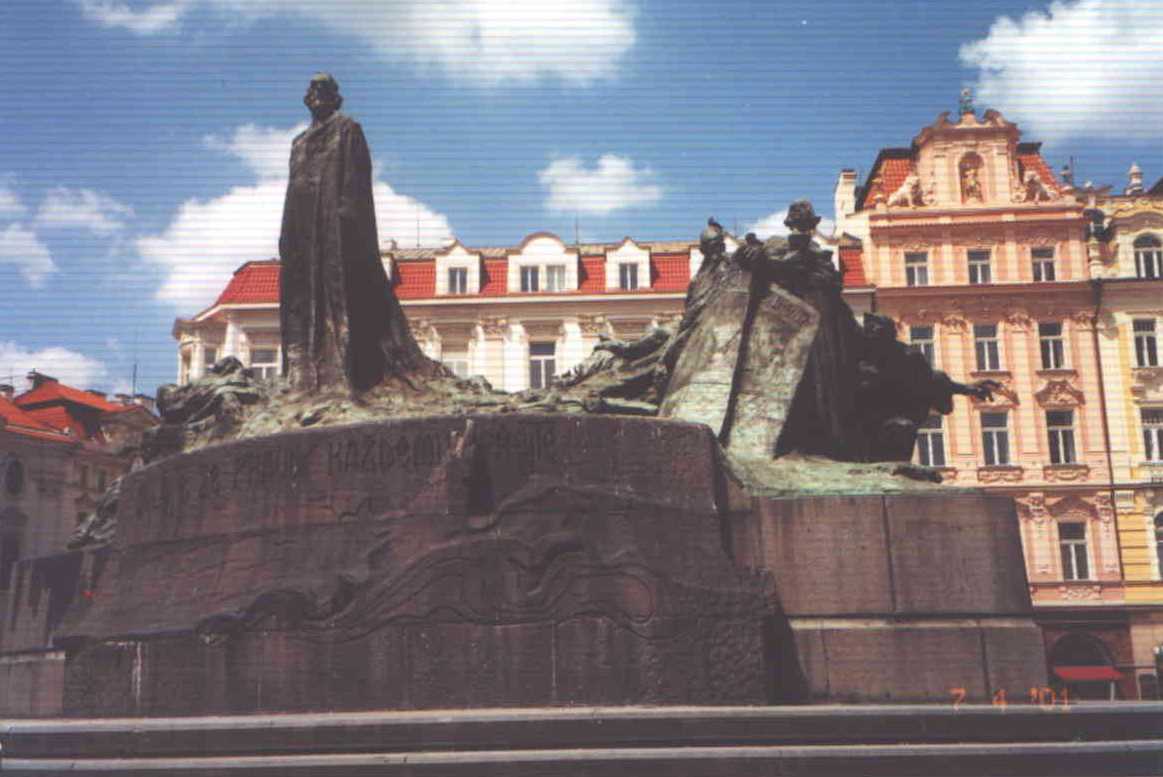 took us to the
Hradcany Castle overlooking Prague. It's like a city within a city,
although the little houses are now souvenir and tourist shops. The
Royal Palace, home to the president of the Czech Republic, is also
up here, as well as the soaring St. Vitus Cathedral. I've learned
about gothic architecture and cathedrals in school, but I didn't
realize how impressive it is until I saw it firsthand. We crossed
the famous Charles Bridge, where we touched the statue of St. John
of Nepomuk. Legend has it that visitors who touch the statue shall
someday return to Prague. Our tour ended in Old Town Square just in
time to see the astronomical clock from the 15th century strike the
hour. Later we were given the better part of a day to explore and
shop.
took us to the
Hradcany Castle overlooking Prague. It's like a city within a city,
although the little houses are now souvenir and tourist shops. The
Royal Palace, home to the president of the Czech Republic, is also
up here, as well as the soaring St. Vitus Cathedral. I've learned
about gothic architecture and cathedrals in school, but I didn't
realize how impressive it is until I saw it firsthand. We crossed
the famous Charles Bridge, where we touched the statue of St. John
of Nepomuk. Legend has it that visitors who touch the statue shall
someday return to Prague. Our tour ended in Old Town Square just in
time to see the astronomical clock from the 15th century strike the
hour. Later we were given the better part of a day to explore and
shop.
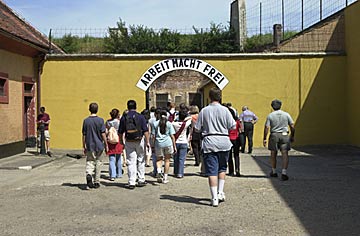 The fortress of Terezín, or
Theresienstadt, was built in the late 1700s but only became well
known in modern history when the Nazis turned it into a
ghetto/reception camp for Jews and political prisoners. During
World War II Jews were kept there before being transported to
Auschwitz-Birkenau and other death camps. 2500 prisoners died in
Terezín itself from bad conditions, disease and torture. It's
sobering seeing the dark isolation chambers and rooms where as
many as 60 people were imprisoned at one time. The nearby Terezín
Museum exhibited drawings and poems created by children, many of
whom perished in the camps, the youngest victims of the Holocaust.
The fortress of Terezín, or
Theresienstadt, was built in the late 1700s but only became well
known in modern history when the Nazis turned it into a
ghetto/reception camp for Jews and political prisoners. During
World War II Jews were kept there before being transported to
Auschwitz-Birkenau and other death camps. 2500 prisoners died in
Terezín itself from bad conditions, disease and torture. It's
sobering seeing the dark isolation chambers and rooms where as
many as 60 people were imprisoned at one time. The nearby Terezín
Museum exhibited drawings and poems created by children, many of
whom perished in the camps, the youngest victims of the Holocaust.