|
|
|||||||||||||||
|
|||||||||||||||
|
|||||||||||||||
|
The Law of the Sea
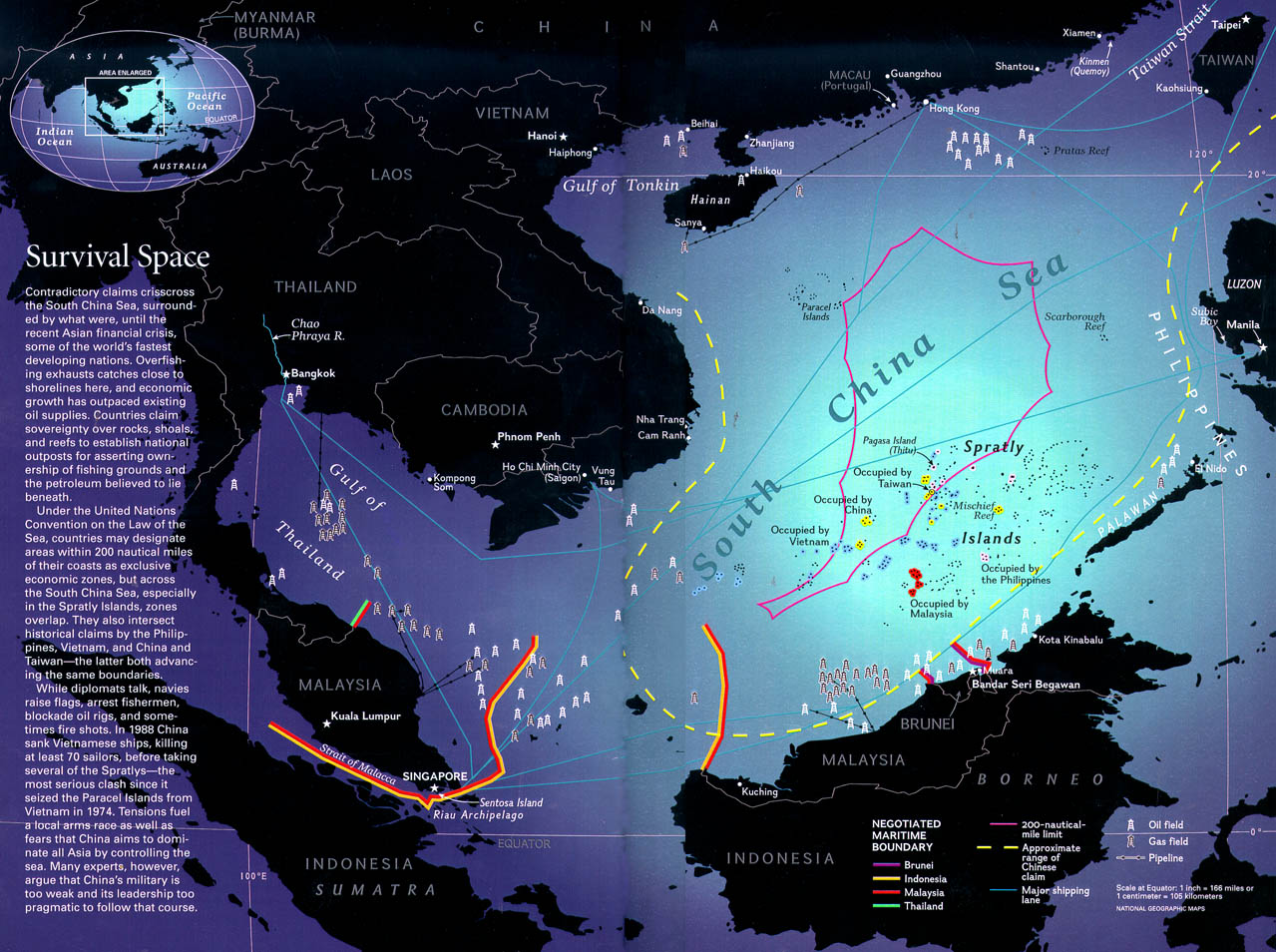
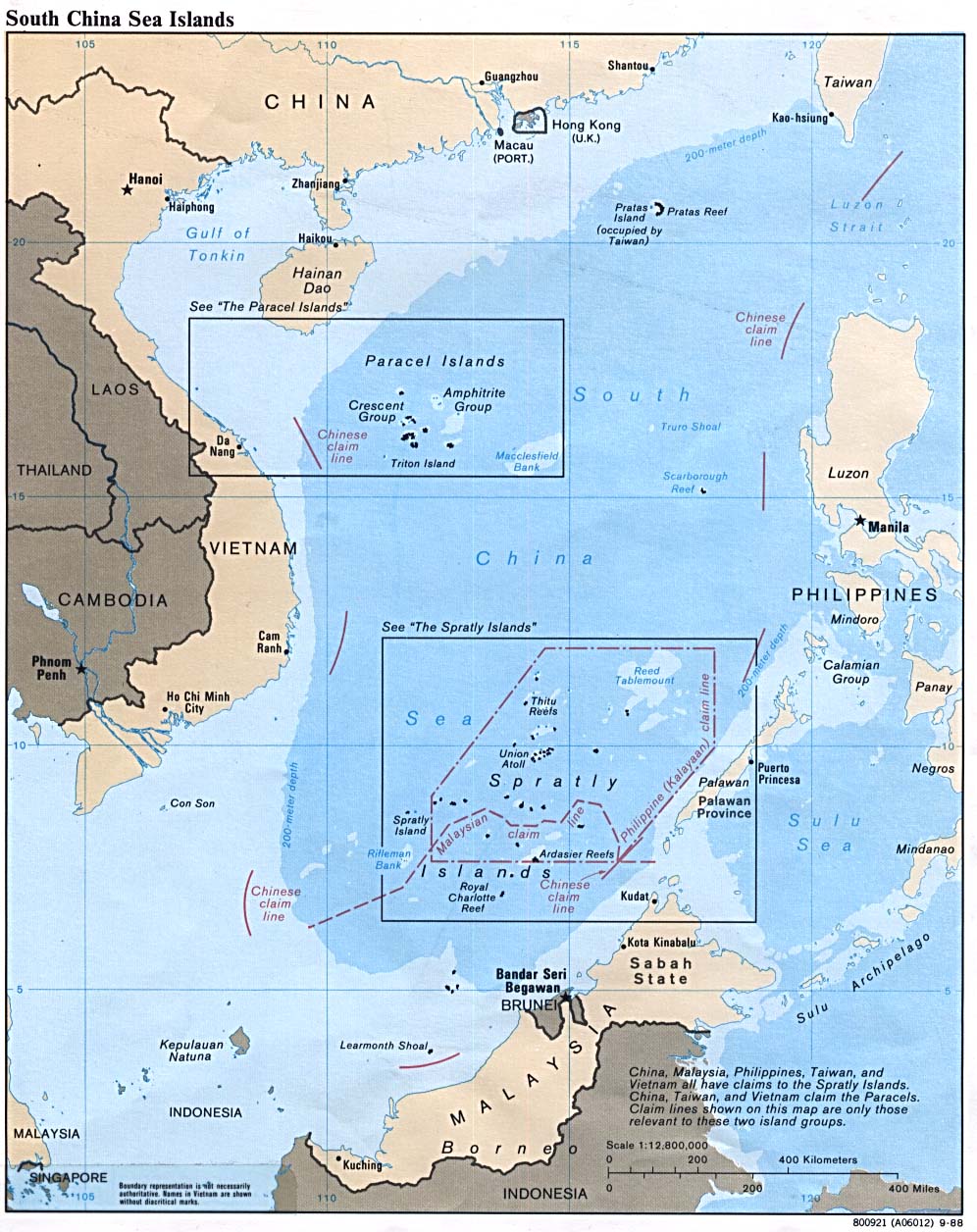
Article 3, which establishes that "every state has the right to establish the breadth of its territorial sea up to a limit not exceeding 12 nautical miles"; Articles 55 and 75, which define the concept of an Exclusive Economic Zone (EEZ), an area up to 200 nautical miles beyond and adjacent to the territorial sea. The EEZ gives coastal states "sovereign rights for the purpose of exploring and exploiting, conserving and managing the natural resources, whether living or non-living, of the waters superjacent to" (above) "the seabed and of the seabed and its subsoil..." Article 121, which states that rocks that cannot sustain human habitation or economic life of their own shall have no exclusive economic zone or continental shelf. The establishment of the EEZ created the potential for overlapping claims in semi-enclosed seas such as the South China Sea. These claims could potentially be extended by any nation which could build a settlement on the islands in the region and attempt to establish a clear title. South China Sea claimants have clashed as they tried to establish outposts on the islands (mostly military) in order to be in conformity with Article 121 in pressing their claims.
|
|
||||||||||||||
|
|
|||||||||||||||
Choi Xin Zhong,Student of GSAPS, HanYang University |
|||||||||||||||