|
The South China Sea study paper for my American politics
class June,2001 |
|||
| Multilatiral relation with different countries: U.S. | China | ASEAN | ||
U.S. and South China Sea
- The U.S. historical influence in this area
- The U.S. defense strategy shift to the Pacific
- The U.S. interest and potential change to this area
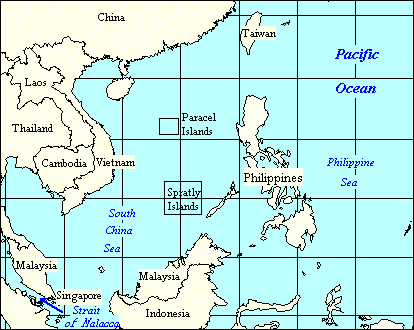
The U.S. historical influence in this area
Will the U.S. get involved in the South China Sea disputes? To what extent will the U.S. change from its former neutral stance to this area? Is the U.S. changing its policy toward to China? This is what I want to discuss here.
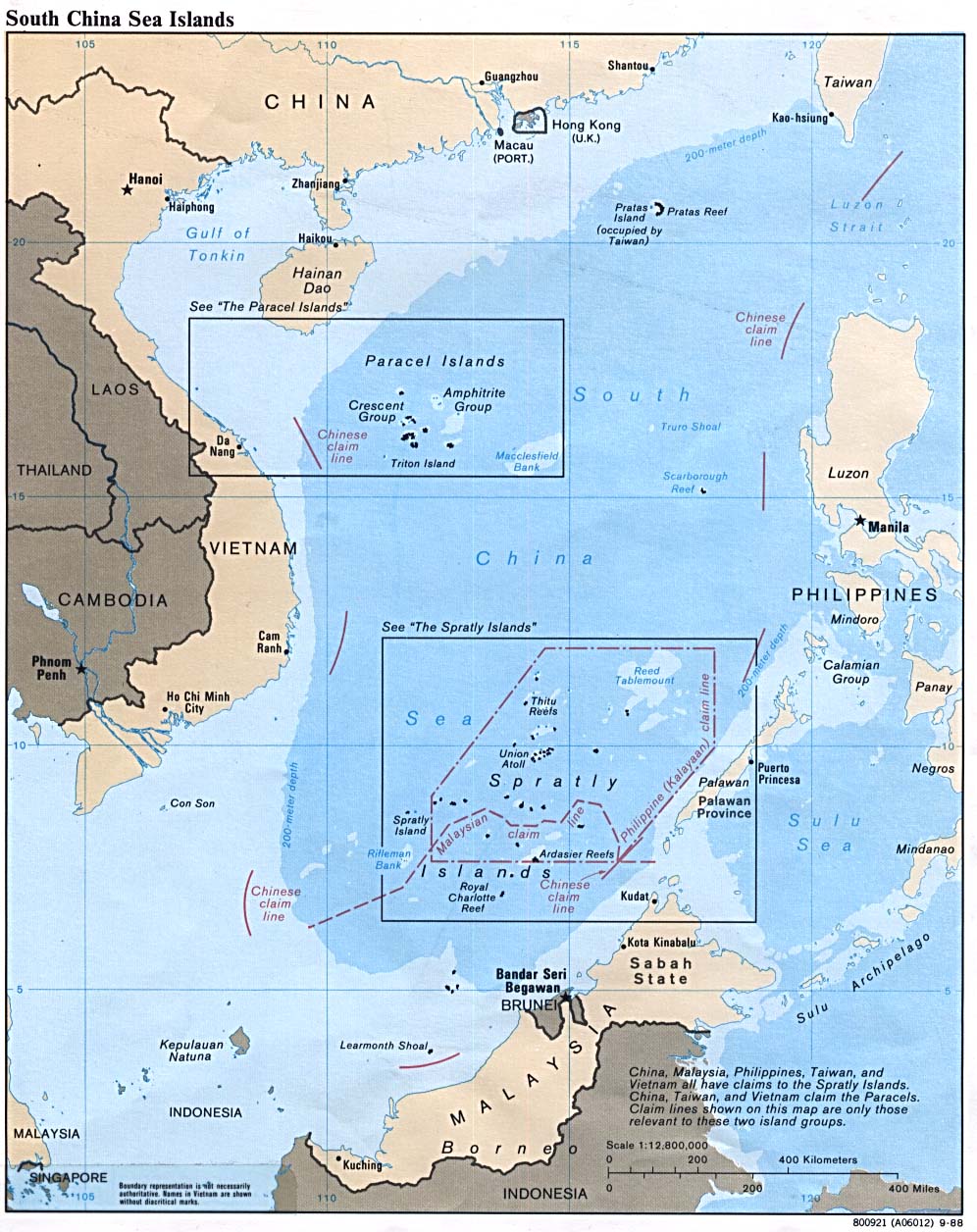
The U.S. has maintained a strong alliance with Philippines during the Cold War, But U.S. air and naval forces departed their bases in the Philippines in 1992. Although there is still a Mutual Defense Treaty between the two countries and the military visits and cooperation exercises still go on, the treaty only covers the territories of the Philippines, not the Spratly Islands where disputes between the Philippines and China occured. When China occupied Mischief Reef which is about 150 miles from the Philippines in 1995 , the Clinton Administration had little reaction. After four months, the Clinton Administration issued a statement that affirmed U.S. neutrality( see the U.S. Statement in 1994). But it emphasized that "Maintaining freedom of navigation is a fundamental interest of the United States."
The U.S. defense strategy shift to the Pacific
The Bush Administration has adopted a completely different rhetoric toward China. President Bush has clearly announced the U.S. would help defend Taiwan if it is attacked by mainland China . The Bush administration has viewed China as its strategic competitor in East Asia. Although there is no new clear statement on the South China Sea issue from the new administration, certain change in policy should be expected. But the question is to what extent will Bush Administration will involve itself in this issue.
A confidential Pentagon strategy review has cast the Pacific as the most important region for military planners, in 1999, Washington signed a Visiting Forces Agreement with the Philippines. The U.S. planned annual Cobra Cold exercises with Thailand. The U.S. got naval visiting rights in Singapore which is capable of handling the largest U.S. ships. These signs are evidence that the U.S. is now developing active military ties with Southeast Asian nations.
The U.S. also sells arms to build up the military forces of Southeast Asian countries to check the growing influence of China. But China will certainly enhance its naval force to countervail these changes. There is doubt if these countries can counter Chinese force even with the arm aids from the U.S. The military competition will enforce the tension in this area.
Richard D. Fisher suggested the U.S. should 1) Seek agreement on security goals; 2) Declare that China's activities in the disputed islands represent a threat to regional security; 3) Assemble a millitary aid package for the Philippines to rebuild the U.S.-Philippine alliance. see Richard's " Rebuilding the U.S.- Philippine Alliance"
But Southeast nations like the Philippines are finding it difficult to become true allies of the U.S. like Japan and South Korea. There are so many issues like economic stagnation, insurgencies and human rights concerns to prevent their alliance.
It is hard to judge if the U.S. will fully change its neutral stance in the disputed Spratly Islands in the future.
The U.S. interest and potential change to this area
The U.S. foreign policy is based on U.S. interest, so in any dispute.Would it really want to help its fragile alliance and other nations? Would it like to see the Spratly Islands to trigger another conflict with China? It is hardly to say how the U.S. would benefit from being involved in such disputes.
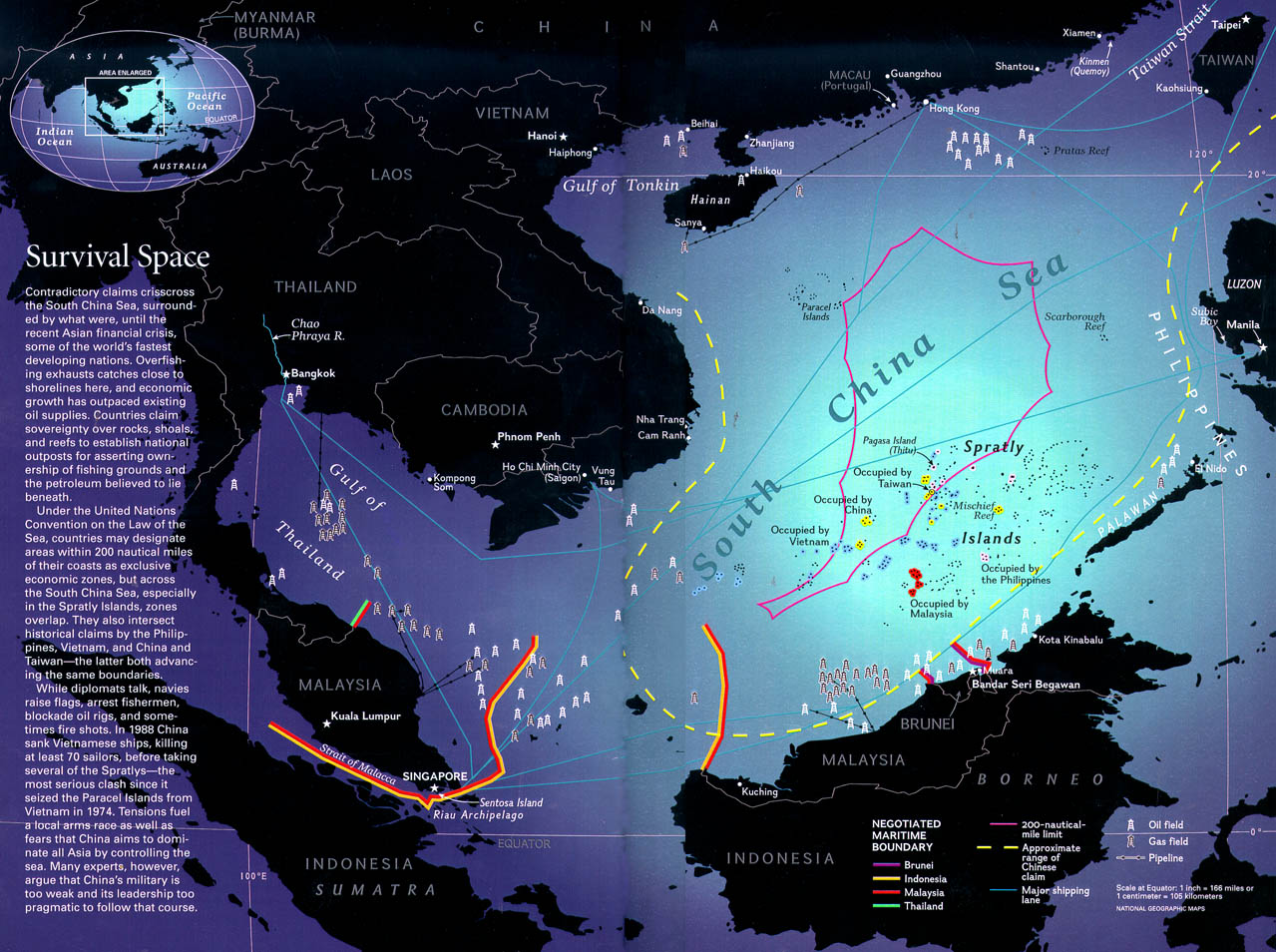
The U.S. interest is focused on maintaining freedom of navigation in the South China Sea. About 70 percent of Japan's and South Korea's oil passes through the sea lane between Mischief Reef and the Philippines.( see the Oil Flow Chart )Thus, Richard D. Fisher deduced that " the loss of access to this sea lane could damage these economies, which , in turn, would threaten the economic health of Asia and the United States."
But how would China benefit from blocking of free navigation and thus damaging the Japanese and Korean economies? Japan is China's one of the biggest sources of loans and foreign investment, and both countries are top trading partners of China. It is hard to believe China would harm its main trading countries and harm itself even if it took control of the whole South China Sea.
Besides the sea lanes through the Mischief Reef and the Philippines are not the only routes that lead to Japan, South Korea and Taiwan. It is only the shortest choice of all the sea lanes. Certainly the other lanes will add some hundred miles of voyage, but it is too absolute to describe China and its forces as a potential threat to the Northeast Asian economy.
When the U.S. shifts strategic emphasis from Europe to the Pacific, the emphasis will still focus on Taiwan straits as well as maintaining strong alliances with South Korea and Japan.
|
||||
|

Choi Xin Zhong,Student of
GSAPS, HanYang University