|
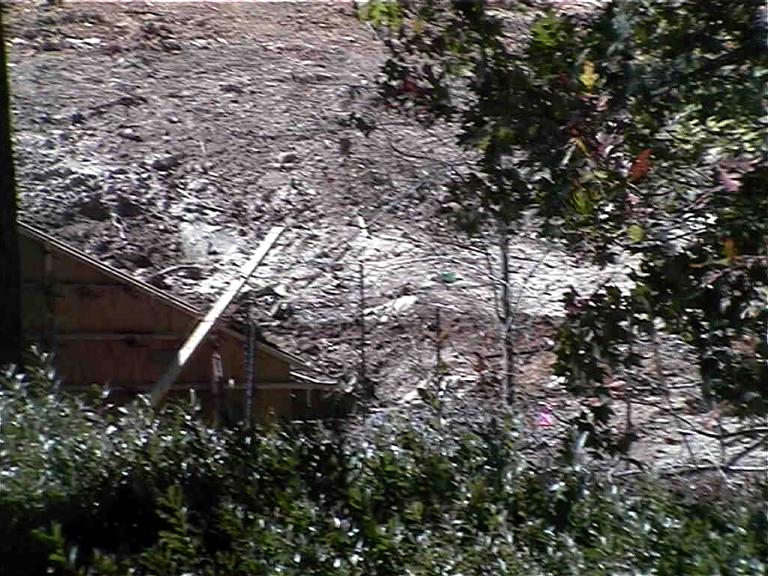
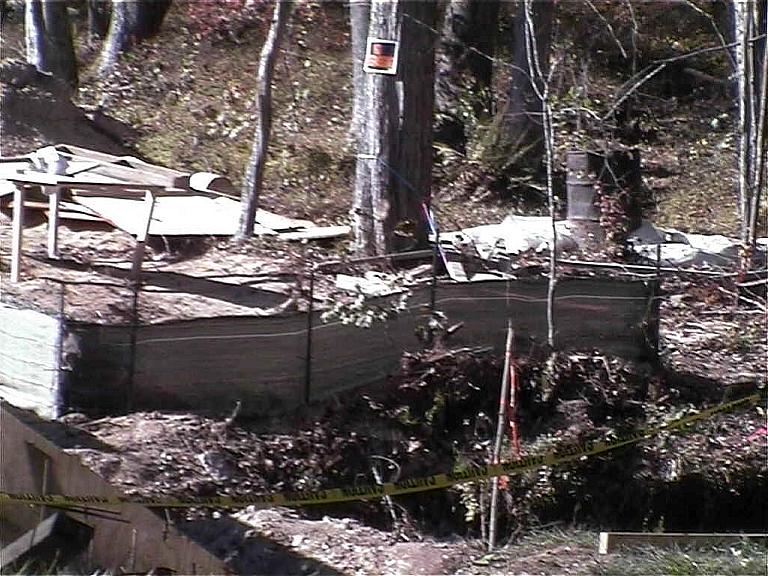
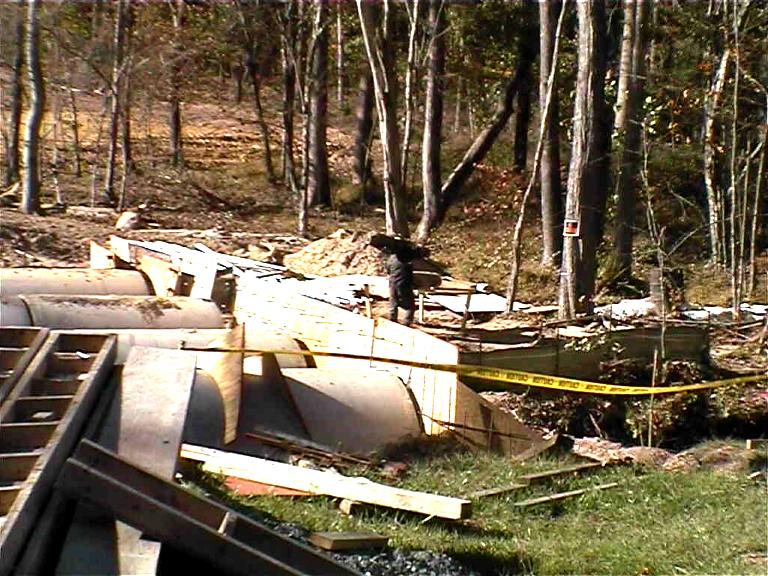
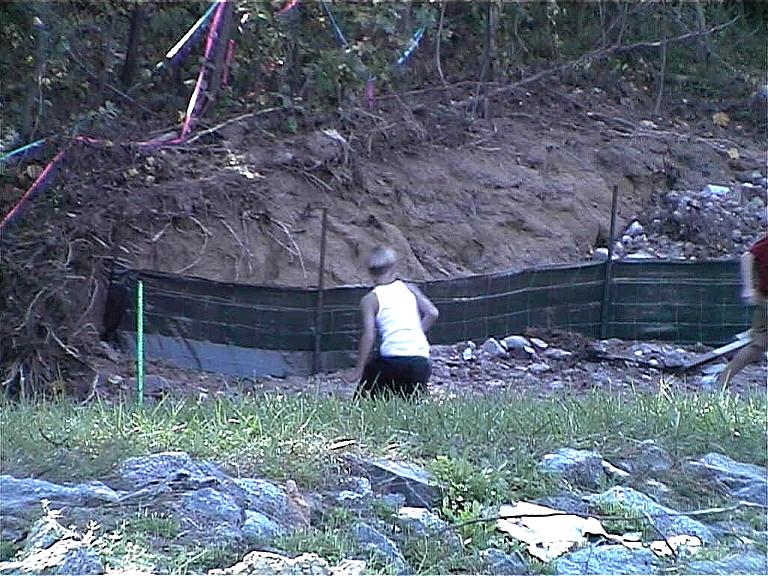
About three months after the development began, silt screens finally went in on October 25.
|
|
Click a thumbnail to view a larger image
|
|
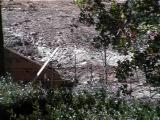
Poles set into the ground
|
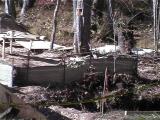
Upstream side
|
|
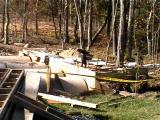
|
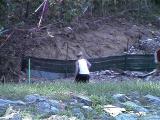
Downstream side
|
|
Below are some guiding principles of erosion and sedimentation control according to a North Carolina Soil Science Specialist. It is sad to see how many of these principles are outright ignored.
|
|
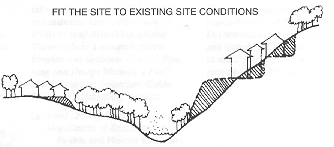
Figure 1. Select a site that Is suitable rather than forcing the terrain to conform to development needs. Steep slopes, areas subject to flooding, and highly erodible soils severely limit the site's use, while level, well-drained areas offer few restrictions. Any modification of drainage features or topography requires protection from erosion and sedimentation.
<The site by Sycamore Creek is partially in a flood zone and slopes down into the creek.>
|
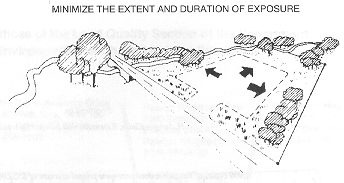
Figure 2. Schedule construction activities to minimize the extent and duration of soil exposure. In scheduling, take into account the season and the weather forecast. Stabilize disturbed areas as quickly as possible.
<Based on the evident clearcutting, they must have thought it said ‘maximize’ extent and duration of soil explosure.>
|
|
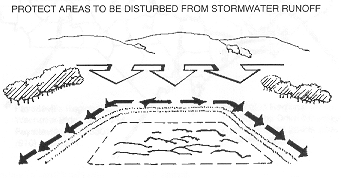
Figure 3. Use dikes, diversions, and waterways to intercept runoff and divert it away from cut-and-fill slopes or other disturbed areas. To reduce on-site erosion, install these measures before clearing and grading.
<NONE of these measures are in place.>
|
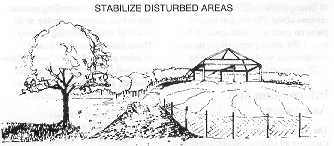
Figure 4. Apply stabilizing measures as soon as possible after the land is disturbed. Use temporary or permanent vegetation, mulches, or other protective practices.
<Some silt screens went in about 3 months AFTER the clearcutting. No other stabilizing measures are in place yet.>
|
|
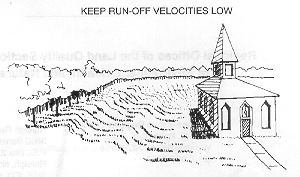
Figure 5. Use measures that break the slopes to reduce the problems associated with concentrated flow volumes and run-off velocities. Practical ways to reduce velocities include conveying storm water runoff away from steep slopes to stabilized outlets, preserving natural vegetation where possible, and mulching and vegetating exposed areas immediately after construction.
<Once again, none of these measures are in place.>
|
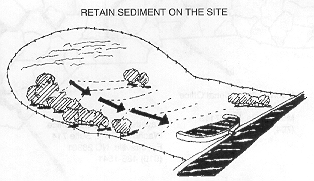
Figure 6. Even with careful planning some erosion is unavoidable. The resulting sediment must be trapped on the site. Protect areas below disturbed soils by building barriers to collect sediment. Whenever possible, plan and construct sediment traps and basins before other land-disturbing activities.
<There are no barriers, sediment traps or basins.>
|