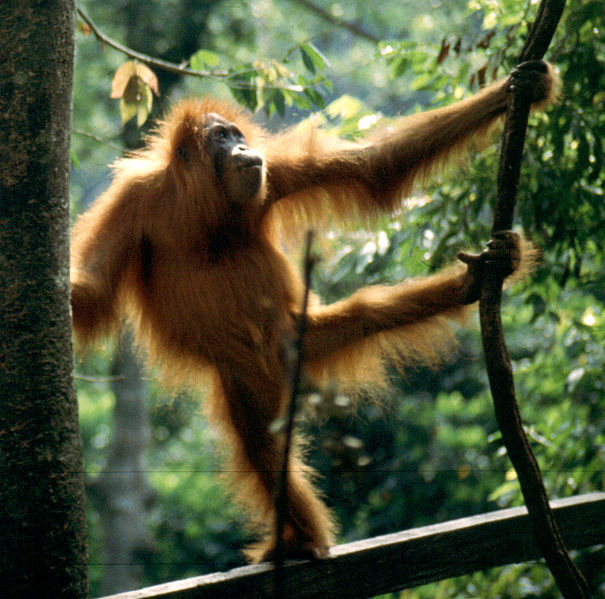
INDONESIA FLORA & FAUNA
"unique varieties of tropical plants, high level of biodiversity due to its vast-size and tropical archipelago make-up"
The flora of Indonesia consists of many unique varieties of tropical plants. Blessed with a tropical climate and around 18,000 islands, Indonesia is a nation with the second largest biodiversity in the world. The flora of Indonesia reflects an intermingling of Asian, Australian and the native species. This is due to the geography of Indonesia, located between two continents. The archipelago consists of a variety of regions from the tropical rain forests of the northern lowlands and the seasonal forests of the southern lowlands through the hill and mountain vegetation, to subalpine shrub vegetation. Having the second longest shoreline in the world, Indonesia also has many regions of swamps and coastal vegetation. Combined together, these all give rise to a huge vegetational biodiversity. There are about 28,000 species of flowering plants in Indonesia, consisting 2500 different kinds of orchids, 6000 traditional medicinal plants used as Jamu., 122 species of bamboo, over 350 species of rattan and 400 species of Dipterocarpus, including ebony, sandalwood and teakwood. Indonesia is also home to some unusual species such as carnivorous plants. One exceptional species is known as Rafflesia Arnoldi, named after Sir Thomas Stamford Raffles and Dr. Arnold, who discovered the flower in the depths of Bengkulu, southwest Sumatera. This parasitic plant has a large flower, does not produce leaves and grow on a certain liana on the rain forest floor. Another unusual plant is Amorphopallus titanium from Sumatra. Numerous species of insect trapping pitcher plants (Nephentes spp.) can also be found in Borneo, Sumatra, and other islands of the Indonesian archipelago.

Chat With Us
RAFFLESIA ARNOLDII
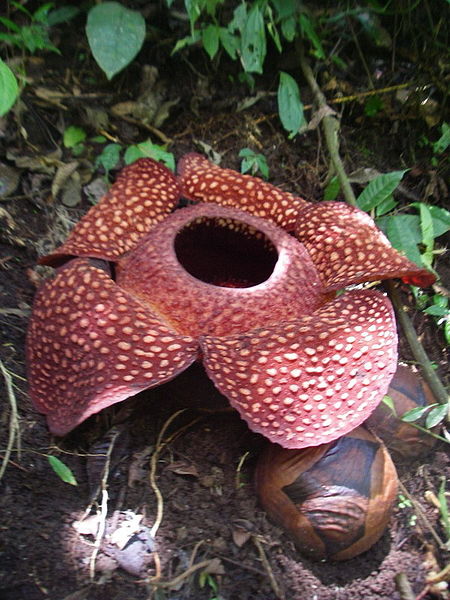
Rafflesia arnoldii is a member of the genus Rafflesia. It is noted for producing the largest individual flower on earth, and a strong odor of decaying flesh - the latter point earning it the nickname of "corpse flower". It is an endemic plant that occurs only in the rainforest of Bengkulu and Sumatra Island Indonesia. Although there are some plants with larger flowering organs like the Titan Arum, those are technically clusters of many flowers.
Rafflesia arnoldii (Indonesian: padma raksasa) is one of the three national flowers in Indonesia, the other two being the white jasmine and moon orchid. It was officially recognized as a national "rare flower" (Indonesian: puspa langka) in Presidential Decree No. 4 in 1993.
How many of these plants still survive is unknown, but as the remaining primary forests of Borneo and Sumatra disappear, it can be assumed that their numbers are dwindling. Many are known to be nearing extinction (citation needed). Some environmentalis are developing ways to recreate the species' environment in an effort to stimulate their recovery. This has proved unsuccessful so far. Steps are also being taken to conserve the forests of Sumatra and Borneo. To help counter the over-collection of this rare plant, residents that have Rafflesia on their private property are encouraged to save the flowers and charge a small fee to see them.
Chat With Us
JASMINUM SAMBAC
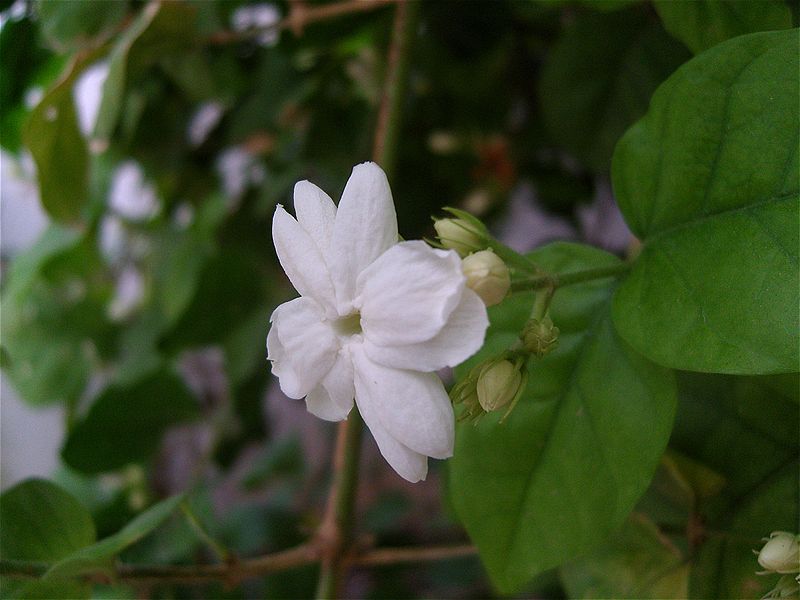
Jasminum sambac is a species of jasmine native to South and Southeast Asia. It is a small shrub or vine growing up to 0.5 to 3 m (1.6 to 9.8 ft) in height. It is widely cultivated for its attractive and sweetly fragrant flowers. The flowers are also used for perfumes and for making tea. It is known as the Arabian jasmine in English. It is the national flower of the Philipines, where it is known as Sampaguita. It is also one of the three national flowers of , where it is known as Melati Putih.
Jasminum sambac is classified under the genus Jasminum under the tribe Jasmineae. It belongs to the olive family Oleaceae.
Despite the English common name of "Arabian jasmine", Jasminum sambac is not originally native to Arabia. The habits of Jasminum sambac support a native habitat of humid tropical climates and not the arid climates of the Middle East. Early Chinese records of the plant points to the origin of Jasminum sambac as and Southeast Asia. Jasminum sambac (and nine other species of the genus) were spread into Arabia and Persia by man, where they were cultivated in gardens. From there, they were introduced to Europe where they were grown as ornamentals and were known under the common name "sambac" in the 18th century. A name which is derived from a misapplication of the Sanskrit name champaka, which refers to the fragrant flowered shrub Michelia champaca.
In 1753, Carl Linnaeus first described the plant as Nycthantes sambac in the first edition of his famous book Systema Naturae. In 1789, William Aiton reclassified the plant to the genus Jasminum. He also coined the common English name of "Arabian jasmine", cementing the misconception that it was Arabian in origin.
Chat With Us
MOON ORCHID (Phalaenopsis Amabilis)
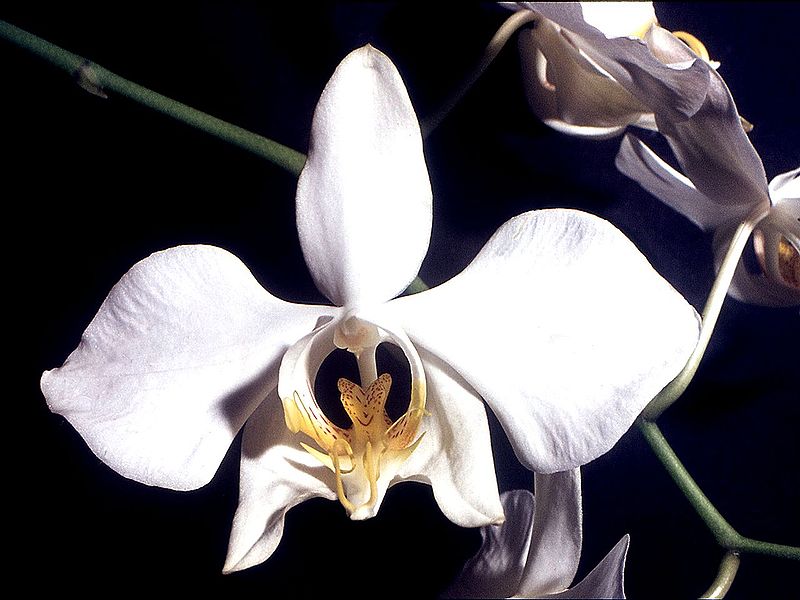
Phalaenopsis amabilis, commonly known as the Moon Orchid, is a species of orchid.
Plants of this genus have a uniform structure that makes the identification easy for novice botanists. Phalaenopsis amabilis, like most of the other species in this genus, has a short stem. This is believed to be an adaptation to gain the light requirements needed to grow, according to Christenson. The rooting of P. amabilis is usually unbranched. The only times it would be branched are if the roots are damaged or if the individual has gotten old in age. The leaves of P. amabilis vary from oblong to elliptic at the base and obtuse, minutely, at the tip or apex and measures at 50 × 10 cm. The moon orchid's flower is showy, membranous, white, the lip, (the unpared petals of an orchid) which is three-lobed, and the callus are a variety of yellow and red depending on the individual plant. It is able to bloom for a long period of time and can grow up to 10 cm in diameter and more.
Phalaenopsis amabilis reproduces sexually through pollination. This plant grows its flower to attract the pollinator. It is generally pollinated by large carpenter bees from the genus Xylcopa. For this particular species in the Phalaenopsis genus the pollination frequency and success rate is high (about 50%).
P. amabilis and the other species in the same genus grow naturally in three distinct habitats. The first is in seasonally dry areas, then seasonally cool areas and last constantly moist or humid areas (Christenson), developing adaptions for each habitat. For the seasonally dry habitats, Phalaenopsis species have an extreme adaptation in which it adopts deciduous habits, losing its leaves. They do this because in dry habitats, leaves are a serious liability when water isn't easily accessible. This adaptation typically occurs in species found outside the Himalayan region. For the habitats that are seasonally cool areas, the species found there are all deciduous or semi-deciduous in nature which means these plant have a strong dormant rest period. In this dormant period, the plants have protection from the cold due to the high carbon to nitrogen ratio and low water content on the leaf tissue. The constantly moist and humid habitats are the most common places that someone can find many of the Phalaenopsis species. In this habitat, the species grow in the canopy evergreen forests. Because they grow in the canopy, the species' adaptation is growing leathery leaves to prevent desiccation and so that the plants can tolerate higher light levels than other species.
According to Dressler, the plants of this family are thought to be closely related to plants that would have been classified in the Liliaceae or the Amaryllidaceae families. This is the largest flower in the genus. When it was discovered, the name it has now was misapplied because it was constantly mistaken for the P aphrodite so before it was called P. grandiflora.
Chat With Us