INDONESIA FLORA & FAUNA
"unique varieties of tropical plants, high level of biodiversity due to its vast-size and tropical archipelago make-up"
The fauna of Indonesia consists of a high level of biodiversity due to its vast-size and tropical archipelago make-up. Indonesia divides into two ecological regions; western Indonesia is more influenced by Asian fauna, and the east is more influenced by Australasian. The WallaceLine—in fact, more an area known as Wallacea—notionally divides these two regions. This unique blend of fauna in Indonesia is also affected by the diverse range of ecosystems, including beaches, sand dunes, estuaries, mangroves, coral reefs, sea grass beds, coastal mudflats, tidal flats, algal beds, and small island ecosystems.
Ecological issues have appeared in the nation due to the rapid industrialisation process and high population growth, resulting in lower priority level to preserve the ecosystems. The situation has worsened by illegal logging activity, in which resulting deforestation; while other problems, including high level of urbanisation, air pollution, garbage management and waste water services also contributing to the forest deterioration.
Although 45% of Indonesian region is still inhabited and covered by tropical forests, high growth of Indonesian population, with its industrialisation, has slowly affected the existence of fauna in Indonesia. Moreover, wildlife trade has also worsened the condition of Indonesia's charismatic fauna, including rhinoceros, orangutans, tigers, and certain species of. Up to 95% of animals sold in markets are taken directly from the wild, rather than from captive breeding stock; and more than 20% of the animals died in transportation. As of 2003, The World Conservation Union lists as endangered 147 mammals, 114 birds, 91 fish and 2 invertebrate species.
Some of the richest habitats have been protected since the early 20th century under Dutch Colonial law. Indonesia's first national parks have been established in 1980, and the network has been rapidly growing since, reaching a total of 50 declared national parks in 2009. Six of these are also World Heritage Site and 3 are wetlands of international importance under the Ramsar Convention.
"SAVE INDONESIA ENDANGERED ANIMAL RIGTH NOW!!!"
Chat With Us
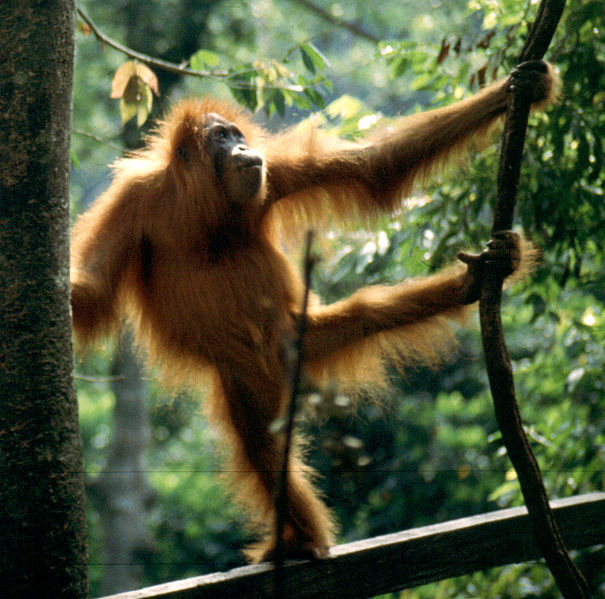
SUMATRAN ORANGUTAN (PONGO ABELII)
The Sumatran orangutan is endemic to Sumatra island and is particularly restricted to the north of the island. In the wild, Sumatran orangutans survive in the province of Nanggroe Aceh Darussalam (NAD), the northernmost tip of Sumatra. The primate was once more widespread, as they were found more to the south in the 19th century such as in Jambi and Padang. There are small populations in the North Sumatra province along the border with NAD, particularly in the Lake Toba forests. A survey in the Lake Toba region found only two inhabited areas, Bukit Lawang (defined as the animalsanctuary) and Gunung Leuser National Park. The species has been assessed as critically endangered on the IUCN Red List since 2000. It is considered one of "The World's 25 Most EndangeredPrimates."
A survey in 2004 estimated that around 7,300 Sumatran orangutans still live in the wild. Some of them are being protected in five areas in Gunung Leuser National Park; others live in unprotected areas: northwest and northeast Aceh block, West Batang Toru river, East Sarulla and Sidiangkat. A successful breeding program has been established in Bukit Tiga Puluh National Park in Jambi and Riau provinces.
Nonja, thought to be the world's oldest in captivity or the wild at the time of her death, died at the Miami MetroZoo at the age of 55.
"SAVE INDONESIA ENDANGERED ANIMAL RIGTH NOW!!!"
Chat With Us
SIAU ISLAND TARSIER (TARSIUS TUMPARA)
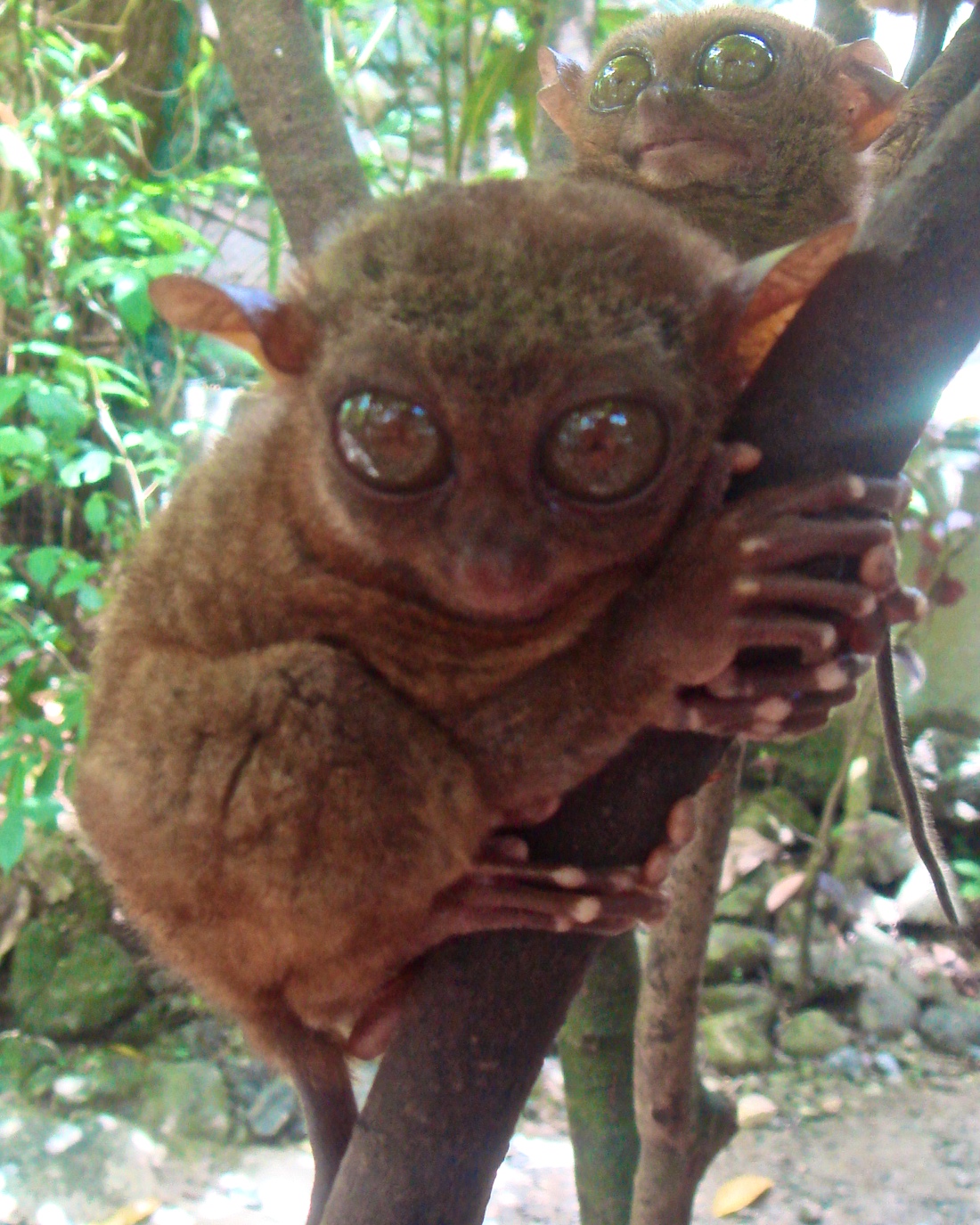
Siau Island tarsier (Tarsius tumpara) is a species of tarsier from the tiny volcanic island of Siau.
Its existence as a distinct taxon was predicted by the hybrid biogeographic hypothesis for Sulawesi. The rationale was that a geographic discontinuity existed between the northern tip of Sulawesi, and the population of tarsiers on Sangihe Islands (TarsiusSangirensis), approximately 200 kilometres (120 mi) to the north. In between, lay very deep oceans and three island clusters, Biaro, /Ruang, and Siau. Like Sangihe Island, itself, each of these three island clusters are a part of the Sangihe Island volcanic arc. Volcanic arcs, like the Galapagos and Hawaiian Island chains, feature islands that erupt from the ocean floor. In such circumstances, islands form independently, are colonized independently, and remain geographically isolated. These characteristics lead to high levels of endemism. The presence of tarsiers on the most distant island group in the Sangihe volcanic arc (i.e. Sangihe island), led to curiosity about the presence of tarsiers on the other islands in the chain. Each of the three island clusters mentioned above were surveyed for the presence of tarsiers in 2004 and 2005, but tarsiers were only observed on Siau.
It was furthermore elaborated upon that the original description of T. sangirensis included mention of a specimen from Siau in the Dresden Museum. Thus it was argued for further investigations of the Siau tarsier to see if it was taxonomically separable from T. sangirensis.
The Sangihe Islands are infamous for their critically endangered avifauna, and concerns about the conservation status of T. tumpara grew before its formal description.
Tarsius tumpara was selected for the list of "The World's 25 Most Endangered Primates" by the IUCN Species Survival Commission, Primate Specialist Group.
"SAVE INDONESIA ENDANGERED ANIMAL RIGTH NOW!!!"
Chat With Us
THE JAVAN SLOW LORIS
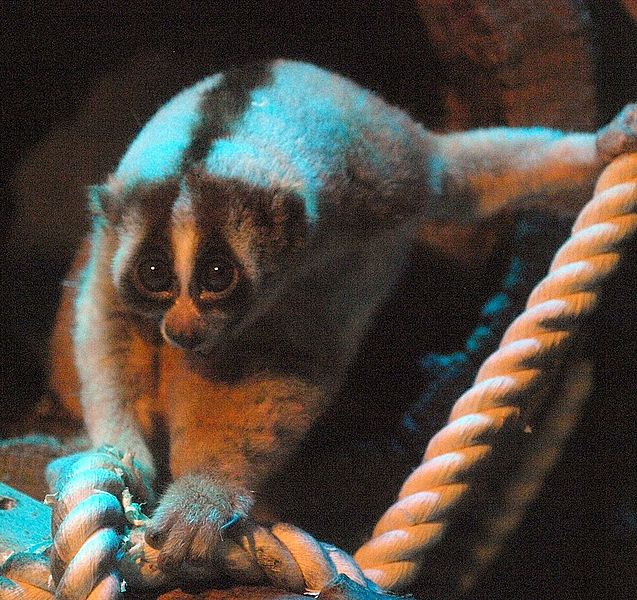
The Javan slow loris (Nycticebus javanicus) is a strepshirrine primate and a species of slow loris native to the western and central portions of the island of Java, in Indonesia. Although originally described as a separate species, it was considered a subspecies of the Sunda slow loris (N. coucang) for many years, until re-assessments of its morphology and genetics in the 2000s resulted in its promotion to full species status. It is most closely related to the Sunda slow loris and the Bengal slow loris (N. bengalensis). The species has two forms, based on hair length and, to a lesser extent, coloration.
Its forehead has a prominent white diamond pattern, which is formed by a distinct stripe that runs over its head and forks towards the eyes and ears. The Javan slow loris weighs between 565 and 687 g (1.25 and 1.51 lb) and has a head-body length of about 293 mm (11.5 in). Like all lorises it is arboreal, and moves slowly across vines and lianas instead of jumping from tree to tree. Its habitat includes primary and secondaryforests, but it can also be found in bamboo forests, mangrove forests, and on chocolate plantations. Its diet typically consists of fruit, tree gum, lizards and eggs. It sleeps on exposed branches, sometimes in groups, and is usually seen alone or in pairs.
The Javan slow loris population is in sharp decline because of poaching for the trade. It is also used in research associated with traditional medicine. Remaining populations have low densities, and habitat loss is a major threat. For these reasons the International Union for Conversion of Nature (IUCN) lists its status as "endangered", and it is also been included on the 2008–2010 list of "The World's 25 Most Endangered Primates". It is protected by Indonesian law and, since June 2007, is listed under CITES Appendix 1. Despite these protections, as well as its presence in several protected areas, poaching continues; the wildlife protection laws are rarely enforced at the local level.
"SAVE INDONESIA ENDANGERED ANIMAL RIGTH NOW!!!"
Chat With Us