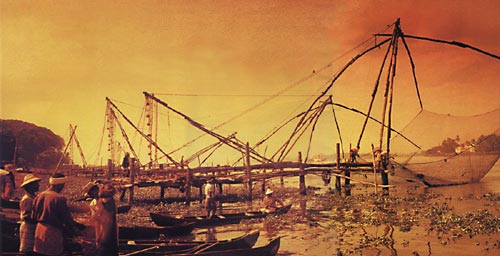
Kerala, land of the coconut tree, is another India entirely. Kerala is a lush, green, somnolent, watery state down on the south-western coast, which is where those who were grabbed by the rich and dusty extravaganza that is Rajasthan go for their next "India" fix. It appeals to those looking for places which chic little boutiques and five-star hotels haven't yet reached but which nevertheless has more than enough to seduce and attract. It is sufficiently off the beaten track to satisfy those who would like a little (just a teeny, teeny bit - if they're being honest) discomfort to give them that warm glow of having being adventurous, of having ventured into "real" India. Kerala still has that faintly shabby, faded air which I find so seductive - it's India before the style gurus have turned it into a model of contemporary chic. It's a more innocent India where an avocado bathroom suite is still the last word in interior design and G&T is the drink to have as you sit on the the veranda, the creaking doors to your room swaying in the breeze, and watch the sun set over some of the most beautiful waterways in the world. It's a green Venice, but unlike Venice, where man has created most of the glory, in Kerala nature rules. It's an India where you still have an almost tangible sense that little has changed since the time of Raj, where the ghosts still echo around the decaying churches and graveyards and where, apart from the bustling ports, there seems scarcely any industry, few commercial establishments - little, in fact, but dreamy lagoons, curving waterways, damp paddy - fields, swaying greenery and singularly beautiful people. But above all, it is the heat that is different. The heat of Rajasthan is dry and catches the back of the throat, but down in Kerala it hangs humid and sultry in the air. It's wher the south-west monsoon starts its hectic journey,drenching the state as it sweeps cast (unless you have a taste for exciting meteorology, plan your visit between October and March). And Kerala, above all, is the home of spices. Spices brought it its prosperity, spices make it the fulcrum of trading routes of a myriad nations, and today, as soon as the visitor heads inland, the air is heady with the scents of cloves and peppers, ginger and tamarind, cinnamon and nutmeg. Can there be a more romantic name in the world than the Cardamom Hills? |

|
National Geographic Traveler |
October 1999
April 2001
March 2002
London January 2001
February 2002
April 2000