
Solar energy is energy from the Sun. This energy drives climate and the weather supports virtually all life on Earth. Heat and light from the sun, along with solar-based resources such as wind and wave power, hydroelectricity and biomass, account for over 99.9 percent of the available flow of renewable energy.
Solar energy technologies harness the sun's energy for practical ends. These technologies date from the time of the early Greeks, Indian, Native Americans and Chinese, who warmed their buildings by orienting them toward the sun. Modern solar technologies provide heating, lighting, electricity and even flight.
Solar power is used synonymously with solar energy or more specifically to refer to the conversion of sunlight into electricity. This can be done either through the photovoltaic effect or by heating a transfer fluid to produce steam to run a generator.
Solar technologies range from traditional methods related to food, heat and light to large-scale electrical generation systems.
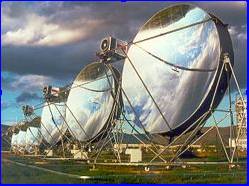
Solar thermal
Solar thermal applications make up the most widely used category of solar energy technology. These technologies use heat from the sun for water and space heating, ventilation, industrial process heat, cooking, water distillation and disinfection, and many other applications.
Solar power
Solar power plants use a variety of methods to collect sunlight and convert this energy into electricity. Traditionally, concentrating solar thermal power plants have been the most common type; however, multi-megawatt photovoltaic sites are seeing more-rapid deployment. Experimental solar power plants also have been built using technologies other than concentrating solar or photovoltaics, but no recent breakthroughs have been reported.
GO TO----- Home Hydro Wind Biomass Geothermal Solar

