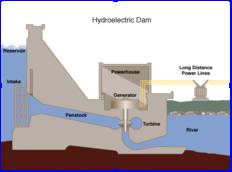
Most hydroelectric power comes from the potential energy of dammed water driving a water turbine and generator. In this case the energy extracted from the water depends on the volume and on the difference in height between the source and the water's outflow. This height difference is called the head. The amount of potential energy in water is proportional to the head. To obtain very high head, water for a hydraulic turbine may be run through a large pipe called a penstock.
Economics
The major advantage of hydroelectricity is elimination of the cost of fuel. The cost of operating a hydroelectric plant is nearly immune to increases in the cost of fossil fuels such as oil, natural gas or coal. Fuel is not required and so it need not be imported. Hydroelectric plants tend to have longer economic lives than fuel-fired generation, with some plants now in service having been built 50 to 100 years ago. Operating labor cost is usually low since plants are automated and have few personnel on site during normal operation.
Where a dam serves multiple purposes, a hydroelectric plant may be added with relatively low construction cost, providing a useful revenue stream to offset the costs of dam operation. It has been calculated that the sale of electricity from the Three Gorges Dam will cover the construction costs after 5 to 8 years of full generation.
GO TO----- Home Hydro Wind Biomass Geothermal Solar

