|
| |
|
Sumatra |
|
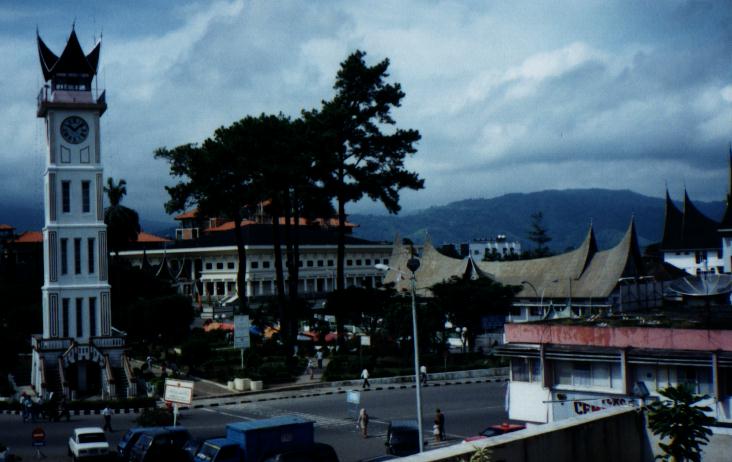
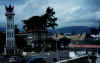
Bukittinggi
Small township in the mountainous area of central Sumatra. Famous
for the curved roofs of its buildings representing the horns of a
bull. In fact the ethnic group of people of this region call
themselves Minang Kerbau (or winning bull) based on an old legend. |
|
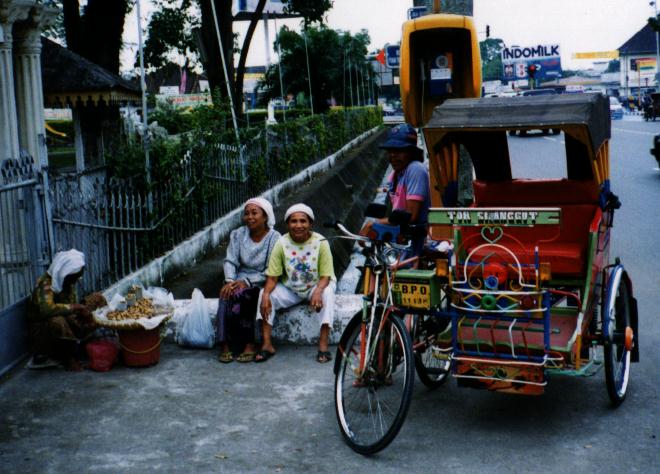
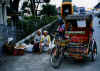
Medan
A Becak (or Trishaw) driver stops for a yawn, to the left an old
woman sells boiled peanuts. |
|
Kalimantan |
|
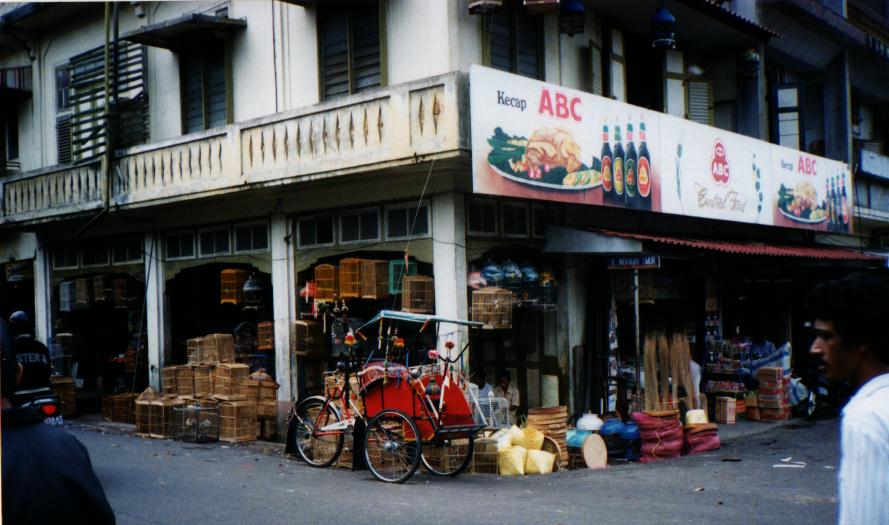
Pontianak
A small bird shop. |
|
Sulawesi
|
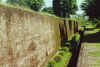 |
Makassar
Formerly named Ujung Pangang by the Dutch it provided a gateway to
eastern Indonesia for centuries. From Makassar, the Dutch controlled
much of the shipping that passed between the western and eastern
Indonesia, and today, the city is still a thriving port.
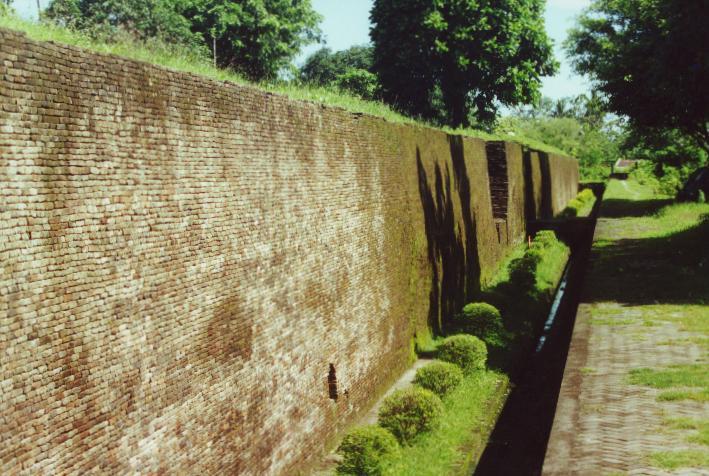
To the left, the remains of a Dutch fort common throughout Indonesia.
The Dutch destroyed practically all their forts as they retreated from the
Japanese (and Indonesian allied rebels) during the second world war. |
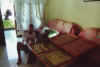 |
Dodo's Pen Collection?
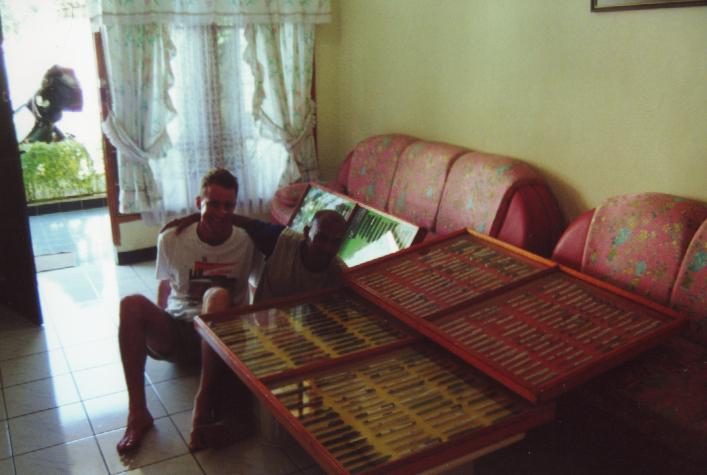
Dodo guided John and I around Makassar and the surrounding area.
Pictured here is Dodo and his proud collection of pens.
Mursalim ("Dodo"): 0411 - 863941/443534
|
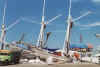 |
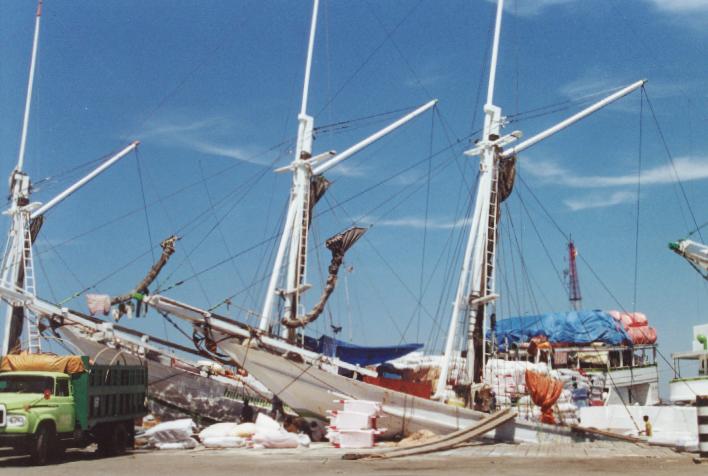
Pelabuhan Paotere (Paotere Harbour),
Makassar
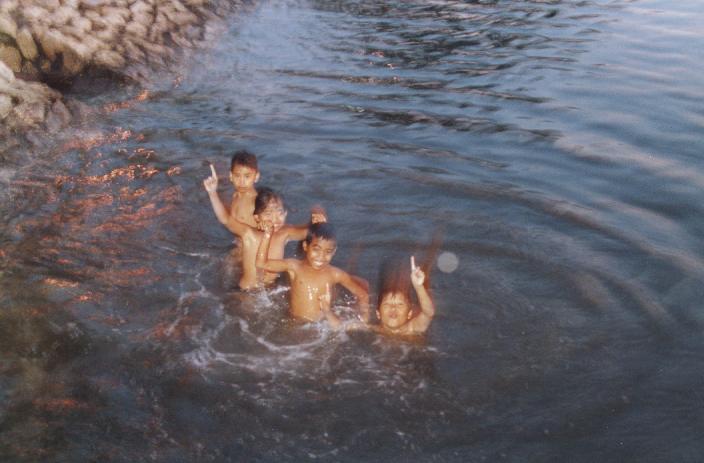
Bugis sailing ships. Many employing children to load/unload
cargo.
|
 |
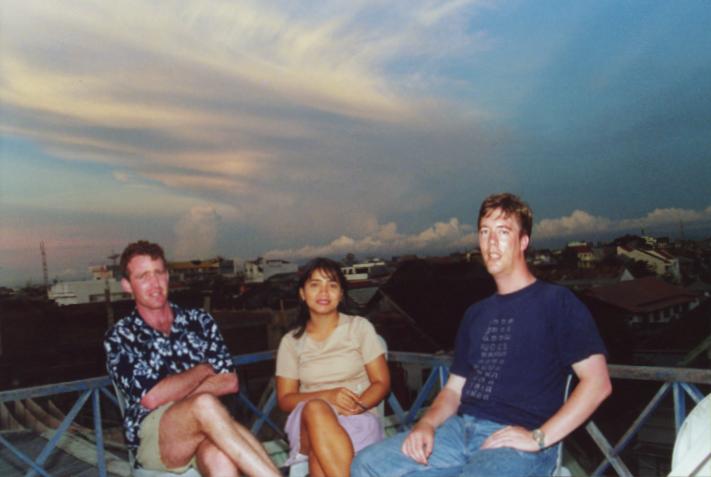
Relaxing in Makassar
John, Sri & I enjoying the sunset on the roof of the Legend Hotel
(Jalan Jampea No.5G, 0411-328203/328204/326486).
|
 |
Rantepao
Rantepao is the largest town and commercial centre of Tana Toraja, and
the main travelers' centre on Sulawesi. The Tana Toraja region is
famed for its unspoilt areas of traditional villages, unique architecture
and fascinating cultures (see below).
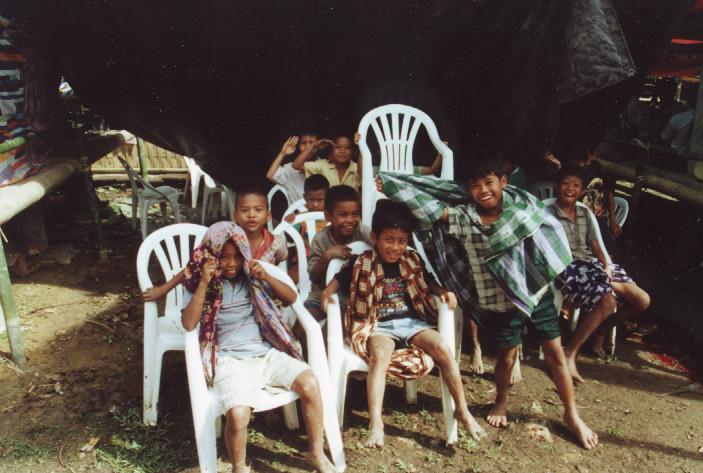
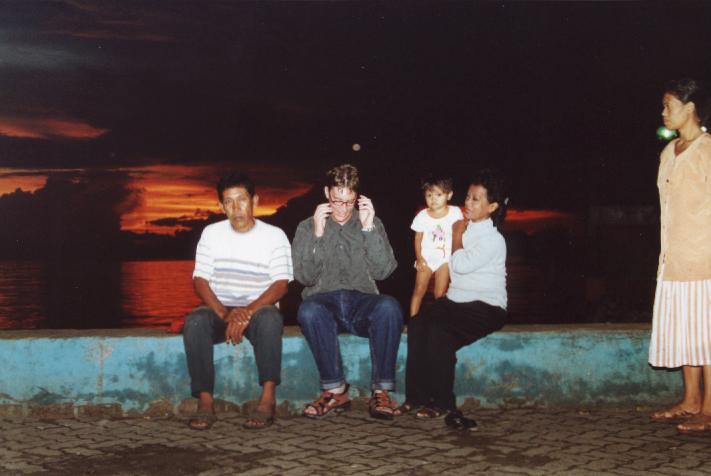
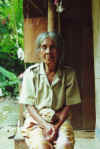
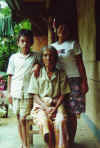
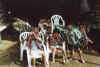
The people shown to the left offered by friend, John, shelter when the
heavens opened up during a walk. |
 |
 |
 |
Funerals in Tana Toraja
(Central Sulawesi)
Tomate (funeral) literally means 'dead person', and of all Torajan
ceremonies the most important are those concerned with sending a dead
person to the afterworld. Without proper funeral rites the spirit of
the deceased will cause misfortune to its family. The funeral
sacrifices, ceremonies and feasts also impress the gods with the
importance of the deceased, so that the spirit can intercede effectively
on behalf of living relatives. Funerals are sometimes held at the
rante, funeral sites marked by one or more megaliths. In Tana
Toraja, there are several arcs or groups of roughly hewn stone slabs
around villages, and each stone possibly represents a member of the noble
class who lived and died there. Some are as high as 4m, symbolising
the importance of the deceased. The efforts to raise even one stone
involves scores of men dragging the stone to the designated place with
ropes, and a sacrificial slaughter to celebrate the new megalith - part of
the complex funeral preparations for nobles.
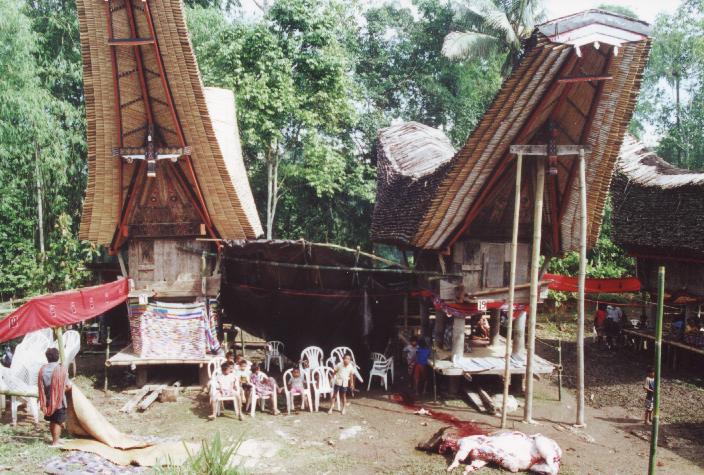
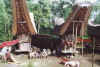
At a funeral, bamboo pavilions for the family and guests are
constructed around a field. The dead person 'presides' over the
funeral from the high-roofed tower constructed at one end of the field.
The Toraja generally have two funerals, one immediately after a death and
an elaborate second funeral after preparations (ie raise the necessary
cash, obtain livestock, gather relatives from afar and so on). For
this reason tomate are usually scheduled during the dry season from July
to September, when family members have free time.
The corpse remains in the house where the person died. These days,
it's preserved by injection instead of traditional embalming herbs.
Food is cooked and offered to the dead person; those of noble birth have
attendants who stay in their immediate presence from the hour of death to
the day of their final progress to the tomb. An invitation to visit
the deceased is an honour (but a polite refusal won't cause offence).
If you accept, however, remember to thank the deceased and ask permission
of the deceased when you wish to leave - as you would a living host.
You won't be expected to pray, but might be invited to take photos, an
indication that the deceased is still an important part of the family.
The souls of the dead can only go to puya, the afterworld, when the
entire death ritual has been carried out. A spirit's status in the afterlife
is the same as its owner's status in the present life: even the souls of
animals follow their masters to the next life - hence the animal
s-ac@fices at funerals. They believe the soul of the deceased will ride
the souls of the slaughtered buffaloes and pigs to heaven. The trip
to puya requires a strong buffalo, because the long and difficult journey
involves crossing hundreds of mountains and thousands of valleys.
Sons and daughters of the deceased have an equal chance to inherit
their parents' property, but their share depends on the number of
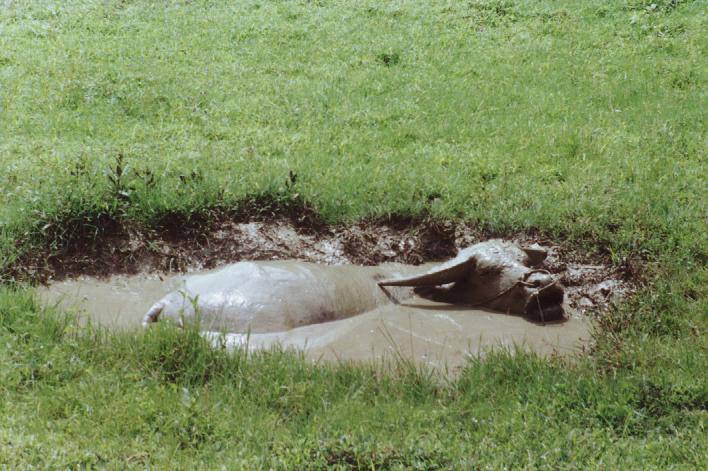
buffaloes they slaughter at the funeral feast. The buffalo has
traditionally been a symbol of wealth and power - even land could be paid
for in buffaloes. The more important the deceased, the more
buffaloes must, be sacrificed: one for a commoner, four, eight, 12 or 24 as
you move up the social scale. The age and status of the deceased
determines the number of animals slaughtered. Large ceremonies,
where more than 100 buffaloes are slaughtered, are spoken of with awe for-
years afterwards. The type of buffalo is also significant - the most
prized is the tedong bonga (spotted buffalo), which may cost many millions
Of rupiah per head.
The temptation to sacrifice dozens of buffaloes to honour the dead: and
impress the living prompted the Indonesian government to levy a tax on
each slaughtered animal to limit the destruction of wealthy.
However, funeral ceremonies have lost none of their ostentation and are
still a ruinous financial burden on families. Some now refuse to
hold tomate, despite their social obligation to do so.
Visitors with strong stomachs can see freshly killed pigs roasted on
open fires to scorch the skin before the pig is gutted and the mea, mixed
with piles of vegetables and stuffed into bamboo tubes. The bamboo tubes
are cooked slowly over low flames to produce tasty pa piong (see Food
later in this section). Cuts of buffalo meat are also distributed -
the funeral season is the only time of year families are guaranteed
regular supplies of meat.
Funerals can be spread out over several days and involve hundreds of
guests (and many tourists). The wooden effigies, known as tau tau
(see Graves & Tau Tau later in this section), can cost nearly a years
wages for many Indonesians. Bamboo pavilions are constructed
specially for the occasion, with a death tower at one end.
After the guests display their presents of pigs and buffaloes, the
traditional mabadong song and dance is performed. This is a
ceremonial re-enactment of the cycle of human life and the life story of
the deceased. it's a slow-moving circular dance performed by men in black
sarongs, who stand shoulder to shoulder and chant for hours. It also
bids farewell to the soul of the deceased, and relays the hope that the
soul will arrive in the afterworld safely.
Ceremonies may include buffalo fighting, in which the bulls, agitated
by the insertion of chilli up their behinds, lock horns and strain against
each other. The winner is the one which makes its opponent slide
backwards. The crowd urges them on with frenzied whoops and yells,
but is ready to scatter in case one breaks loose and charges in panic (so
don't get too close to the action!). You might also see sisemba (see
Traditional Sports earlier in this section), and maybe cockfights at the
end of the ceremony.
As well as the mabadong, orchestras of school children often play
painted bamboo wind instruments. The programme might also include
dances like the maranding, a war dance performed at the burial service of
a patriotic nobleman to remind the people of his heroic deeds, or the
makatia, which reminds the people of the deceased's generosity and
loyalty. Songs may also be sung to console the bereaved family, or
convey their grief to the other guests at the funeral. |
 |
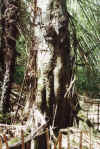 |
The Baby Graves
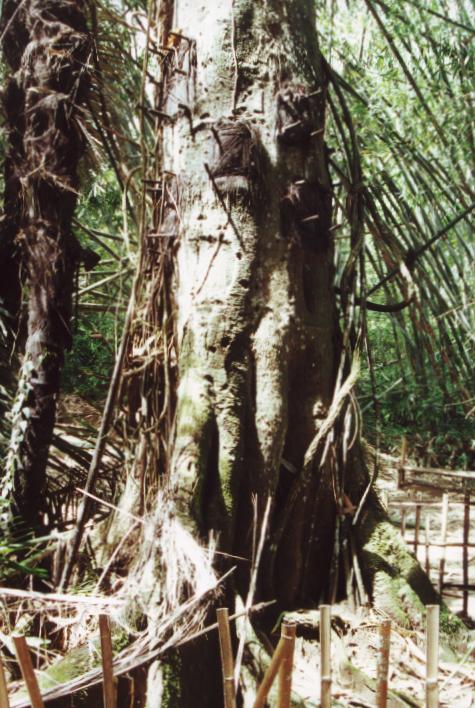
Some babies that have died during child-birth or at a young age are
buried here. Small compartments are carved into the tree, the baby
placed inside and covered. Over time the tree closes the
compartments entombing the baby. Only this particular type of tree
is used because its sap appears similar to mothers milk.
|
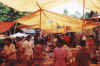 |
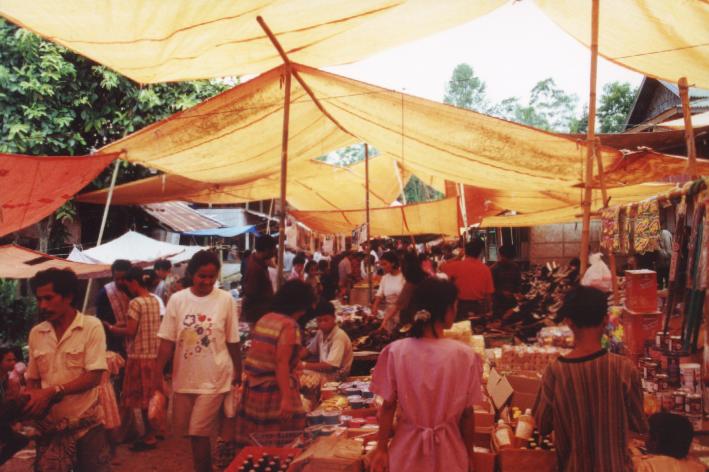
Market Day
You name it... ...it is here.
|
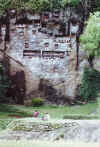 |
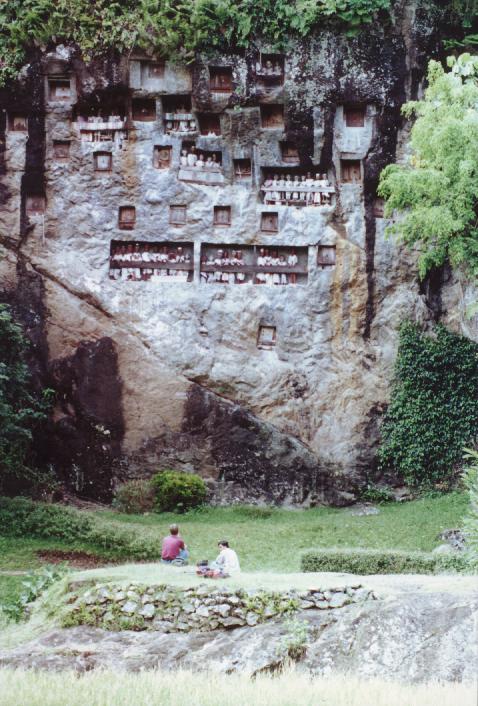
The Graves of Lemo
According to local legend, these graves are for descendants of a Toraja
chief who reigned over the surrounding district hundreds of years ago and
built his house on top of the cliff into which the graves are now cut.
Because the mountain was part of his property, only his descendants could
use it. The chief himself was buried elsewhere because the art of
cutting grave caves had not yet been developed.
|
 |
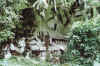 |
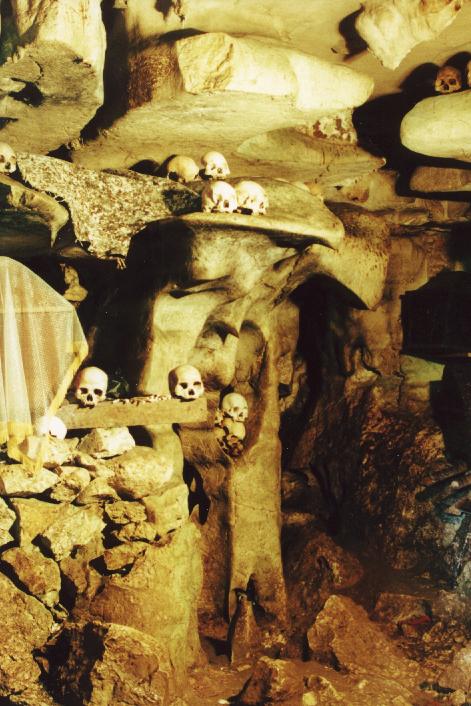
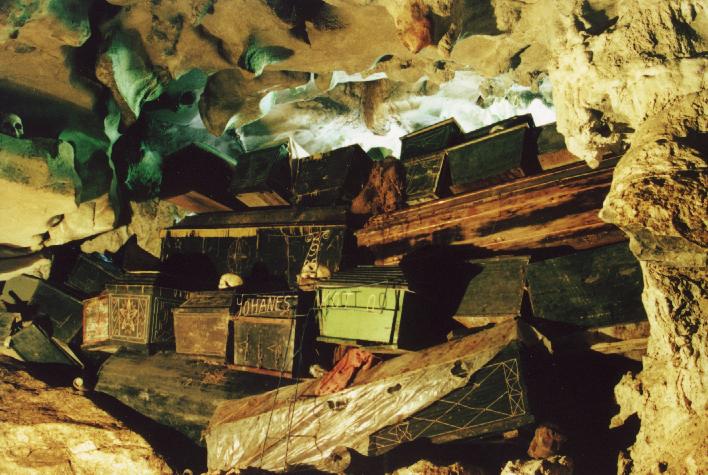
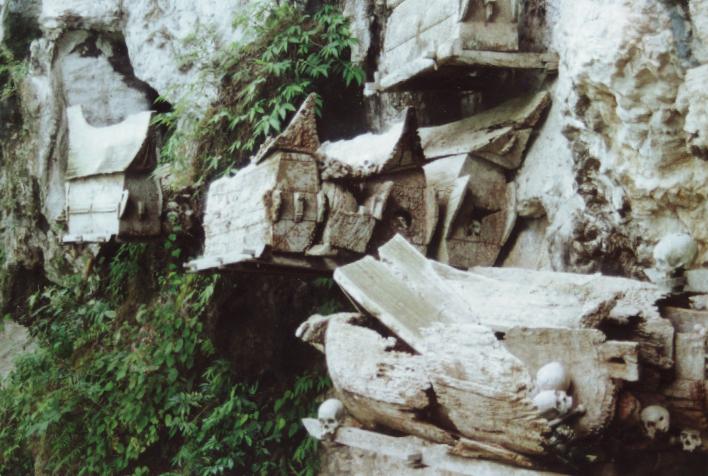
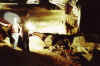
The Londa Burial Caves (6km
south of Rantepao)
The Toraja believe that
you can take possessions with you in the afterlife, and the dead generally
go well equipped to their graves. Since this led to grave
plundering, the Toraja started to hide their dead in caves or hew niches
out of rock faces.
These caves were hollowed
out by specialist cave builders who were traditionally paid in buffaloes,
and since the building of a cave would cost several buffaloes, only the
rich could afford it. Although the exterior of the cave grave looks
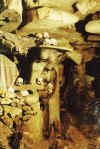
small, the interior is large enough to entomb an entire family. The
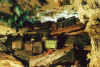
coffins go deep inside the caves, and sitting in balconies on the rock
face in front of the caves are the tau tau - life-size, carved wooden
effigies of the dead.
Tau tau are carved only
for the upper classes; their expense alone rules out their use for poor
people. Traditionally, the statues only showed the gender of the
person, not the likeness, but now they attempt to imitate the likeness of
the person's face. The making of tau tau appears to have been a
recent innovation, possibly originating in the late 19th century.
The type of wood used reflects the status and wealth of the deceased;
nangka (jackfruit) wood is the most expensive. After the deceased
has been entombed and the tau tau placed in front of the grave, offerings
are placed in the palm of the tau tau. You can see the carvers at
work at Londa.
If there are no rocky
outcrops or cliff faces to carve a niche in, wooden house graves are
created, in which the coffin is placed. Most of the hanging graves,
where the wooden coffins are hung from high cliffs, have rotted away.
Sometimes the coffins may be placed at the foot of a mountain.
Babies who have died before teething are placed in hollowed-out sections
of living trees. Examples of these graves can be seen at Pana.
Most tau tau seem to be in
a permanent state of disrepair, but in a ceremony after harvest time the
bodies are re-wrapped in new material and the clothes of the tau tau
replaced. Occasionally left lying around the more obscure cave
graves is a duba-duba, a platform in the shape of a traditional house
which is used to carry the coffin and body of a nobleman to the grave.
There are many tau tau at
Lemo and a few elsewhere, but it's becoming increasingly difficult to see
tau tau in Tana Toraia. So many have been stolen that the Toraja now
keep many of them in their own homes. |
 |
 |
 |
 |
 |
 |
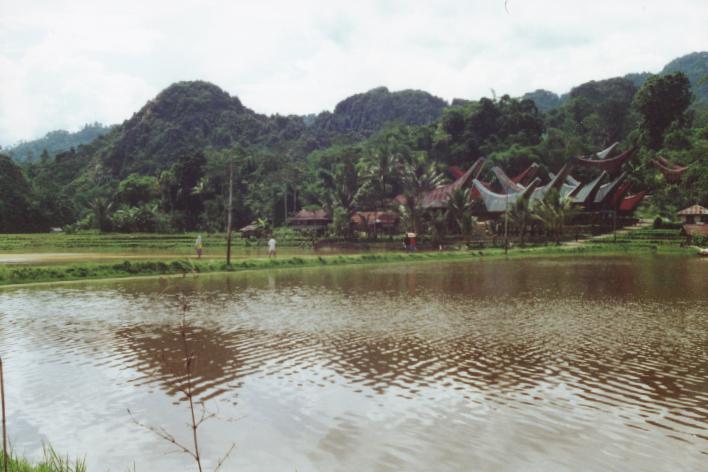
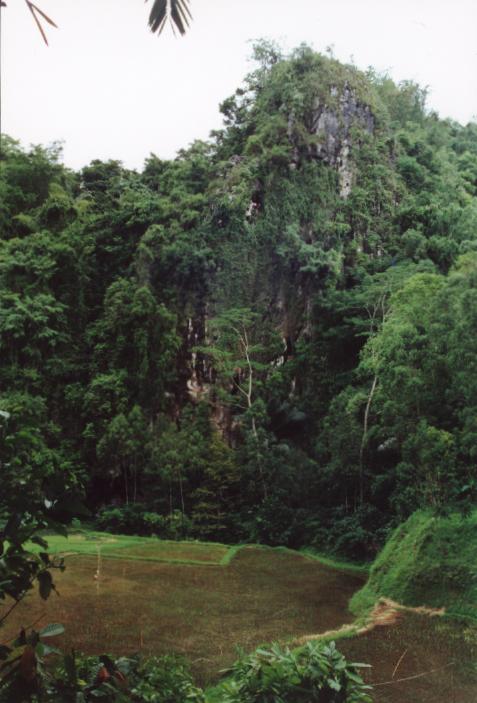
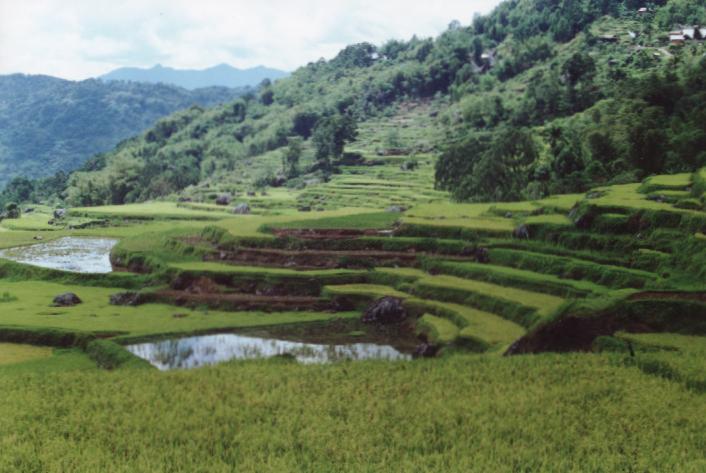
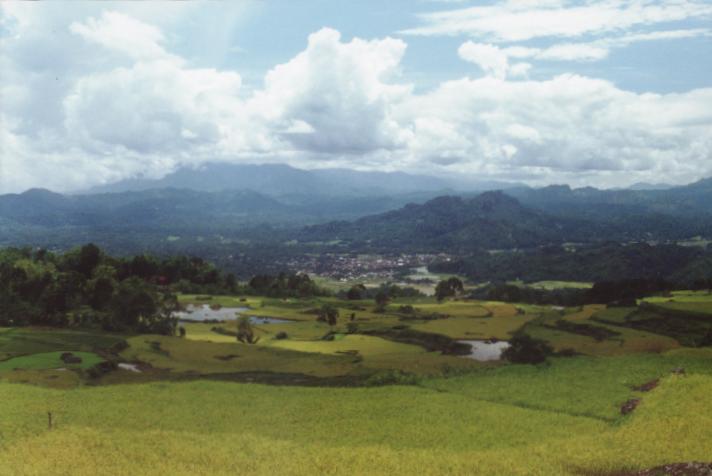
Easy-going Rantepao
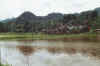
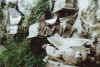
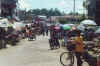
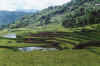
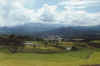
Some sites in and around Rantepao... ...a produce market and
surround padi fields.
|
 |
 |
 |
Manado
North Sulawesi is the most developed region on the island, and probably
the most egalitarian in Indonesia; its people have a long history of trade
and contact with the outside world. With the Sangir-Talaud island
group, North Sulawesi forms a natural bridge to the Philippines, providing
a causeway for the movement of peoples and cultures, and as@& result
the language and physical features related to the Philippines can be found
amor4 the Minahasans.
The three largest distinct groups in the province ire the Minahasans, (Gorontalese
and Sangirese, but there are many more dialects and subgroups. The
kingdoms of Bolaang Mongondow, sandwiched between Minahasa and Gorontalo
were important political players too.
The Dutch have had a more enduring influence on this isolated northern
peninsula than in the archipelago. Dutch is still spoken among the
older generation, well-to-do families often send their children to study
in the Netherlands.
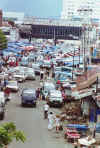
To the left is a picture of the a mini-bus station. Manado has one
serious rubbish problem... ...both downtown and the market places
are filthy and smelly. |
 |
The Boat to Pulau Bunaken
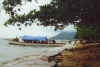
Palau Bunaken (Bunaken Island) is North West of Manado in Northern
Sulawesi. Due to the lack of facilities on the island the diving
resorts (collection of bungalows) offer full board and lodging.
Picture is the suicide boat that ferries the locals and budget travelers
between the island and the mainland. Safety was not an option.
|
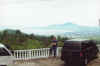 |
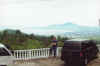
Lookout over Manado |
 |
Tomohon
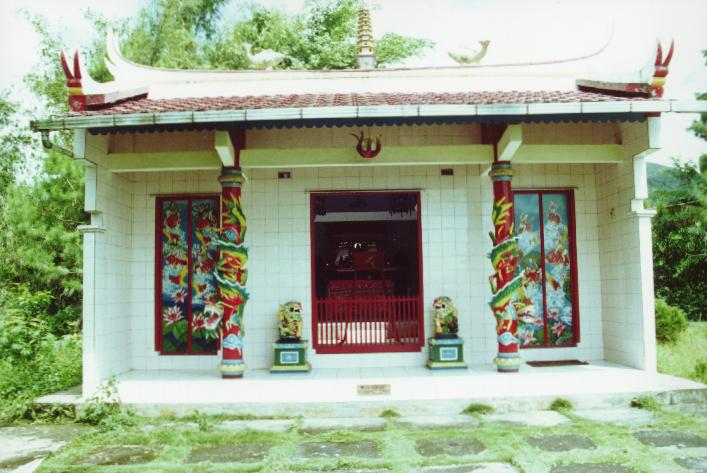
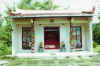
For an anti-Chinese country Buddhist temple are fairly rare. This
one is located in Tomohon, not far from Manado. Tomohon is just a small
town sitting on the door step of one big-ass active volcano called Gunung
Lokon.
|
 |
Kawangkoan
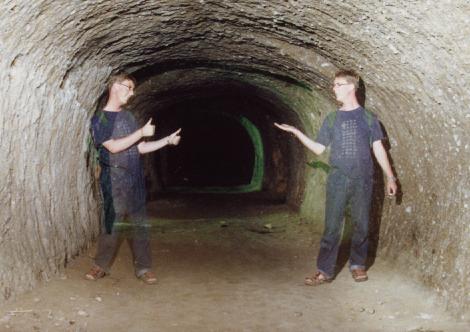
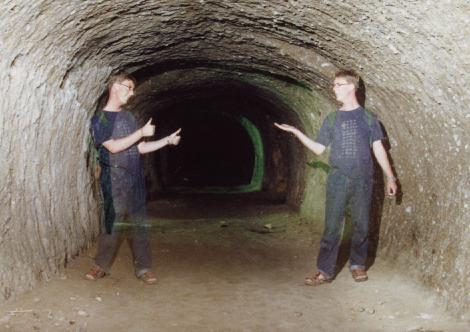
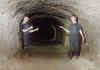
During WWII, the Japanese dug these caves into the hills surrounding
Manado to act as air-raid shelters, and as storage space for ammunition,
for, weapons and medical supplies.
|
 |
Small Fishing Village |
 |
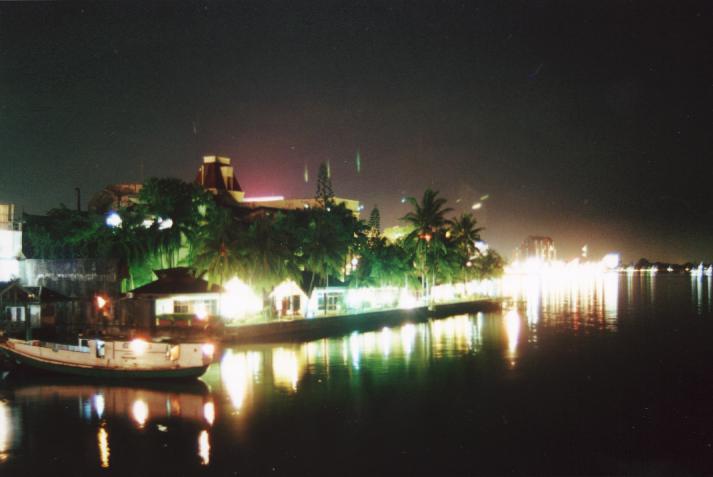
Makassar Esplanade
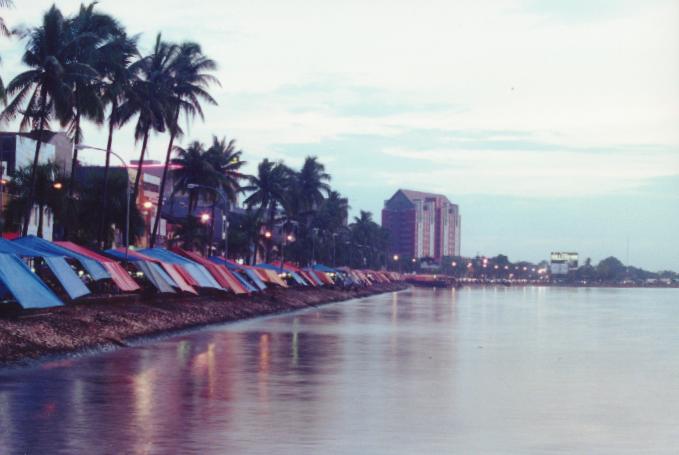
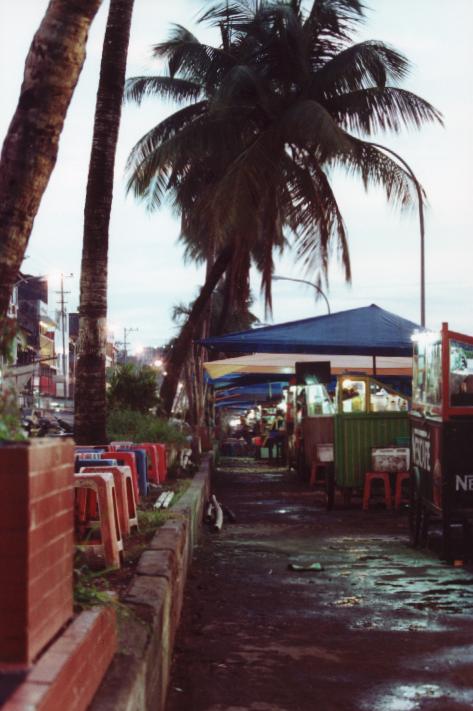
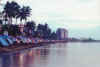
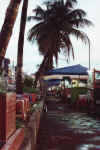
Along the coast adjoining Makassar township is a stretch of road lined
hundreds of warungs (street stalls). The warungs sold
everything... ...from fruit juice and hot drinks to
noodles and fried bananas.
Many people migrate here in the evenings to meet friends and watch the
sunset. |
 |
 |
 |
 |
 |
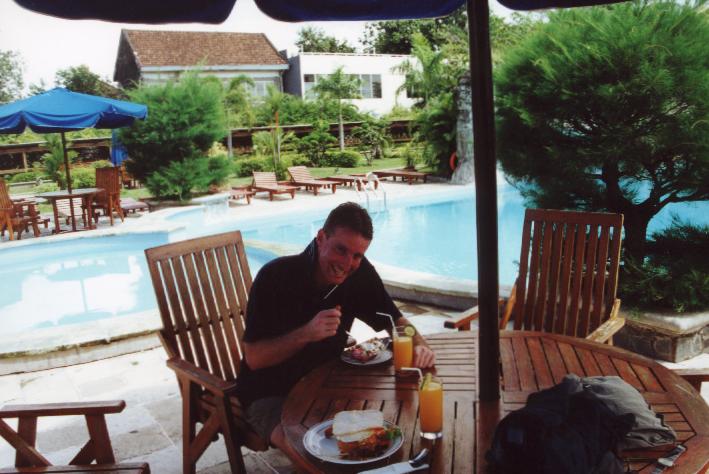
Luxury!
For the final day of out "Sulawesi Experience" John and I
checked into a resort hotel called "Hotel Pantai Gapura"
(US$20/night).
|
Sign
My Guest Book View
My Guest Book

This page was last updated on 17 February 2001.

|