|
| |
|
Brunei Darussalam |
 |
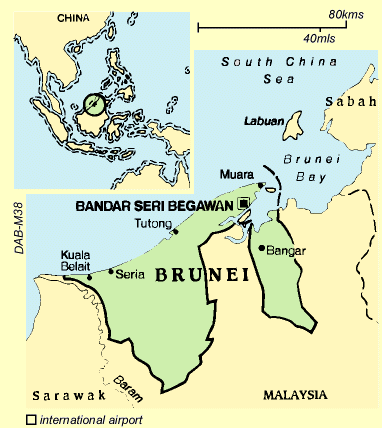
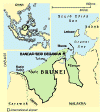
Brunei is a tiny Islamic sultanate
lying in the north-eastern corner of Sarawak, Borneo. If falls into
that category of small states, remnants of empires, colonies and quirks of
history that seem to captivate the imagination.
It is neither traditional nor romantic exoticism that makes this
country fascination - it is the astounding wealth. The population,
estimated to be around 300,000, is the second wealthiest per capita on
earth. Fortune magazine has estimated (pre-Asian crisis) that
the Sultan's personal fortune is worth a shade over US$37 billion - making
him one of the richest people in the world.
The enormous wealth is displayed in various ways, excessive public
buildings, haunting Mosques and the international airport more suitable
for a country 10 times the size. The Sultan's personal spending is
also legendary with an obsession with Italian sports cars (my friend once
stumbled across 10 Lamborghini's each individually coloured) and
polo. The Sultan and his extended family enjoyed a lifestyle unparalleled
in the world if a fifth of the rumours that circulated amongst the
expatriate community were correct.
Where does the nation's wealth come from? OIL! Huge oil and
gas reserves are located off-shore from Seria and Muara although
officially the government publicly states that half Brunei's income is
from international investments. Shell Brunei (51% of which is owned
by the Sultan) is based in Seria and extracts and processes Brunei's oil,
it is also the countries largest employer. Brunei's large untouched
primary jungle and silicon reserves near Seria have been identified as
natural resources.
In the 15th and 16th centuries Brunei was a considerable power in the
area, and its rule extended throughout Borneo and into the
Philippines. The Spanish and the Portuguese were the first European
visitors, arriving in the 16th century. The Spanish actually made a
bid to take over, but were soon ousted. The arrival of the British
in the guise of James Brook, the first White Rajah of Sarawak, in the
early 19th century, spelt the end of Brunei's power.
A series of 'treaties' was forced onto the Sultan as James Brooke
consolidated his hold over Kuching with the aim of developing commercial
relationships and suppressing piracy, a favourite Bruneian and Dayak
occupation (and piracy was a favourite excuse for justifying European land
grabs). The country was gradually whittled away until, with a final
dash of absurdity, Limbang was ceded to Sarawak in 1890, thus dividing the
country in half. In 1929, just as Brunei was about to be swallowed
up entirely, oil was discovered. The present Sultan's father, who
abdicated in 1967, kept Brunei out of the Malaysian federation, preferring
that the country remain a British protectorate, which it had been since
1888.
In 1962, in the lead-up to amalgamation with Malaysia, the British pressured Sultan Omar Saifuddin to hold elections. The opposition Ra'ayat Party, led by A M Azahari, which wanted to keep Brunei independent and make the Sultan a constitutional monarch within a democracy, won an overwhelniing victory. As the Sultan's plans to take Brunei into union with Malaysia became clear, Azahari fled to the Philippines, from where he directed an armed rebellion with the support of Indonesia. The rebellion was quickly crushed with British military backing, and the Sultan later opted for independence, but the country has been under emergency laws ever since, though you'll see little evidence of this.
In early 1984 the popular Sultan and Yang Di-Pertuan (king), His Majesty Paduka Seri
Beginda Sultan Haji Hassanal Bolkiah' Mu'izzaddin Waddaulah, the 29th of his line, led his tightly ruled country somewhat reluc-! tantly into complete independence from Britain. The 37-year-old leader rather, enjoyed the English umbrella and colonial; status, and independence was almost unwanted.
Since independence, Brunei has shown an increasing trend towards Islamic fundamentalism and is keen to counter growing modernisation and accompanying Western values. Melayu Islam Beraja (MIB) is the national ideology, stressing Malay culture, Islam and monarchy, and is promulgated through the ministries of education, religious affairs and information. In 1991 the sale of alcohol was banned, stricter dress codes have been introduced, and in 1992 MIB became a compulsory subject in schools.
For more information on Brunei's climate, government, culture and
economy please refer to the links page. |
|
|
Bandar Seri Begawan |
|
The capital of Brunei, Bandar Seri
Begawan (abbreviated to BSB or simple Bandar), is the only town/city of
any size. Unlike other Asian cities BSB is clean and orderly with no
trishaws and bicycles and infrequent public transport. Bruneians can
afford to purchase modern (and sometimes very expensive) vehicles and tend
to drive at excessive speeds (the only speed trap in the country is
outside the Sultan's palace).
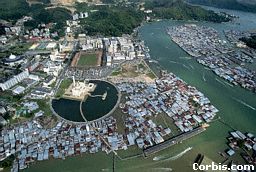
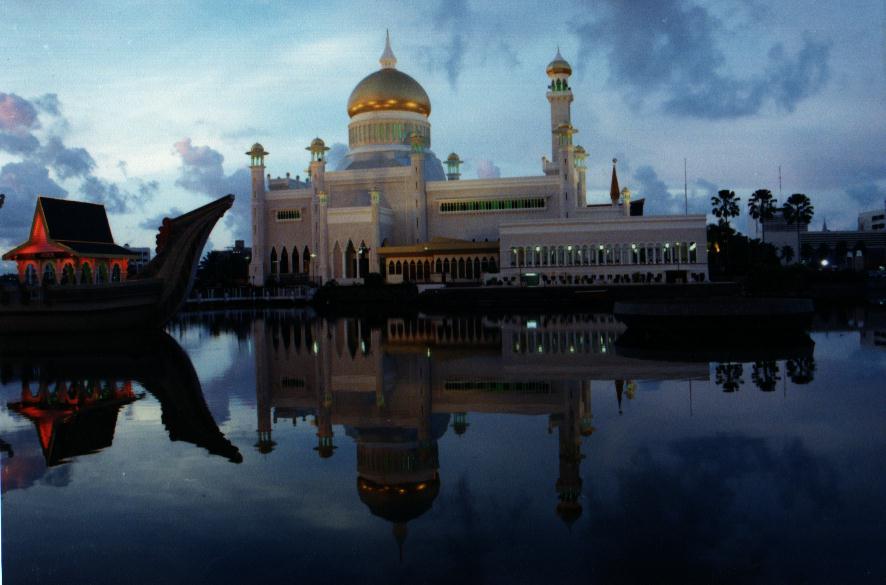
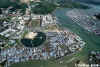
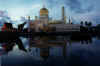
Pictured to the left is an aerial photography of BSB taken prior to
1994 with the impressive Omar Ali Saifuddin Mosque and its circular
moat. Surrounding the Mosque and across the Brunei river are the
extensive water villages, home to over 30,000 people. Unfortunately
the water village directly to the right (South) of the Mosque has been
demolished for the now completed huge Singapore style shopping centre
called Yayasan.
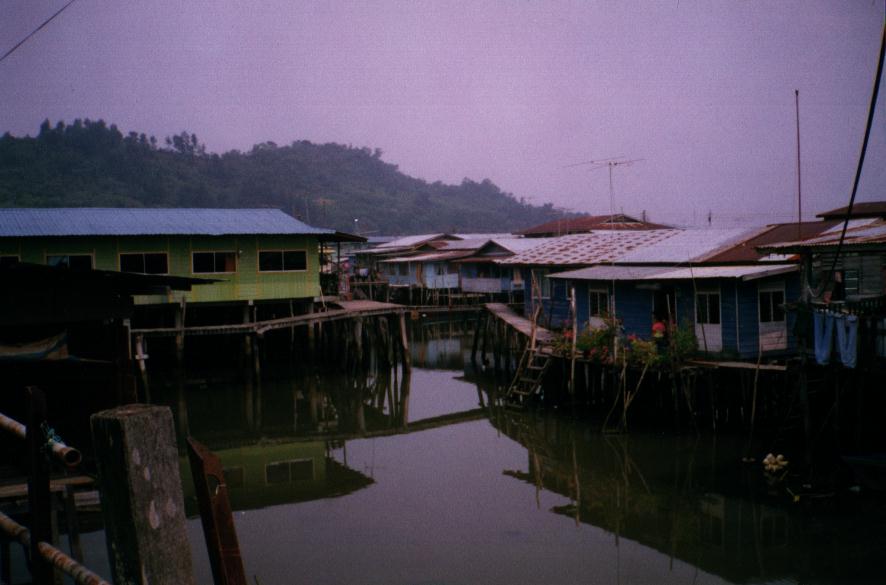
Plying the Brunei River (Sungai Brunei) are hundreds of water
taxis supporting the thousands of people that call Kampung Air
their home.
|
|
|
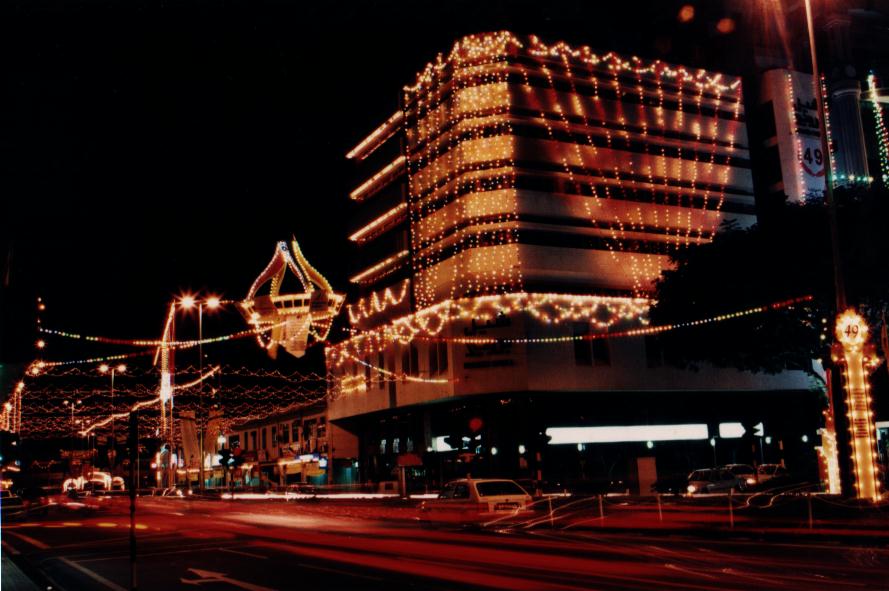
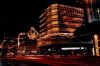
Leading up to the Sultan's birthday the capital
is decorated with millions of ferry lights on and between buildings.
As a treat to the residents of Brunei the Sultan's halved all Royal
Brunei Airline flights for a month following his 50th birthday. |
|
Hari Raya Adilfiltri, the festive time
following the fasting month of Ramadan, is celebrated in style.
Bruneian invite all and sundry to visit their homes to drink soft-drinks,
eat snack and if you are lucky sing karaoke.
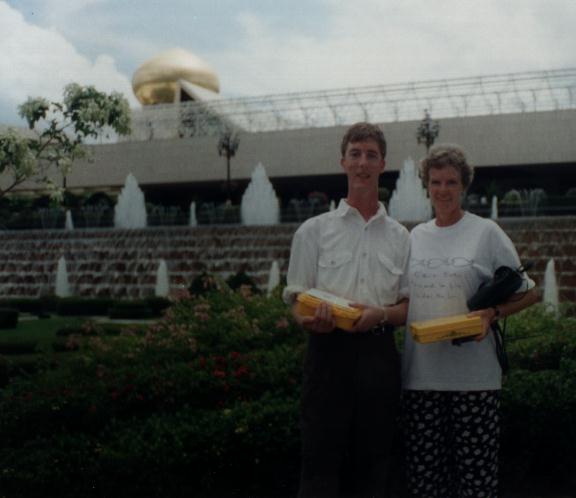
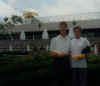
Pictured to the left, myself and my mother Maggie visiting the Sultan's
palace (Istana Nurul Iman) during the Sultan's Hari Raya "open
house". The few days of Hari Raya is the only time during the
year that the public are permitted to visit the colosal palace, the
largest building the world with more rooms than the Vatican and guarded by
the Ghurkha army (under British control). During this occasion all
guests are permitted to meet either the male or female members of the
royal family (including the Sultan himself), partake in a banquet meal and
receive a souvenir box of food.
Opposite the Sultan's palace, at his brothers residence guests receive
gift of B$5 (~US$2.5). Needless to say that the Sultan' brothers
residence was very popular with the large Bruneian families.
|
|
Kampung Air (Water Village) |
|
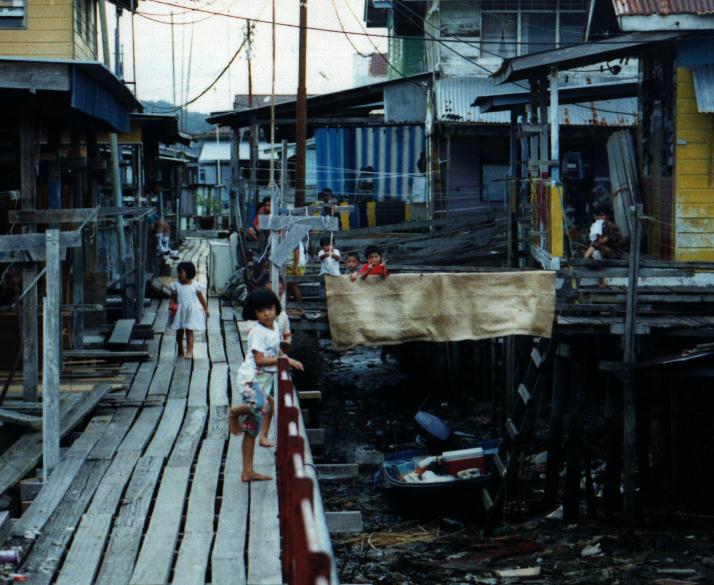
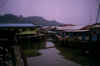
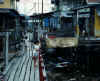
Visiting the water villages would
have to be one of the most rewarding experiences in Brunei. The
condition of the houses can be deceiving as the occupants are often
well-off and have expensive cars parked on the mainland. Now
supporting a growing population in excess of 30,000 the water village
enjoys modern conveniences of the 21st century including water
reticulation, electricity, TV's and the essential karaoke machine.
One can walk for hours along the narrow wooden pathways that wind
through the villages past schools, police stations, shops and
uncomfortable alongside the homes of the residences. Plagued now by
centuries of pollution, raw sewage and fires (sometimes arson) the
government is actively relocating residence to new sterile water villages
along the coast. |
 |
|
Temburong |
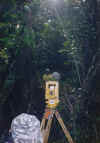 |
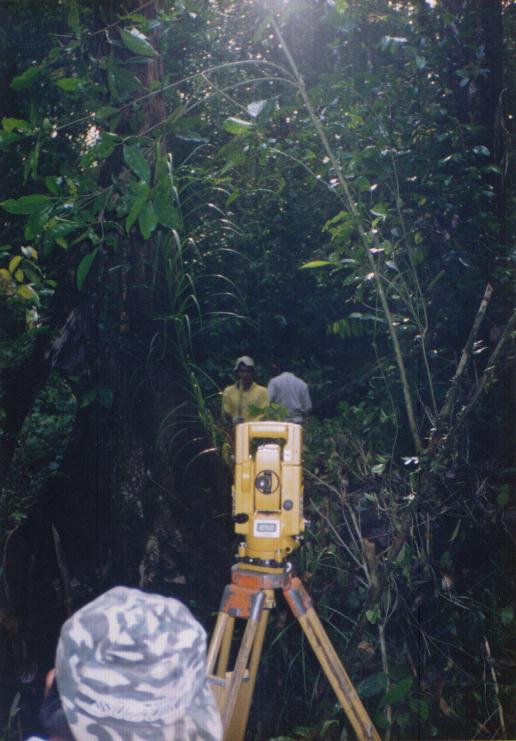
As a fresh graduate from university, my new
employers in Brunei sent me to the virtually uninhabited and isolated
district of Temburong. The project I worked on involve the staking
of a quarry mining claim in primary jungle.
The chainmen I worked with were mostly Iban (formerly the infamous head
hunters of Borneo) from Sarawak. Sarawak Iban still enjoy the
traditional village life, a notable characteristic of their villages is
the presence of longhouses (or rumah panjang). A longhouse is
a long wooden structure divided into units for each family but fronting
onto a common porch area used for communal activities (like drinking Tuak
or rice wine).
|
|
Jerudong Park |
|
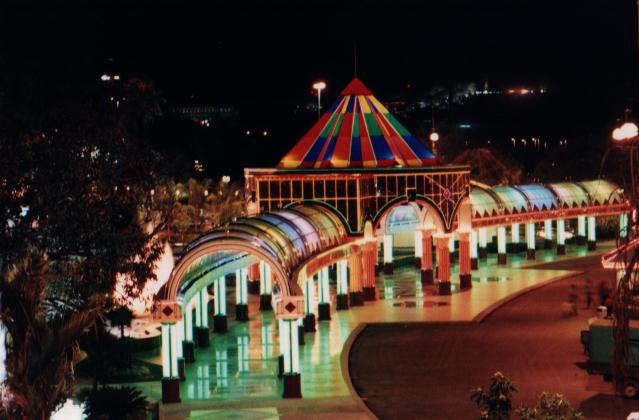
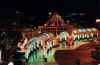
Jerudong, a small township not far from BSB,
was originally well known for its collection of royal palaces and the
stables of the Sultan's Argentine polo ponies. From early 1994 work
began on Jerudong Park, the spent on this complex was obscene but much
appreciated by the people. By 1997 Jerudong Park was enormous,
sporting two huge roller-coasters, go-karts, roller-blade rinks, video
games, log-rides, simulators, bumper cars, pirate ship and a dozen or so nauseous
ride and all for FREE!
With the Asian crisis and the demise of Prince Jefri's Armedo company
the future of Jerudong park is uncertain.
|
|
Malay Wedding |
|
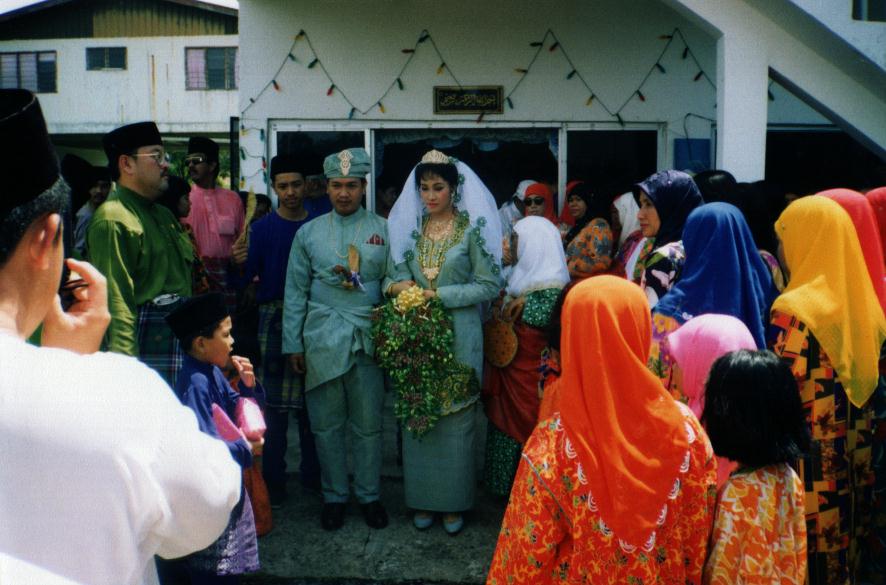
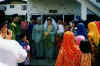
Malay weddings are extremely colourful and noisy
ceremonies. The bride and groom are represented by energetic drum
parties that are eventually unified at the completion of the
ceremony. To encourage a lucky union the bride and groom's family
offend invite hundreds of people even if they do not know the wedding
couple. What might seem amusing to outsiders is that many guests
turn up to the banquet at the beginning of the ceremony and leave offend
without meeting either of the wedding couple.
The wedding couple normal arrive separately to the ceremony location
(when most guests have already departed) and are seated together on
decorated thrones. The wedding costumes are extremely elaborate (and
is changed five time during the day), the groom is adorned with a Kris
(or ceremonial dagger) said to possess magic powers.
The wedding ceremony is concluded with a massive photo session with
family and friends on the decorative throne and wedding bed. |
|
Expatriate Life... |
|
In 1991 the sale of liquor was banned however
drink was alway easily accessible at expatriate sporting and social
events.
Food was great, with the same variety that is available in Malaysia but
slightly more expensive.
Without income tax, huge shopping centres, nightclubs or pubs it
was easy to save money in Brunei.
|
Sign
My Guest Book View
My Guest Book

This page was last updated on 17 February 2001.

|