 |
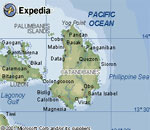
Map of Catanduanes |
 |
WOW Bicol Website |
 |
Puraran Surfing Site |
 |
|
Map of Catanduanes |
|
WOW Bicol Website |
|
Puraran Surfing Site |
|
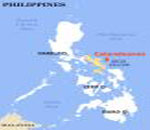 |
Philippine Islands |
 |
The Bicol Region |



| The Government Investment Incentives of doing business in the Philippines, particularly in the Province of Catanduanes provide a better Business Opportunities for Foriegn and Local Investors. Doing business in Catanduanes has promising benefits. Aside from the low labor cost , the Government has investment incentives to prospective investors. Two agencies under DTI, the Board of Investments (BOI) and the Philippine Economic Zone Authority (PEZA) give separate incentives to investors. |
| I. Doing Business in Catanduanes |
a. Location and boundaries Catanduanes is bounded by Maqueda Channel on the West, Lagonoy gulf on the South, Philippine Sea on the North and East. |
b.Infrastructure facilities One secondary airport |
c. Potential investment areas Agri-industrial ventures |
d. Local Incentives Exemption from the payment of building permit fees and other fees and charges, mayor's permit fees, business sales taxes, fees and charges within 3 years from the start of commercial operations. Exemption from the basic real property tax accruing to the general fund, imposed under the Tax Code of Virac for a period of 2 years from the date of approval by the Municipal Investment Incentive Board.[Go Top] |
| II. Cost of Doing Business |
a. Registration Fees Corporations and Partnerships (Securities and Exchange Commission) |
b. Manpower Resources
Work Day Overtime Remuneration Night-Shift Differential Pay Service Incentive Leave Salaries and Wages |
c. Mandatory Employment Contribution
Social Security System Philhealth Home Development & Mutual Fund |
d. Utilities
Water Rates Sewerage Treatment Gas and Fuel Costs Telecommunication Rates Internet Service Fees |
e. Transportation
Freight Rates of Domestic Vessels for Export Cargoe Freight Rates for Containerized Cargoes of Local Origin / Destination Freight Rates for Containerized Cargoes Courier Rates (Nationwide, Door-to-Door) |
|
f. Power
Commercial: $0.99 minimum for 0-15 kwh, addtional $0.31 per excess kwh |
g. Water
Commercial: $2.40 minimum Minimum wage rates Non-agricultural: $3.40 Agricultural: $3.00[Go Top] |
III. Investment Incentives |
Two agencies under DTI, the Board of Investments (BOI) and the Philippine Economic Zone Authority (PEZA) give separate incentives to investors as long as they meet a number of criteria. |
The BOI, the lead investment promotion agency of the government issues the Investment Priority Plan (IPP) annually. Under Book I of the Omnibus Investments Code, an investor may enjoy certain benefits and incentives provided he invests in preferred areas of investments found in the current IPP. Incentives include tax exemptions and concessions. An enterprise may still be entitled to incentives even if its business activity is not listed in the IPP as long as it has: At least 50% of its production is for exports, if Filipino owned At least 70% of its production is for exports, if majority foreign-owned (or more than 40% equity) |
The PEZA was established under Republic Act 7916 or the Special Economic Zone Act of 1995. Its main mission is to spur the growth and diversification of exports by attracting foreign investors to locate their manufacturing plants, their regional warehouses or their IT companies in the country's economic zones. Currently, there are 150 economic zone locations in different sites all over the country. [Go Top] |
