
Home
T
Myself

Culture
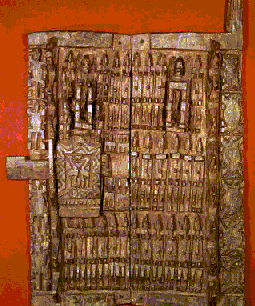
This decorated Granary Door represents, "Dogon of Mali" which is known for excellent wood carving in Africa. Images of human figures and animals are portrayed protecting their precious grain, as people widely believed that trees contained respectable spirits satisfying them with grain.
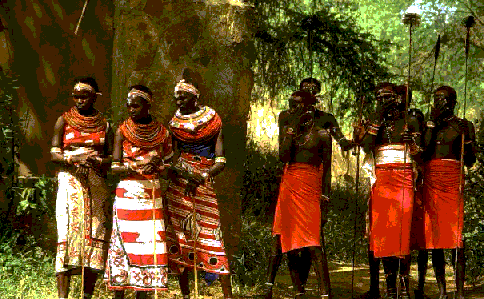
In the photograph above, women from the Nilotic tribe are shown wearing traditional Kenyan clothes, that consist of bright, vivacious colours, roped bead collars and more importantly, lots of jewelry.
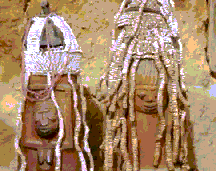
The Beaded Crowns of the Yoruba depicts the art of the Yoruba people in southwest Nigeria recognizing important qualities, such as, symmetry, as shown above in the beaded crowns. These beaded crowns were used by Yoruba Kings, as they are known for arts and crafts, wood carving and bronze casting.
Life and Work
Despite the expansion of commerce and industry and the importance of these activities to the economy, most Africans remain farmers and herders. In northern and northwestern Africa, wheat, oats, corn, and barley are the important grain crops. Dates, olives, and citrus fruit are the main tree crops; a variety of vegetables are grown. Goats and sheep are the most significant livestock raised. In the Sahara region, nomadic herders raise camels, and a few farmers situated in oases grow dates and grains. South of the Sahara, shifting agriculture—a method in which small areas were burned, cleared, and planted and then allowed to revert to bush—has given way in most areas to settled farming. Grain is the main crop outside the rain forests; rice, yams, cassava, okra, plantains, and bananas are raised for food.