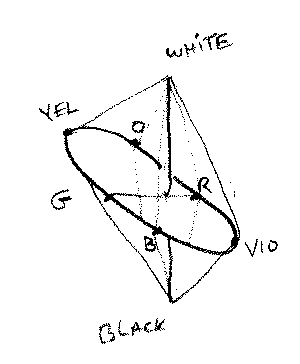
The color solid is a spatial model that integrates these three variables
of color and represents them as three dimensions of the models space.
The various hues are found by traveling in a circle (the color wheel) around
the vertical axis of the solid. Value is equated with verticality.
Moving up or down lightens or darkens colors. The achromatic
vertical core, with white at the top descending thru all the grays to black
at the bottom, is devoid of hue.
Moving out horizontally from this central axis increases intensity
until the surface of the solid is reached. This point at the surface
represents this color's maximum intensity at that value. The
hue of the color would depend on which horizontal direction relative to
the circle of the color wheel one initially moved.
The violet chart above represents a "slice" of the solid (minus white and black) from the central axis to saturated violet. Note its roughly triangular shape.
The wheel of hues is tilted in the color solid because of the range
of natural values. Saturated yellow, being high in value, is level
with a very light gray. Maximum intensity violet is descends deep
into the darkest grays. Vivid red and green are the terminals of
a horizontal line through middle gray, while orange and blue equate with
moderately light and dark grays.
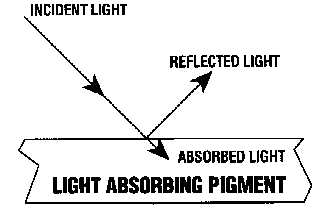
In other words, the color we perceive when we look at a colored surface
results from some frequencies being subtracted from the complete range
of frequencies present in white light falling on that surface.
In radiative (or additive) phenomenon, color sensation results from
the perception of a colored light source, exempla gratia (define):
stage lighting or the screen of your computer monitor.
In both case, the shape of the color solid remains the same; The nomenclature
(define)
changes.
