
THE TWENTIES WOMAN
WOMEN RIGHTS: One of the many things that were considered in the thid decade was women's rights. Women gained the right to vote in 1920, but as was said in a famous play of the time, they could no longer hide behind the petticoat. Liberation brought increased responsibility, and it was only partial in any case. People talked more openly of sex, but anti-obscenity laws still made it difficult to get information about birth-control. Women found it easier to find jobs, and working outside the home was more acceptable, but women rarely became doctors, lawyers or business managers. Initially women voters changed the political landscape very little, as most tended to vote with their husbands or other male family members. The first Equal Rights Amendment was introduced in Congress but got nowhere. Women had come a long way, but still had a long way to go.
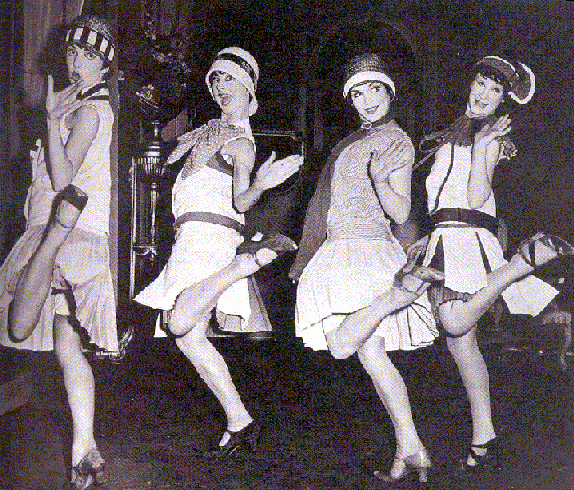
FLAPPERS:The term "flapper" first appeared in Great Britain after World War I. It was there used to describe young girls, still somewhat awkward in movement who had not yet entered womanhood. In the June 1922 edition of the Atlantic Monthly , G. Stanley Hall described looking in a dictionary to discover what the evasive term "flapper" meant: [The dictionary set me right by defining the word as a fledgling, yet in the nest, and vainly attempting to fly while its wings have only pinfeathers; and I recognized that the genius of 'slanguage' had made the squab the symbol of budding girlhood.]
Authors such F. Scott Fitzgerald and artists such as John Held first used the term to the U.S., half reflecting and half creating the image and style of the flapper. Fitzgerald described the ideal flapper as "lovely, expensive, and about nineteen." The flapper image was of young girls wearing unbuckled galoshes that would make a "flapping" noise when walking.
Many have tried to define flappers. In William and Mary Morris' Dictionary of Word and Phrase Origins , they state, "In America, a flapper has always been a giddy, attractive and slightly unconventional young thing who, in [H. L.] Mencken's words, 'was a somewhat foolish girl, full of wild surmises and inclined to revolt against the precepts and admonitions of her elders.'" Flappers had both an image and an attitude
Changing ways of life | Education and popular culture | The Harlem Renaissance | Youth in the Roaring Twenties | The Twenties Woman |