
THE HARLEM RENAISSANCE
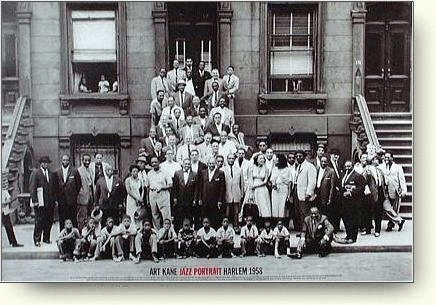
Although the twenties weren't all that bad, reffering to post wars. The emergence of what has been called the "New Negro" was one of the highlights. Many Blacks began to take pride in their ethnicity, and a great outpouring of art, literature and music from the hearts and minds of African Americans lifted the Black culture and also all of America. Writers like Ralph Ellison who wroteThe Invisible Man , Langston Hughes, Zora Neal Hurston from Their Eyes Were Watching God , Richard Wright and others provided insight into the human experience as seen by Black Americans. Before and during World War I thousands of Blacks had begun to migrate to Northern cities is search of better economic opportunities, and there they developed new, rich urban cultures, often segregated in fact (though not by law) from white communities. New York City's Harlem is the most famous focal point of Northern Black culture, but similar places existed in Detroit, Chicago and other Northern cities. A Black Nationalist Movement was also part of the Twenties as leaders like W.E.B. Du Bois and Marcus Garvey struggled to expand civil rights and cultural pride in Black Americans. In the legal arena, the court system began slowly to dismantle the legal segregation that began in the aftermath of Reconstruction, but full liberation for Black people was still a long time away.
Changing ways of life | Education and popular culture | The Harlem Renaissance | Youth in the Roaring Twenties | The Twenties Woman |