
CHANGING WAYS OF LIFE
The 1920's made a big change in the century. The eighteenth amendment banned excess manufacture, sale and transportation of alcohol. Billy Sunday, an Evangelist who preached against the evils of drinking, predicted a new age of of virtue and religon.
"The reign of tears is over! The slums will soon be only a memory. We will turn our prisons into factories and our jails into storehouses and corncribs.Men will walk upright now, women will smile and the children will laugh. Hell will be forever for rent!"
RURAL AND URBAN DIFFERENCES:
America changed dramatically over the past few years. 51.2 percent of Americans lived in communities with populations of 2,500. Between 1922 and 1929, migration in cities accelerated, with nearly 2 million people leaving farms and towns each year. The industry also grew. Chicago for example, was an industrial powerhouse, home to naitive-born whites and African-Americans, Poles, Irish, Russians, Italians, Swedes, Arabs, Freanch, and Chinese.
The Prohibition Experiment:
One clash between small town and big cities was the prohibition of alcohol. Reformors had long considered liquor a prime cause of corruption. Unfortunately it was difficult to do this because people would hide alcohol in nightclubs known as Spaeakeasies. People also hid alcohol in bootleggers, smugglers would hide them in the leg of boots.
SCIENCE AND RELIGON CLASH:
Another bitter controversy highlighted the growing rift between traditional and modern ideas during the 1920's. This battle raged between fundamentalist religous groups and secular thinkers over the validity of certain scientific discoveries. The protestant movement grounded in a literal, or a nonsymbolic, interpretation of the bible ws known as fundamentalism. Fundamentalists were a bit skeptical of science and thier discoveries. They argued that all the important knowledge could be found in the bible. They believed that the bible was inspired by god, and that therefore its stories were true.
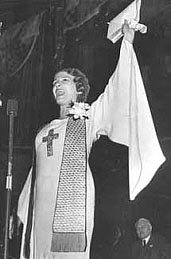
The Evangelist Aimee Semmple McPherson.
Changing ways of life | Education and popular culture | The Harlem Renaissance | Youth in the Roaring Twenties | The Twenties Woman |