
Praveen Bhole | Theatre Teacher, Director & Designer
Latest Play >
|
| Awataar Moliére's Tartuffe in Marathi |
Moliére |
|
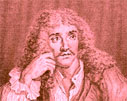
| Jean-Baptiste Poquelin (1622-1673) |
Just as French tragedy had achieved maturity with Racine, so French comedy was to reach its peak with Moliére. Jean-Baptiste Poquelin, who assumed the name Molière, was the son of a prosperous upholsterer of Paris and had received a good education before entering the theatre in 1643. after his first venture, the Thèâtre Illustre, failed, Molière and his companions toured the provinces of France from 1646 to 1658. during those years the group obviously learned much, for when they returned to Paris they rapidly became second only to the Hôtel de Bourgogne troop and they even surpassed that group in comedy. Molière was a favorite of Louise XIV, who allowed him to use theatre Richelieu had built, the Palais-Royal, and protected him in many controversies.
Although Moliére is noted today principally for his comedies of character and ideas, he wrote other kind of plays as well. Greatly influenced by the commedia dell'arte, many of his plays are farces featuring the commedia character types. He also wrote a number of comedy ballets (comic plays with dances) for the court and tried his hand at tragedy. Through out his career Molière borrowed as he saw fit from Plautus, Terence, the commedia, and from Spanish and Italian sources. Molière's work has retained a more universal appeal than that of his tragic contemporaries; his plays are still seen on the stages of almost every country, while those of Corneille and Racine are seldom produced outside of France.
Moliére's most famous works are: The School for wives (1662), Tartuffe (1664), The Miser (1668), The Doctor in Spite of Himself (1666), The would-Be Gentleman (1671), and The Imaginary Invalid (1673).