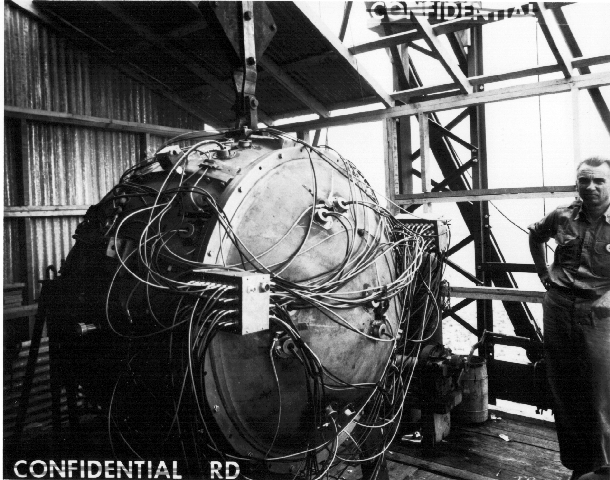
Initiated in 1942, during World War II by General Leslie Groves.
This top secret government project developed the US's first atomic
bomb. The Germans had discovered nuclear fission in 1938 and the
US was fearful Hitler might detonate a nuclear weapon during the war.
The Manhattan Project is significant as it marks the very beginning of
the nuclear arms race, a contest to which the Berlin Airlift is related.
Source: http://icdweb.cc.purdue.edu/~phealy/yalta.html
By mid-April 1945, a large part of the German Reich was under
Allied control. Hitler committed suicide on April 30 as the German
forces could not deter Russian troops from approaching Berlin.
On May 7, the German High Command signed a document of
unconditional surrender. Source: Germany 1945-49, A sourcebook,
Manfred Malzahn
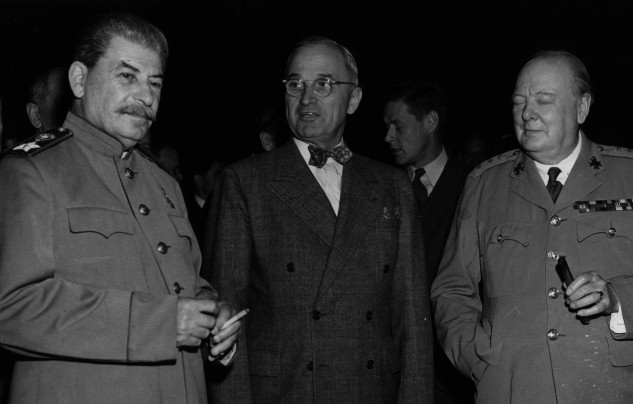
The Potsdam Conference was a meeting of the American, British,
and Soviet contingencies. Several points were established
concerning post-war conduct. These included the following: a
peace conference was to be held at which new territorial boundary
lines would be finalized; Germany should be demilitarized and its
citizens should maintain a lower living standard than the rest of the
European citizenry; a four power Allied Control Council should
control, though not absolutely, Germany's affairs; machines and
industrial equipment could be removed from Germany as war
reparations. Here, Truman revealed that the US possessed and
could detonate a nuclear bomb.
Sources: Germany from Partition to Reunification, Henry
Ashby Turner, Jr.
http://icdweb.cc.purdue.edu/~phealy/yalta.html
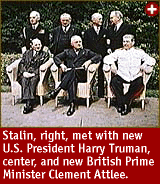
Formed out of the meeting at Postdam, this organ would solve
dispute between the victors. However, there would be major
disagreements among them such as the free election in Poland
and German reparation to the Soviet Union.
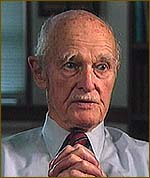
The State Department's Soviet expert, wrote “Long Telegram"
as a response to a speech Stalin gave in February 1946 that
contained Marxist-Leninist propaganda. The American media held
this speech to be a near-declaration of war on the Western powers.
Kennan predicted a prolonged struggle between capitalist and
communist oriented nations, claiming that for Soviets to feel secure,
they must try to destroy American society as it existed.
Sources: Cold War Issacs and Downing
http://icdweb.cc.purdue.edu/~phealy/yalta.html
Links: http://www.cnn.com/SPECIALS/cold.war/episodes/01/interviews/kennan
http://www.gwu.edu/~nsarchiv/coldwar/interviews/episode-1/kennan1.html
http://www.mtholyoke.edu/acad/intrel/fakiolas.htm
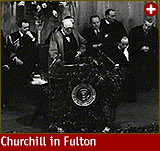
March 5, 1946 Westminster College Fulton MO
Removed from his post as Prime Minister, this speech coined the
phrase "the Iron Curtain." Although it was thought to be a very
extreme speech, it is now one of the most famous speeches of the
post World War II era.
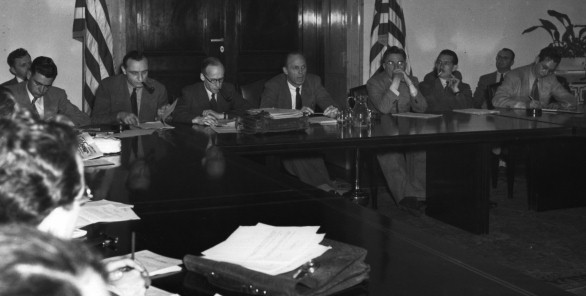
The Truman Doctrine is the policy resultant of the President’s
decision to supply Turkey and Greece with aid “so they could
resist Communist pressures.” The need for four-power
agreement on a central German government system seemed
crucial to Secretary of State George Marshall at the time of
this development. Without diplomacy, Germany would
probably ally itself with one Allied power in particular.
Source: Germany and the United States, Frank Ninkovich
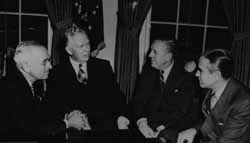
The Marshall Plan offered US aid to all of Europe, excluding
Germany initially, and including Germany’s former allies Italy
and Austria and the Russians themselves. This plan was part
of an American political agenda “geared towards consolidation
of the West.” Germans accepted the aid they were eventually
offered simply because “beggars can not afford to be too
choosy.” Real economic recovery could not be achieved
until a currency reform.
Sources: Germany 1945-1949, Manfred Malzahn
The Death and Life of Germany, Eugene Davidson
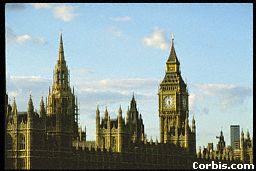
At this meeting, representatives from Britain, France, the
Benelux nations and the US established a consolidated West
German state called Trizonia in response to increasing Soviet
presence in Germany. This state was invited to participate in
the Marshall Plan. Two days after the conference opened,
Czechoslovakia fell to the Communists.
Source: The Dawning of the Cold War, Woods and Jones
The reform is considered the event that most directly resulted
in the blockade of Berlin. On Friday, the Allies told the press
that the following Monday in their zones, excluding Berlin, a
new currency would replace the reichsmark. This action
would in the long-term strengthen the German economy with
Western influence and was a direct threat to Soviet interests.
Source: The Dawning of the Cold War, Woods and Jones