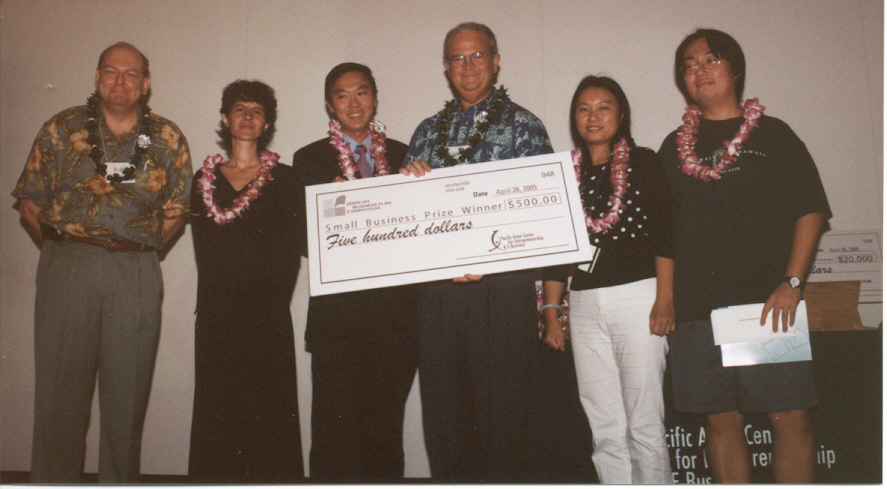
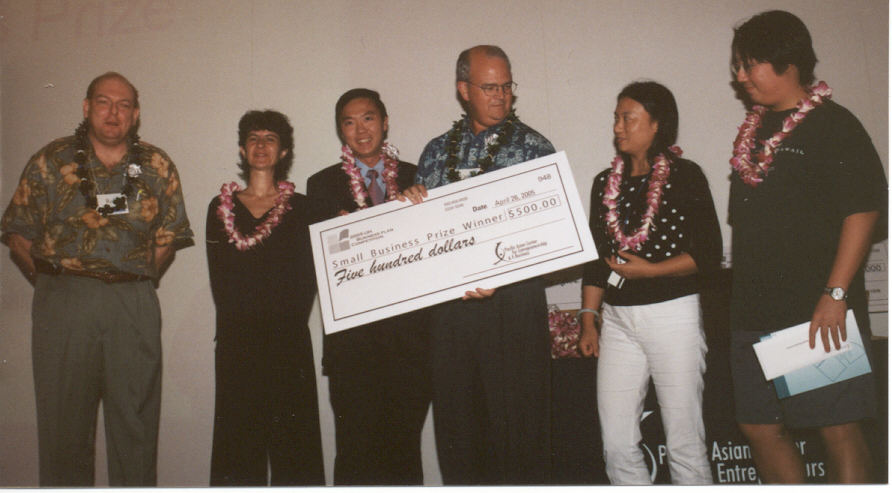
2005 UH Business Plan Competition


Tips on winning Business Plan Competitions
Tip Number One: Know the Rules and Judging criteria
Very often many contestants are too confident of a business plan they have written (not for competitions) or business idea. They thus would submit a plan that do not jive with the criteria and format suggested by the competition organisers. They would write pages of prose writing probably guided by the hypnotic idea in their minds. While a persuasive business plan does wonders, it needs to be written as a business writing, substantiated by business facts and figures and structured by conventional business plan headings.
Tip Number Two: Plan for a business that impacts the community
If you have a business idea, there are two ways of implementing it. Doing it small, or doing it big yet manageable. Here is where a well thought and researched business plan will stand out. One that is massive in scale, yet is well planned in terms of risks and contingencies taken, good utilization of capital for marketing and brand building etc, all well accounted for in the financials. A bizarre idea done in small scale will not attract attention. But, a good idea done in big scale with good quantifiable returns and a well planned implementation will garner some interest. The bottomline is how thorough your planning is for the business that will have significant financial and social returns. That's the essence of a business plan.
Tip Number Three: Test your business plan in the market
The competition will attract many applications. The judges will be shaking their heads over tonnes of persuasive writing that their business idea will shake the world. Plans that stand out usually have been tested in the market. The team either had experience managing a small portion of the business and reaped promising returns, or had set up a booth or conducted market research and found tremendous positive response to the idea. In this case, evidences of this should be placed in the appendix of the business plan document with mention in the main section of the business plan how the practical experience in the market shaped the business plan. If there is news or media coverage of the team's implementation of the idea, it will show the public's endorsement towards the idea and will look impressive. It will demonstrate the team's ability to manage the business as well as the feasibility of the business plan.
Tip Number Four: Demonstrate connections and partnerships
Most business plan competitions have many applicants who lack experience in running business. The objective of the competition is to get new young entreprenuers to think of starting businesses. But, a business can not be run by inexperienced managers. This is where serious applicants will seek to establish partnerships with organizations that will benefit from their business. Interview key people in the industry or organizations that could work with the business. Seek grey beard in the management team or board of advisors. This will certainly add points in the judges' evaluations.
Tip Number Five: Work on your financials
It is said a venture capitalists will first read the first few paragraphs of the executive summary of the business plan. Then, it turns to the back pages where the financials are. The venture capitalists will then just have a glance and decide whether to continue reading. If he or she does, a more thorough scrutiny of the financials will be done where inconsistencies will be noted. Then, if there is sufficient interest, the details of the plan will be read from the beginning. Hence, conduct a research to obtain the cost of each item that will be needed to start the business and estimate as accurately as possible. If you are renting a new place, do not just mention the rental cost - what about the cost for renovation and deposits required for leasing, cost to train new staff etc. Project profits and returns conservatively under different scenarios. Always quantify returns, be it social returns or financial returns. If the business benefits the poor in the community, then specify the quantity of poor people who will benefit from the business idea and how. Other examples of social return that can be quantified include number of jobless people who have reentered the job market through your business, number of students who are able to do an internship through your business partnership with the university, number of endangered languages that are documented by establishing a language documentation center. Never stop quantifying.
Click here to read on a write up on winning contests in general
 Click
here for previous winning slogans and captions of other contests
Click
here for previous winning slogans and captions of other contests
Click here for my contest winnings up till today
Number of visitors benefited from this site :

|

Sign Guestbook View Guestbook Archived Old Guestbook 1 2
 Email me at: [email protected]