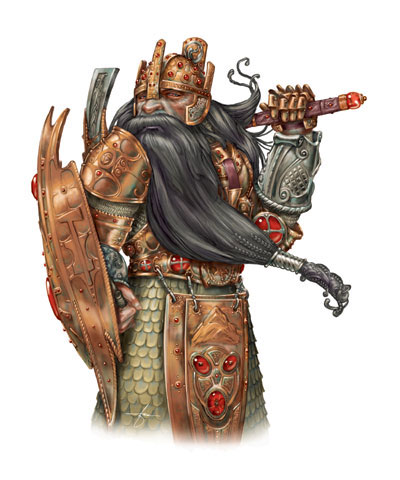
| Who I Am About Me My Interests Family & Friends My Faith What I Do St. Therese School My Desk Other Aspects Art Gallery Fantasy Page News Links Song now playing: "No Survivors," by Bjorne Lynne Click here to visit his web site, or check the logo at the bottom of the page This page created July 24, 2000 Last modified March 28, 2004 Picture at right: Moradin, god of the dwarves from Deities & Demigods |
 |
| This is a question that more adults would ask. Most newer players would have no clue as to why anyone would say such a thing, but that's because they just weren't around when stuff like this was making the news. When folks ask this, they usually have in mind some vague recollections of stories they heard about or read, involving college students mostly, who back in the 1980s were supposed to have taken their interest in the game a little too far by acting it out for real. The implication is that D&D must somehow encourage deviant behavior based on the inability to distinguish fantasy from reality after a while. First, any pastime can become an obsession; gambling, chess, video games, surfing the Internet, even crossword puzzles. It just depends on what a person finds interesting. And while becoming hooked can be unhealthy, since it takes you away from the rest of your daily life, it's usually not the pastime that's bad -- it's the obsession a person has allowed it to become. A person obsessed with D&D really isn't that much different from someone obsessed with anything else. It's just that people seem more inclined to blame the game because it's Dungeons & Dragons for the person's attachment. But substitute some other pastime, and you probably won't get the same condemnation, despite the same kind of obsession. While it's true that Dungeons & Dragons can be particularly interesting, leading some people to spend far too much time with it, the game itself cannot be blamed for this any more than video games, or the Internet, for taking up a person's time. None of these things, of themselves, cause obsession. Ultimately, one could say that someone who has personal difficulties already -- who obviously has a hard time coping with real life -- may want to avoid this and any other imagination-based game, for fear of eventally being unable to distinguish between fantasy and reality, as a normal, healthy person should. From everything I've read, the popular tales about obsessed college students who took their favorite pastime too far seem to be either total fabrications or urban legends that grew out of a real-life situation. The most popular story seems to be that of James Dallas Egbert, who really did live, but whose eventual suicide (and the events leading up to it) somehow got blamed on his obsession with D&D. Click here for the straight story. After writing this, I stumbled on a good essay that, without my knowing about it beforehand, touches on the very things I've been saying above. Click here to read it. Players with healthy groundings in reality, whose imaginations are normal and not overly morbid -- and whose pre-existing personal issues do not interfere with these things -- should have no problem. Next: Does D&D promote anything to do with the occult, or with satanism? Just what goes on during a game? |
 |
 |
 |
| "I've heard stories over the years about strange goings-on during the game. Does D&D encourage that?" |