The animal evaluation required for our AAA/AAT volunteers is a three part process. It involves a health screening done by a veterinarian, and a skills and aptitude screening done by a Delta Society® Pet Partners® certified evaluator. This screening process helps us identify animals that are appropriate for this type of work, and if passed provides volunteers with liability coverage in case of accidents.
After completing Delta Society's Animals Helping People course, and before you can begin your skills and aptitude screening, your animal must be checked by a veterinarian. You will need to present your completed health forms to your evaluator on the day of your screening. Animals must be current on all vaccinations, free from any signs of ill health, house-trained (for dogs and cats) or carried in baskets or carriers for other animals, free from internal and external parasites, and cleaned and groomed as if you were preparing for a visit.
Pet Partners Skills Test (PPST)
This series of tests is designed to test basic "good behavior" skills, and show whether or not the animal can be controlled by the handler and follow basic commands. Some tests will be modified for different species of animals.
1. Accepting a Friendly Stranger
This test demonstrates that the animal will allow a friendly stranger to approach it and speak to the handler in an everyday situation.
2. Sitting Politely for Petting
This test demonstrates that the animal will allow a friendly stranger to touch it while it is out with it's handler.
3. Appearance and Grooming
This test demonstrates that the animal will welcome being groomed and examined, and will permit a stranger to do so. It also demonstrates the owners care, concern, and responsibility in caring for his/her animal.
4. Out for a Walk
Dogs will walk on a leash, other animals will be carried as they would be during a visit.
This test demonstrates that the handler is in control of the animal. Dogs need not heel when walking, or sit when the handler stops, but should be under control and walking on a loose leash.
5. Walking Through a Crowd
This test demonstrates that the animal can move about politely in pedestrian traffic and around healthcare equipment, and is under control in public places.
6. Sit and Down on Command and Staying in Place
Dogs will be attached to a 20 foot line; the handler will walk to the end of the line and return. Other animals will be placed in a strangers lap for 30 seconds.
This test demonstrates that the dog has training and will either lie down or sit, and stay/ remain in place at the handler's command.
7. Come When Called
This test is for dogs only. It demonstrates that the dog will come to the handler and allow him/her to attach a leash.
8. Reaction to a Dog
This test demonstrates that an animal can behave politely around a an approaching dog. With two dogs they should show no more than a casual interest in each other; cats and other animals can be held by the handler or placed in a basket and walked past a dog.
9. Reactions to Distractions
This test demonstrate that the animal remains confident when faced with common distracting situations.
Pet Partners Aptitude Test (PPAT)
This test determines if your animal has the ability, capacity, desire and potential for participating in AAA/AAT programs. Also evaluated is the aptitude of the animal/ handler team.
Test A: Overall Exam
This test demonstrates that the animal will accept being examined by a stranger.
Test B: Exuberant and Clumsy Petting
This test demonstrates that animal will maintain self-control and will tolerate clumsy petting. Additionally, petting may done with elbows or feet, using a high pitched voice, and squealing or giggling the animal.
Test C: Restraining Hug
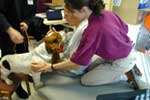
This test demonstrates that the animal will tolerate restraint. Unexpectedly, the animal will be given a full body hug that restrains the animals movement.
Test D: Staggering/Gesturing Individual
This test demonstrates that the animal will exhibit confidence when a person, acting in an unusual manner, approaches it.
Test E: Angry Yelling
This test demonstrates that the animal will not be upset when someone exhibits angry emotions.
Test F: Bumped from Behind
This test demonstrates that the animal is able to recover when a person bumps into it. With small dogs and other animals, a loud stomp or slap will be made behind the animal.
Test G: Crowded and Petted by Several People
This test demonstrates that he animal will tolerate crowding and petting by several people at once.
Test H: Animal Held by Stranger
This test demonstrates that the animal not get upset when left with a stranger.
Test I: Sociability
This test determines that the animal has proper sociability for AAA/AAT. The animal's overall interest in people will be scored.
Test J: Overall Reaction
This item determines if the animal/hanlder team is appropriate for AAA/AAT. The evaluator will score the overall reaction of the team (animal and handler) to the test, determining whether the team has developed the level of trust and understanding needed to work together in unpredictable environments.