



















|
"As a body is one, though it has many parts, and all the parts of the body, though many, are one, so also Christ. For in one Spirit we were all baptized, whether Jew or Greek, slaves or free persons, and we were all given to drink of one Spirit."
--I Corinthians 12: 12 |
|
The holy Catholic Church, which is the Mystical Body of Christ, is made up of the faithful who are organically united in Holy Spirit by the same faith, the same sacraments, and the same government. The combine into different groups, which are held together by their hierarchy, and so form particular churches or rites. Between those churches there is such a wonderful bond of unity that this variety in the Universal Church, so far from diminishing its unity, rather serves to emphasize it. For the Catholic Church wishes the traditions of each particular church or rite to remain whole and entire, and it likewise wishes to adapt its own way of life to the needs of different times and places.
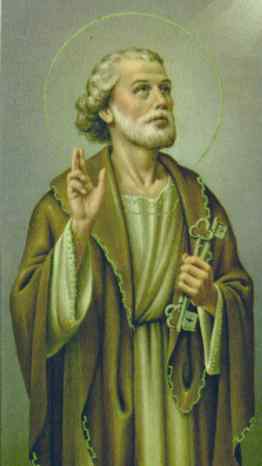
These individual churches both Eastern and Western, while they differ somewhat among themselves in what is called "rite," namely in liturgy, in ecclesiastical discipline, and in spiritual tradition, are none the less equally entrusted to the pastoral guidance of the Roman Pontiff, who by God's appointment is the successor of Blessed Peter in primacy over the Universal Church. Therefore these churches are of equal rank, so that none of them is superior to the others because of its rite. They have the same rights and obligations, even with regard to the preaching of the Gospel to the whole world, under the direction of the Roman Pontiff.
Orientalium Ecclesiarum
Articles 2 and 3
November 21, 1964
From the earliest community of Jerusalem until the parousia, it is the same Paschal mystery that the Churches of God, faithful to the apostolic faith, celebrate in every place. The mystery celebrated in the liturgy is one, but the forms of its celebration are diverse.
The mystery of Christ is so unfathomably rich that it cannot be exhausted by its expression in any single liturgical tradition. The history of the blossoming and development of these rites witnesses to a remarkable complimentarity. When the Churches lived their respective liturgical traditions in the communion of the faith and the sacraments of the faith, they enriched one another and grew in fidelity to Tradition and to the common mission of the whole Church.
The diverse liturgical traditions have arisen by very reason of the Church's mission. Churches of the same geographic and cultural area came to celebrate the mystery of Christ through particular expressions characterized by the culture: in the tradition of the "deposit of faith," in liturgical symbolism, in the organization of fraternal communion, in the theological understanding of the mysteries, and in various forms of holiness. Through the liturgical life of a local church, Christ, the light and salvation of all peoples, is made manifest to the particular people and culture to which that Church is sent and in which she is rooted. The Church is catholic, capable of integrating into her unity, while purifying them, all the authentic rites and cultures.
The liturgical traditions or rites presently used in the Church are the Latin (principally the Roman rite, but also the rites of certain local churches, such as the Ambrosian rite, or those of certain religious orders) and the Byzantine, Alexandrian or Coptic, Syriac, Armenian, Maronite and Chaldean rites. In "faithful obedience to tradition, the sacred council declares that Holy Mother Church holds all lawfully recognized rites to be of equal right and dignity, and that she wishes to preserve them in the future and to foster them in every way."
paragraphs 1200 - 1204