|
About Project
Participants
About
Registered Schools
ACTIVITIES
Not-to-Be-Missed Places
My Souvenir
Famous Stories Travel around
the World
Customs and Traditions
Celebrations

| |
NOT-TO-BE-MISSED-PLACES
Click
here to see
other contributions
|
 Intered Kallitheas School, Athens, Greece Intered Kallitheas School, Athens, Greece
Click
here to
find out more information about this school
Project coordinator:
Maria Kasipidi
Participating pupils: Aris (11), Fivos (13), Leonidas (11),
Vangelis (11), Theano (11), Maria (11)
|
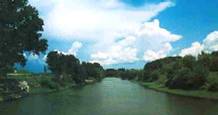
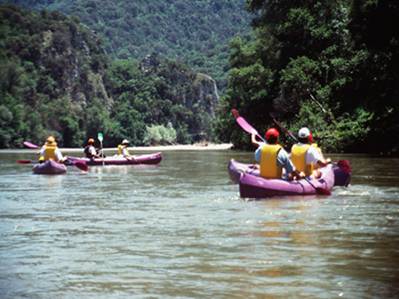
Nestos River Valley
 The
river waters flowing for thousands of years between the Rodopi mountains have
carved out a beautiful narrow pass. The
river waters flowing for thousands of years between the Rodopi mountains have
carved out a beautiful narrow pass.
Α botanical treasure which offers refuge to animals has also been created here.
Ιn 1977, the Nestos Pass was included as an "Aesthetic Forest" region and is
legally protected. Ιn addition to this, it is also protected under the
European Union Directive (79/409) for the Special Protected Areas of Wild Birds.
by Fivos (13 years old)
top
Crete
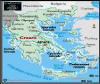 The
environment that gave birth to the famous Minoan civilization is surrounded by
mountains and rocks. The plains, the mountains, the cities, the villages, the
archaeological sites and the monasteries that lie in the beautiful landscape of
Crete are all giving the sense of the many thousand year history of Crete. The
environment that gave birth to the famous Minoan civilization is surrounded by
mountains and rocks. The plains, the mountains, the cities, the villages, the
archaeological sites and the monasteries that lie in the beautiful landscape of
Crete are all giving the sense of the many thousand year history of Crete.
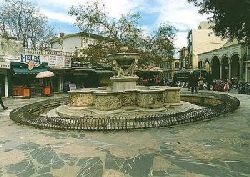
Crete-Heraklio
I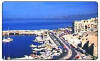 t
was the biggest and the most important fort of Europe. The city and its
surroundings have a lot of sights. The most important archeological
monuments of Heraklio are Knossos and Festos. To the northeastern side of
Eleuferia’s square it is located the archeological museum where you can see a
lot of archeological monuments. They were discovered at the main archeological
places of Crete, Knoso, Faisto, malia, Zarko etc. t
was the biggest and the most important fort of Europe. The city and its
surroundings have a lot of sights. The most important archeological
monuments of Heraklio are Knossos and Festos. To the northeastern side of
Eleuferia’s square it is located the archeological museum where you can see a
lot of archeological monuments. They were discovered at the main archeological
places of Crete, Knoso, Faisto, malia, Zarko etc.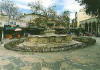
top
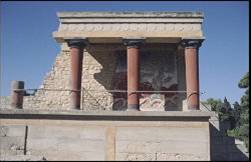
Knossos
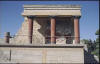 The
Minoan palace is the main site of interest at Knossos, an important city in
antiquity which was inhabited continuously from the Neolithic period until the
5th c. AD. The
Minoan palace is the main site of interest at Knossos, an important city in
antiquity which was inhabited continuously from the Neolithic period until the
5th c. AD.
The palace was built on the Kephala hill and had easy access to the sea and the
Cretan interior.
According to tradition, it was the seat of the wise king Minos.
The Palace of Knossos is connected with thrilling legends, such as the myth of
the Labyrinth with the Minotaur and the story of Daedalus and Icarus.
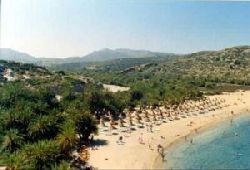
Siteia
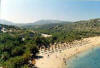 Siteia
( 73 kms' distance from Ag. Nikolao) is a picturesque large village, which is
distinguished for its peace, healthy climate and beautiful beaches. Siteia
( 73 kms' distance from Ag. Nikolao) is a picturesque large village, which is
distinguished for its peace, healthy climate and beautiful beaches.
You can also visit the villages Palaiokastro and Itano where you can admire the
Minoan ruins. In Itano there is unique forest with palm trees.
by Vangelis (11)
top
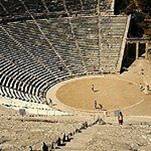
Epidaurus
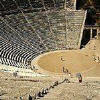 This
famous theatre was built during the last quarter of the fourth century B.C.. This
famous theatre was built during the last quarter of the fourth century B.C..
The harmony of its cavea, the way it 'sits' in the landscape with the semicircle
hollowed out of the side of the hill, and the quality of its acoustics make the
Epidaurus theatre one of the great architectural achievements of the fourth
century.
The circular orchestra provides the link with the stage buildings.
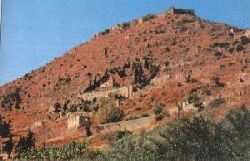
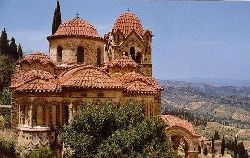
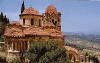
Mystras
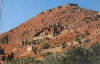 The
Castle of Mistra was built in 1249 by Guillaume II de Villhardouin, but in 1263,
having been taken prisoner by the Byzantine Emperor Michael VIII, he was
compelled to yield it up to the emperor, together with the castle of Maina and
Monemvasia. The
Castle of Mistra was built in 1249 by Guillaume II de Villhardouin, but in 1263,
having been taken prisoner by the Byzantine Emperor Michael VIII, he was
compelled to yield it up to the emperor, together with the castle of Maina and
Monemvasia.
Until the Turkish conquest in 1460, Mistra was ruled by Bizantine princes, who
from 1347 bore the title of despot, the second highest rank in the Empire.
Below the Frankish castle on the summit of the hill there grew up first the
upper and then the lower town.
top
| |
Coming up soon
National Symbols
Our
Global Calendar
Our Mascot's Trip
|
 KNOWING
ME
IS KNOWING
YOU
KNOWING
ME
IS KNOWING
YOU