|
NOT-TO-BE-MISSED-PLACES
Click
here to see
other contributions
|
 School No. 191,
Bucharest, Romania School No. 191,
Bucharest, Romania
Click
here to find out more information about
our school
Project coordinator:
Andreea Silter |
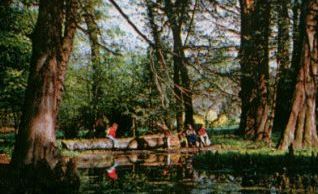
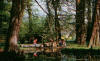 Cismigiu Gardens are the oldest and
most beautiful park in Bucharest (opened to the public in 1816). Situated in the
centre of the city, opposite the City Hall and next to Gheorghe Lazar High
School this park has lots of trees, plants, birds and a large lake. Cismigiu Gardens are the oldest and
most beautiful park in Bucharest (opened to the public in 1816). Situated in the
centre of the city, opposite the City Hall and next to Gheorghe Lazar High
School this park has lots of trees, plants, birds and a large lake.
Red tulips and roses surround fine statues of famous writers and men of science.
The white of the statues, the red of the flowers and the green of the grass make
a beautiful sight which you can admire while sitting on benches under the big
old trees.
In Cismigiu Gardens you can also have lots of fun. For little children there are
several playgrounds. There is also a kiosk where on Sundays or on different
holidays a brass-band plays fine music, so while parents are listening to music,
their children can play nearby.
You can also go boating on a large lake which is in the middle of the park.
We strongly advise you to come and visit Cismigiu Gardens. You will have a great
time here!
by Ana and Ana-Maria (School No.191, Bucharest, Romania)
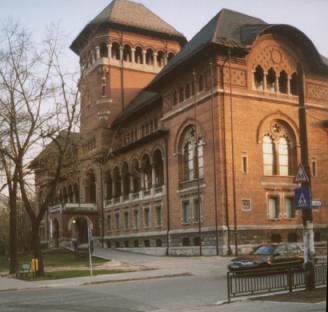
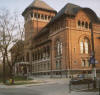 The
Museum of the Romanian Peasant is one of the most important sights in
Bucharest. In 1996 it was the winner of the European Museum of the Year Award.
The
Museum of the Romanian Peasant is one of the most important sights in
Bucharest. In 1996 it was the winner of the European Museum of the Year Award.
It houses 18,000 pieces of pottery from different regions of Romania. The old
ceramic item existing in this museum bears the inscription 1746. There are also
20,000 objects representing highly valuable folk costume pieces from all over
the country and 10,000 carpets, decorative towels and wall hangings, not to
mention glass icons, furniture, magnificent "troite" (crosses placed at the
edges of villages or at crossroads) as well as films and photos of the rural
life customs. There is also a timber church (without its roof) inside one of the
galleries.
The foreign countries collection of traditional objects is original and highly
valuable, too.
We strongly recommend that you visit the Museum of the Romanian Peasant.
top
by Stefan, Dragos T.,Attilo
(School No.191, Bucharest, Romania)
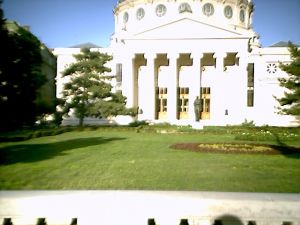
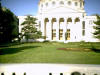 The Romanian Athenaeum is the
best concert hall in Bucharest. It was built between 1885 and 1888 with funds
raised by public subscription, following the plans of the French architect
Albert Galleron.
The Romanian Athenaeum is the
best concert hall in Bucharest. It was built between 1885 and 1888 with funds
raised by public subscription, following the plans of the French architect
Albert Galleron.
It looks like a Ionic temple with six columns and a large cupola. Inside you can
see a large round concert hall with 1000 places. The hall room is decorated with
a fresco that presents the most important moments in our history.
It is worth mentioning that in front of the Romanian Athenaeum is the bronze
statue of Mihai Eminescu - the greatest Romanian poet.
In our opinion this is the ideal place to listen to classical music in
Bucharest.
by Andrei, Dragos B. and Catalin
(School No.191, Bucharest, Romania)
The Village and
Folk Art Museum
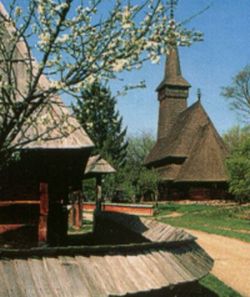
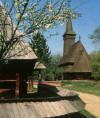 The
sayings" Home, sweet home" and "My home is my castle" are well illustrated by
the Romanian peasant homes that you can see at The Village and Folk Art
Museum (the second most important in Europe after the one in Stockholm). The
sayings" Home, sweet home" and "My home is my castle" are well illustrated by
the Romanian peasant homes that you can see at The Village and Folk Art
Museum (the second most important in Europe after the one in Stockholm).
Everything in this open-air museum is original. The peasant homes and all the
things in them were brought piece by piece from all the regions of Romania. The
houses in Dobrogea and the Danube Delta are not high and have thatched roofs.
Those in Transylvania are quite tall and made of wood. Their verandahs are full
of flowers and climbing plants.
When you go into the houses you can admire the Romanian
traditional folk costumes, the old pieces of furniture and the hand-made carpets
on the walls and floors.
We strongly recommend that you visit this wonderful museum.
by Catalina and Marcela (School No.191, Bucharest, Romania)
top
Bucharest Botanical
Gardens
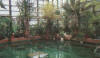 Bucharest
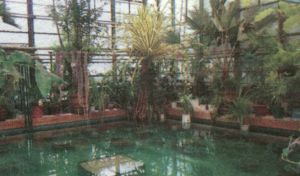
Botanical Gardens (opened to the public in 1895) contain plants and
trees from different parts of Romania as well as a hothouse with plants and
trees from all over the world. This is a wonderful place where you can relax and
breathe fresh air. It is located opposite the Cotroceni Palace and quite close
to the Dambovita river. Bucharest
Botanical Gardens (opened to the public in 1895) contain plants and
trees from different parts of Romania as well as a hothouse with plants and
trees from all over the world. This is a wonderful place where you can relax and
breathe fresh air. It is located opposite the Cotroceni Palace and quite close
to the Dambovita river.
by Diana (School No.191, Bucharest, Romania)
top
The Palace of
Parliament
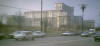 From
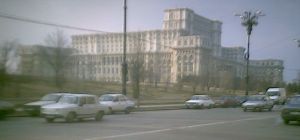
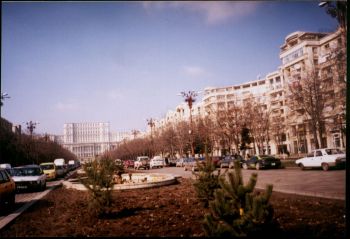
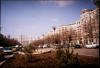
Unirii Square, towards the west is Unirii Boulevard ending in front of the
Parliament building.
It is a huge palace where Nicolae Ceausescu wanted to reside. He did not
live to see it finished. It competes with the Pentagon in size. From
Unirii Square, towards the west is Unirii Boulevard ending in front of the
Parliament building.
It is a huge palace where Nicolae Ceausescu wanted to reside. He did not
live to see it finished. It competes with the Pentagon in size.
 It
is located in the new civic centre, on the left bank of the Dambovita River. By
order of Nicolae Ceausescu most of the old buildings which stood in this area
were pulled down to make way for the new buildings. Two old and extremely
beautiful churches were demolished, too. It
is located in the new civic centre, on the left bank of the Dambovita River. By
order of Nicolae Ceausescu most of the old buildings which stood in this area
were pulled down to make way for the new buildings. Two old and extremely
beautiful churches were demolished, too.
by Dragos and Mihai (School No.191, Bucharest, Romania)
top
Baneasa Zoo
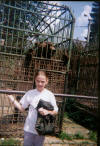 Baneasa
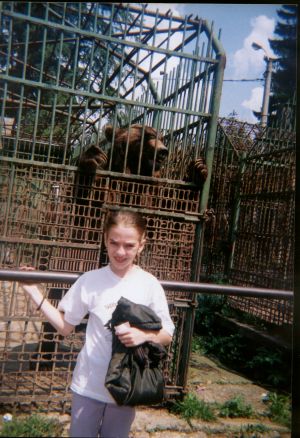
Zoo is children's favourite attraction. Baneasa
Zoo is children's favourite attraction.
It is situated in Baneasa Forest, a wonderful place where you can relax and
breathe fresh air.
You can see some of the world's most rare and endangered species of animals and
birds here. Every Sunday morning you can ride the ponies, too.
Come and visit this wonderful place! It is open all year.
by Oana (School No.191, Bucharest,Romania)
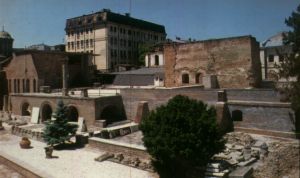
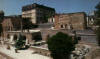 Situated in the old centre of
Bucharest, the Curtea Veche Museum is worth visiting. Here you can see
fragments of constructions raised in the ages of Vlad Tepes (Dracula), Mircea
Ciobanul and Constantin Brancoveanu.
Situated in the old centre of
Bucharest, the Curtea Veche Museum is worth visiting. Here you can see
fragments of constructions raised in the ages of Vlad Tepes (Dracula), Mircea
Ciobanul and Constantin Brancoveanu.
The museum houses a large number of flag-stones, vases, stone cannon balls and
traces of settlements going back to the 4th century, as well as other important
historical vestiges.
Nearby is the church Buna Vestire, Bucharest's oldest building (1558-1559) kept
to our days.
by Laurentiu and Dan (School No.191, Bucharest,Romania)
top
The National Art Museum
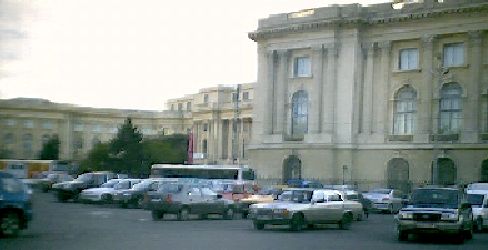
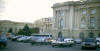 The
National Art Museum (housed by the Royal Palace) is Romania's largest
and most representative gallery of European, Oriental and national art. Here
you can admire paintings by Italian, German, Spanish, Flemish, Dutch and French
masters of the 14th - 18th centuries. There are also valuable collections of
Chinese jade carvings and Japanese prints. The
National Art Museum (housed by the Royal Palace) is Romania's largest
and most representative gallery of European, Oriental and national art. Here
you can admire paintings by Italian, German, Spanish, Flemish, Dutch and French
masters of the 14th - 18th centuries. There are also valuable collections of
Chinese jade carvings and Japanese prints.
The Gallery of National Paintings contains works by N.
Grigorescu, I.Andreescu, St. Luchian, N. Tonitza and other Romanian masters.
There are also several sculptures by Brancusi, a Romanian sculptor who is
world-famous.
by Sorina and Cosmina (School No.191, Bucharest,Romania)
top
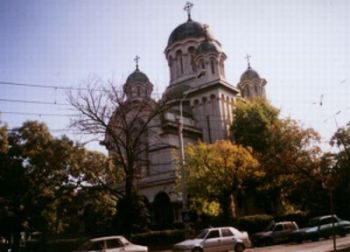
Casin Monastery
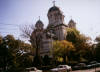 It
was built in 1937 nearby the Triumphal Arch. It is a great monument which
combines harmoniously the traditional architectural elements with the modern
ones. It
was built in 1937 nearby the Triumphal Arch. It is a great monument which
combines harmoniously the traditional architectural elements with the modern
ones.
Its mural decoration is made of multi-coloured mosaic and marble. Its
catapetasma and apse are also made of marble with icons made of mosaic and
enamel.
Nadia Comaneci (one of the world's best gymnasts) and Bart Conner got married
here on April 27, 1996, in a lavish church ceremony. Their godparents were
Adrian Nastase (our Prime Minister) and his wife Dana Nastase.
by Madalina (School No.191, Bucharest,Romania)
top
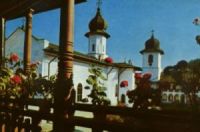
Agapia Monastery
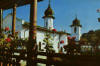 Situated in
Moldavia, Agapia village (12 km. south-west from Targu Neamt) Agapia
Monastery was founded by Gavril Hatmanul ( a leader of army) and his wife
Lady Liliana and dedicated in 1647. Situated in
Moldavia, Agapia village (12 km. south-west from Targu Neamt) Agapia
Monastery was founded by Gavril Hatmanul ( a leader of army) and his wife
Lady Liliana and dedicated in 1647.
The front sides of the monastery are covered outside with paintings of
neo-classical inspiration. Inside, this monastery was painted in 1860 by Nicolae
Grigorescu, a famous Romanian painter.
There is also a very interesting museum of religious art nearby where you can
admire many icons of a great artistic value painted by N. Grigorescu, too.
The Agapia Monastery houses nuns. They are very helpful and kind to the tourists
who want to visit the monastery or spend their holiday in this blessed place.
Their cells are beautifully decorated with red geraniums by the windows.
You should not miss this monastery! It is worth visiting it!
by Francesca (School No.191, Bucharest, Romania)
 The Salt Mountain
is located in Slanic Prahova, Romania.
The Salt Mountain
is located in Slanic Prahova, Romania.
There is a hole into the mountain (called the Bride's Cave) through which
you can see a saline lake. The sun rays reflected in the lake create a wonderful
sight.
Here is the story of the Bride’s Cave:
My grand-grandmother told me the story as she got to know the bride’s mother
whose daughter was very beautiful.. She was so beautiful that every man in
Slanic Prahova who knew her wanted to marry her but the girl wasn’t interested
in any of them.
One day the girl’s mother told her daughter that she would have to marry a rich
boy.
She was very unhappy on the wedding day. When the wedding ceremony finished she
ran as fast as she could up to the cave. In that time the cave was huge. It was
like a giant salt-mountain. She climbed up to the top. Then, she threw herself
into the clear-blue salty and cold water. Since then nobody has heard anything
about her.
by Mihaela and Cristina (School No. 191, Bucharest, Romania)
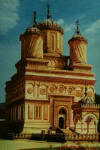 Curtea de
Arges Monastery
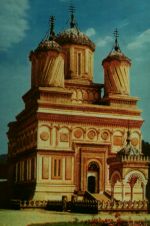
Curtea de
Arges Monastery
Built at Curtea de Arges between 1512 and 1521 this monastery is one of the most
beautiful religious monuments in the Balkans. It was built under the pious
prince Neagoe Basarab's supervision and following Artisan Manole's plans.
Carol I and Ferdinand, the kings of Romania were buried in this monastery.
Here is Manole's legend.
He was the Artisan who built the monastery together with his nine apprentices.
The ruler of that time asked Manole to build a glorious church on a place that
was under a curse. Manole and his apprentices started working and working but
what they would build during the day, collapsed during the night.
One night Manole saw in his dream that the walls would resist if the first woman
bringing food to the workers was walled into the foundation of the monastery.
The next day that woman happened to be Manole's wife. They walled her into the
foundation and so the monastery never collapsed again.
by Alexandra and Andreea (School No.191, Bucharest, Romania)
top
|  KNOWING
ME
IS KNOWING
YOU
KNOWING
ME
IS KNOWING
YOU