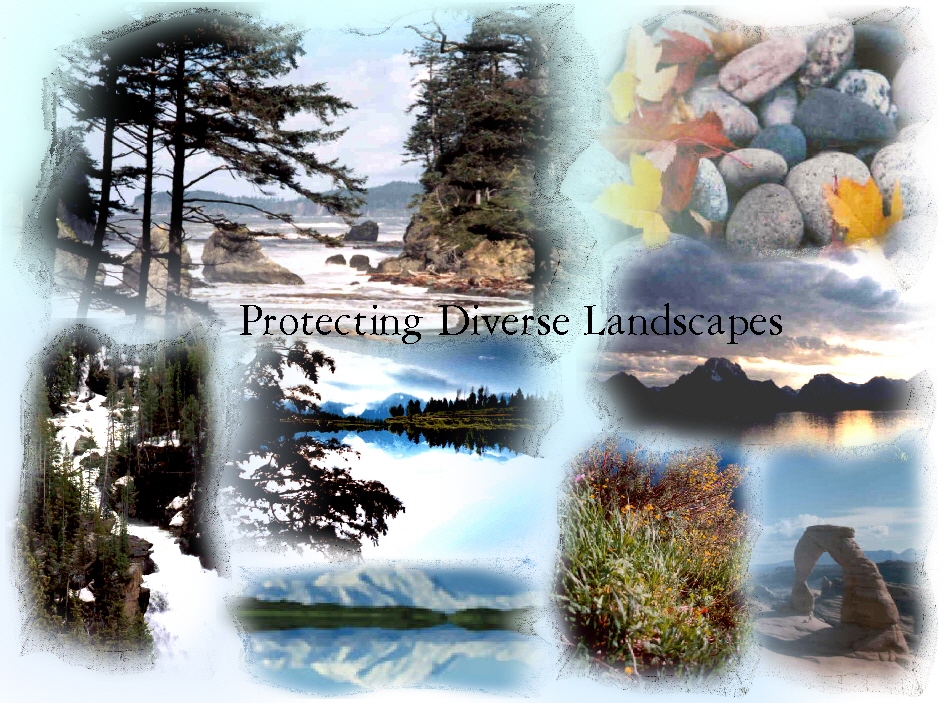
Park Reflections Image Created by L. M. Little
Carlsbad
Caverns National Park (1995)
Preserves more than 80 caves in the Guadalupe Mountains
of southern New Mexico, including the nation's deepest limestone
cave.
Chaco
Culture National Historical Park (1987)
Features 13 major archeological sites that represent
the highest point of Pueblo pre-Columbian civilization.
Everglades
National Park (1979)
The largest subtropical wilderness in the continental
U.S. includes extensive fresh- and saltwater areas, Everglades prairies,
and mangrove forests.
Grand Canyon National
Park (1979)
Focusing on the Grand Canyon of the Colorado River,
park illustrates one of the most spectacular examples of erosion
anywhere in the world.
Great Smoky Mountains
National Park (1983)
Encompassing portions of NC and TN, park features
a diversified plant and animal life, and preserves structures representing
southern Appalachian mountain culture.
Hawaii
Volcanoes National Park (1987)
International Biosphere Reserve and World Heritage
Site features active volcanism and rare vegetation. Elevations
range from sea level to 13,677 feet.
Independence National
Historical Park (1979)
Located in central Philadelphia, park includes structures
and sites associated with the American Revolution and the founding
of the United States.
Mammoth Cave National
Park (1981)
The longest recorded cave system in the world includes
more than 336 miles explored and mapped.
Mesa Verde National
Park (1978)
The first cultural park set aside by NPS features
the best preserved and most notable pre-Columbian cliff dwellings
and other works of early Americans.
Olympic
National Park (1981)
Pristine wilderness park includes glacier capped
mountains, over 60 miles of scenic ocean shore, and stands of
old-growth and temperate rain forest.
Pueblo
de Taos (1992)
One of the best preserved group of habitations
and ceremonial centers which are representative of a culture largely
derived from the traditions of the pre-historic Anasazi Indian
tribes.
Redwood National Park
(1980)
Features old growth coastal redwood forests and
40 miles of scenic Pacific coastline.
San Juan National
Historic Site (1983)
Park includes three Spanish-built fortresses and
five kilometers of historic city walls.
Statue
of Liberty National Monument and Ellis Island (1984)
Park includes the Statue of Liberty and Ellis Island,
which played an important role in the history of immigration in
the late 19th and early 20th centuries.
Yellowstone
National Park (1978)
Yellowstone Net Company site includes multimedia
tour, park newspaper and newsletter, discussion forums, and more.
Yosemite National Park
(1984)
Established in 1890, this Sierra Nevada park features
alpine wilderness, groves of Giant Sequoias, and the glacially-carved
Yosemite Valley.
| Home Page | NPS Overview |
NPS History |
NPS Legislation |
| NPS Units |
NPS Geology |
NPS Regions |
 World Heritage Sites
 |
| Quiz Site |
Education Links |
Quit |
NEXT PAGE
PAGE |