Breast Cancer Prognosis Using Image Processing
Overview & Background
Breast Cancer Prognosis Using Image Processing
Overview & Background
|
|
Breast Cancer Prognosis Using Image Processing Overview & Background |


|
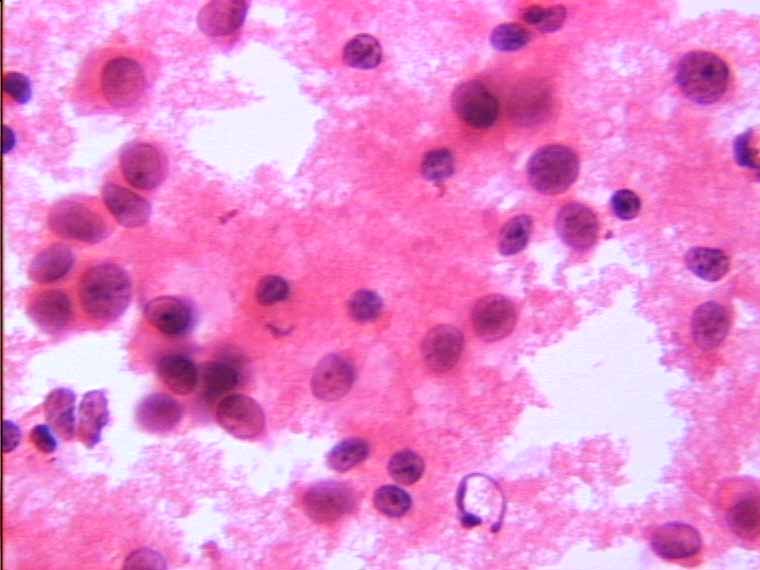
Cancer. A cancer may start by a transformation of a single cell; this transformation converts a normal cell to a cancer cell. If the body's immune system does not detect this abnormality the cell may proliferate to form a tumour. If the cancerous cells are confined to their original site the tumour is known as benign and may be removed without any further effect to the patient. However, if the tumour has spread to nearby organs the tumour is known as malignant and the patient is classified as having cancer. The spread of cancer cells to other parts of the body is known as Metastasis the treatment for which is high radiation treatments such as chemo-therapy and toxic drugs that are harmful to normal healthy dividing cells. First signs of a cyst present in the breast are the detection (self examination) of a small lump. Mammography is used to determine the size and location of the cyst and the cells are removed for diagnosis. To accurately determine the malignancy of the tumour so that precise treatments may be prescribed the prognosis of the tumour is determined. Prognosis can be determined by either Histology or Cytology. Histology. The cyst is removed from the breast and sections of the tissue are examined for prognostic indicators, a grade is assigned that reflects the amount of time before recurrence of the cancer. Cytology. A number of cells are removed from the cyst using fine needle aspiration, the cells are smeared across a slide and inspected for prognostic indicators. The prognostic indicators are based on the Histological scores and a histological grade is assigned which determines the prognosis. Histology is well established and prognosis can be accurately predicted, however, Histology is performed post operatively, which may psychologically affect the patient. Cytology is desirable as it can be performed pre-operatively and accurate treatments may be prescribed, prognosis by cytology may alleviate stress on a patient's behalf. Aspiration cytology having been developed in the 1930's was not widely accepted until the 1980's. Fine needle aspiration (FNA) techniques are at the cutting edge of clinical medicine (Kline 1998, Wojcik et al 1994, Hussain et al 1993, Zardawi 1998) Fine Needle Aspiration Cytology. Typically, a 20ml syringe is attached to a fine needle, the fine needle is then inserted into the cyst and a sample is taken. The contents of the syringe is then smeared over a glass slide, the aspirate is then fixed and stained. Either air-drying or wet fixing techniques achieves fixing and staining increases the contrast. Various features of the cell and nucleus are then extracted by an observer and given a score. The scores when added relate to a grade, which will identify the malignancy of the tumour, the grade relates to the likely outcome of the cancer i.e. the prognosis. This process is known as Fine Needle Aspiration Cytology (FNAC). Digital Image Processing & Cytology. "Because neoadjuvant therapy, including pre-operative chemotherapy and tamoxifen, is becoming increasingly popular for early breast cancer, it is desirable to grade a tumour before surgery" (Robinson et al 1994). One such method is cytology (Robinson et al. 1994) where fluid from a cyst is removed using a fine needle and syringe, this is known as 'Fine Needle Aspiration Cytology'. Fine needle aspiration cytology is an important method of breast cancer prognosis as it can be performed preoperatively, as apposed to Histology, which is performed post-operatively. The patient also prefers the former, as it is less invasive and it causes less psychological stress as structural alteration to the breast may be avoided (Negri et al 1994, Kreuzer et al 1976, Gardecki et al 1980, Dixon et al 1984).
| |
|
Home | Overview | Abstract | Main | Results | Future | References | Download | Terminology | Links | About The Author | Contact us Copyright © 2002 Nick Bryan All rights reserved. |