
NORTH
SHORE WARGAMES CLUB
Renaissance
| Home | Renaissance links | News | Push of Pike 2009 | 2008 | 2007 | 2006 | 2005 | 2004 |
Renaissance
wargaming on the North Shore
Renaissance or DBR is a strong period at our club. There are about a
dozen of us at the club with renaissance armies and you will usually see
one or two DBR games at the club every meeting. In the last couple of
years there have been some games in 25mm scale,
but so far most of our
renaissance wargames have been in 15mm scale. We have also tried a few
games using late period DBM/DBMM armies (e.g. Hussites and Medieval Germans)
using DBR rules. FOG-R (Field of Glory) is likely to make an appearance soon.
Competitions and Conventions
NICon | NatCon
| Push of Pike
| South Pacific Championship
History
of renaissance wargaming in NZ
The
first ever renaissance wargames army
Nicon 2009
Nicon 2009 was held on Queen's Birthday weekend, May 30-31, in the Napier Boys' High School hall.
There were 8 players in the DBR competition. Scott won the prize for the best army, a vast horde (nearly 90ME) of Tlaxcalans (from The Assault Group) and Spanish (from Eureka Miniatures). Kelly again produced a beautiful army, the Ottoman Turks, and won the Best Sport award. His Turks were at the point of winning their first game but then lost two elements attacking the enemy baggage and the game ended in a mutual break!
Almost all games finished with clear wins (10-0 or 9-1), many well within the four hour time limit. Only three games ended with a draw; neither army having broken by the end of play. There was one quick and bloody mutual break.
Final scores:
1. Richard Foster German Protestant, Hesse-Kassel 1635 [29 points]
2. Philip Abela Early Tudor English with Maximilian allies 1513 [28]
3. John Way Japanese after 1542 [23]
4. Allen Yaxley Ming Chinese 1539 [21]
5. Andrew Bennetts Italian Wars French 1522 [19]
6. Scott Neilsen Tlaxcalans and Conquistadors 1521[17]
7. Rex Hurley Valois French 1525 [17]
8. Kelly Gay Ottoman Turks before 1595 [6]
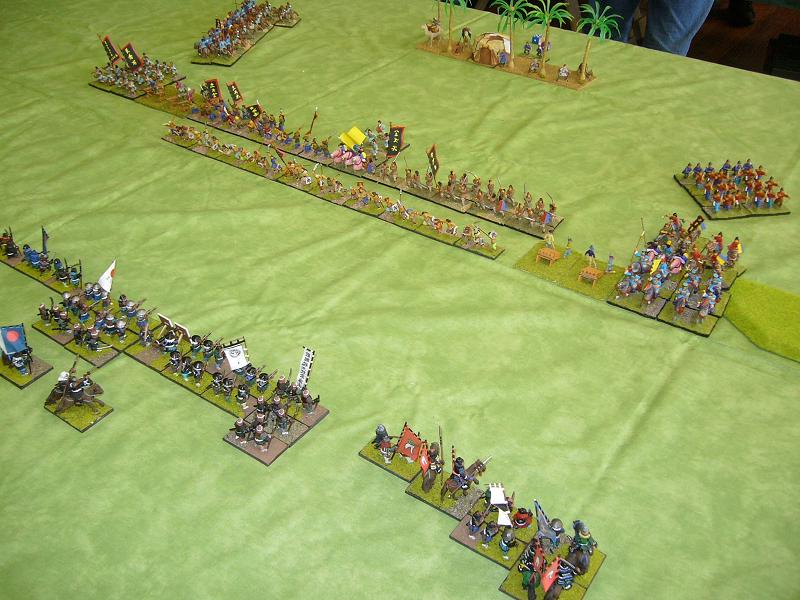 Japanese v Ming Chinese |
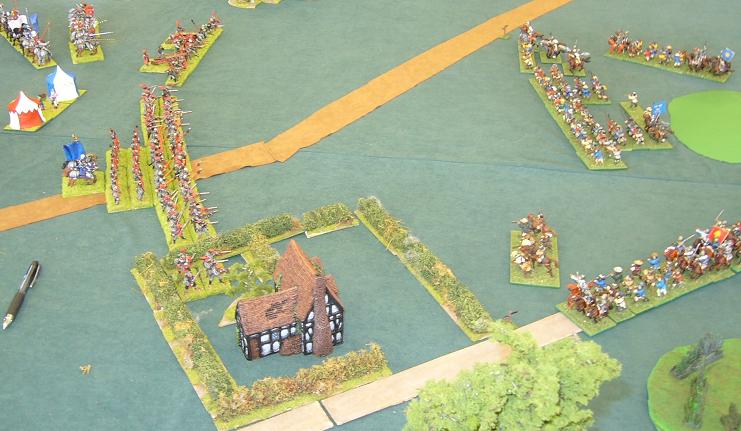 Valois French v German Protestants |
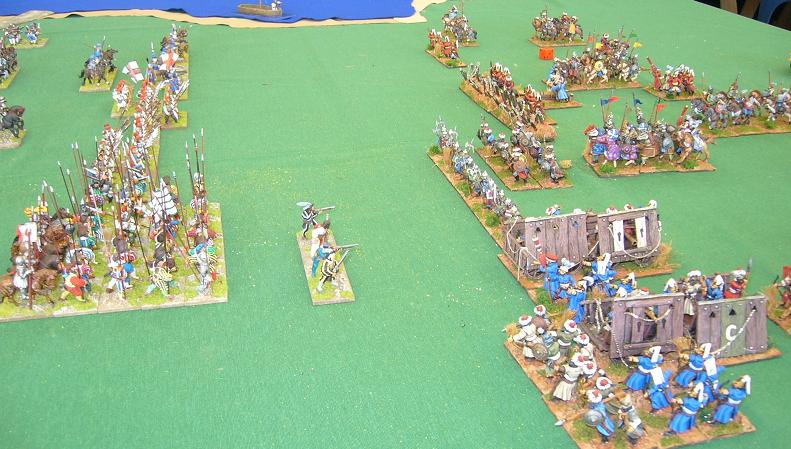 Tudor English v Ottoman Turks |
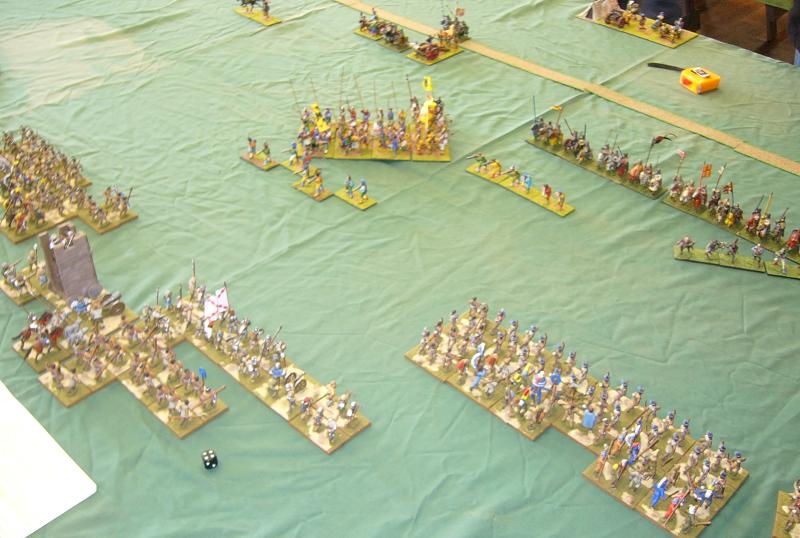 Tlaxcalans and Conquistadors v Italian Wars French |
Nicon 2008
The Manawatu Duellists hosted Nicon 2008 at Massey University. As there was no DBR at Natcon this year, Nicon doubled as the National tournament.
There was a great variety of armies, and the 17th Century armies did rather better this year than last. Four players took naval elements, the most impressive being Grant's buccaneer squadron.
We experimented with a new rule:
"Shot (F) get a +1 vs enemy they move into contact with in their own
turn".
The purpose of this was to give the Shot (F) a fighting chance and
the players who use them some hope. It did encourage said players to
try different armies but as it turned out there were no instances
where the +1 had any significant impact on a game. It did, however,
allow the Shot (F) to survive a little longer in hand to hand.
Final scores:
1. Richard Foster German Protestants Bohemian Revolt 1620, 335 points
2. Philip Abela Early Tudor English 1544, 332
3. Kelly Gay 30YW Swedes 1632, 327
4. Lawrence Antill German Catholics Eastern Imperial 1633, 232
5. Scott Neilson Omani Arabs 1518, 222
6. Grant Brown Buccaneers 1660, 221
7. Phil Gates Venetians 1506, 220
8. Allen Yaxley Knights of St John 1522, 220
9. Scott Gallagher Ukrainian Cossacks 1683, 111
10. John van den Hoeven Valois French 1536, 110
11. John Kerr ECW Royalists 1645, 110
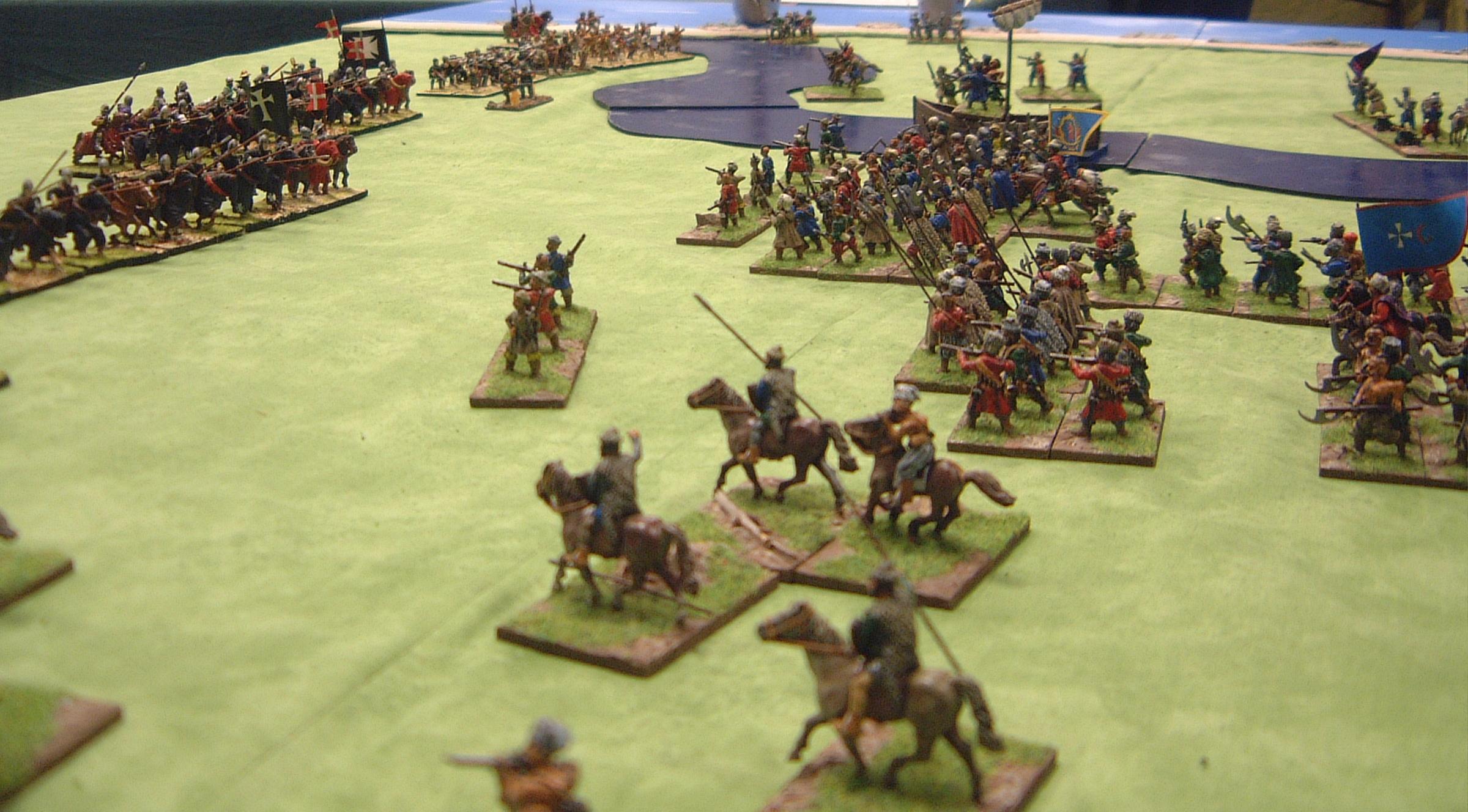 Knights of St John v Ukrainian Cossacks |
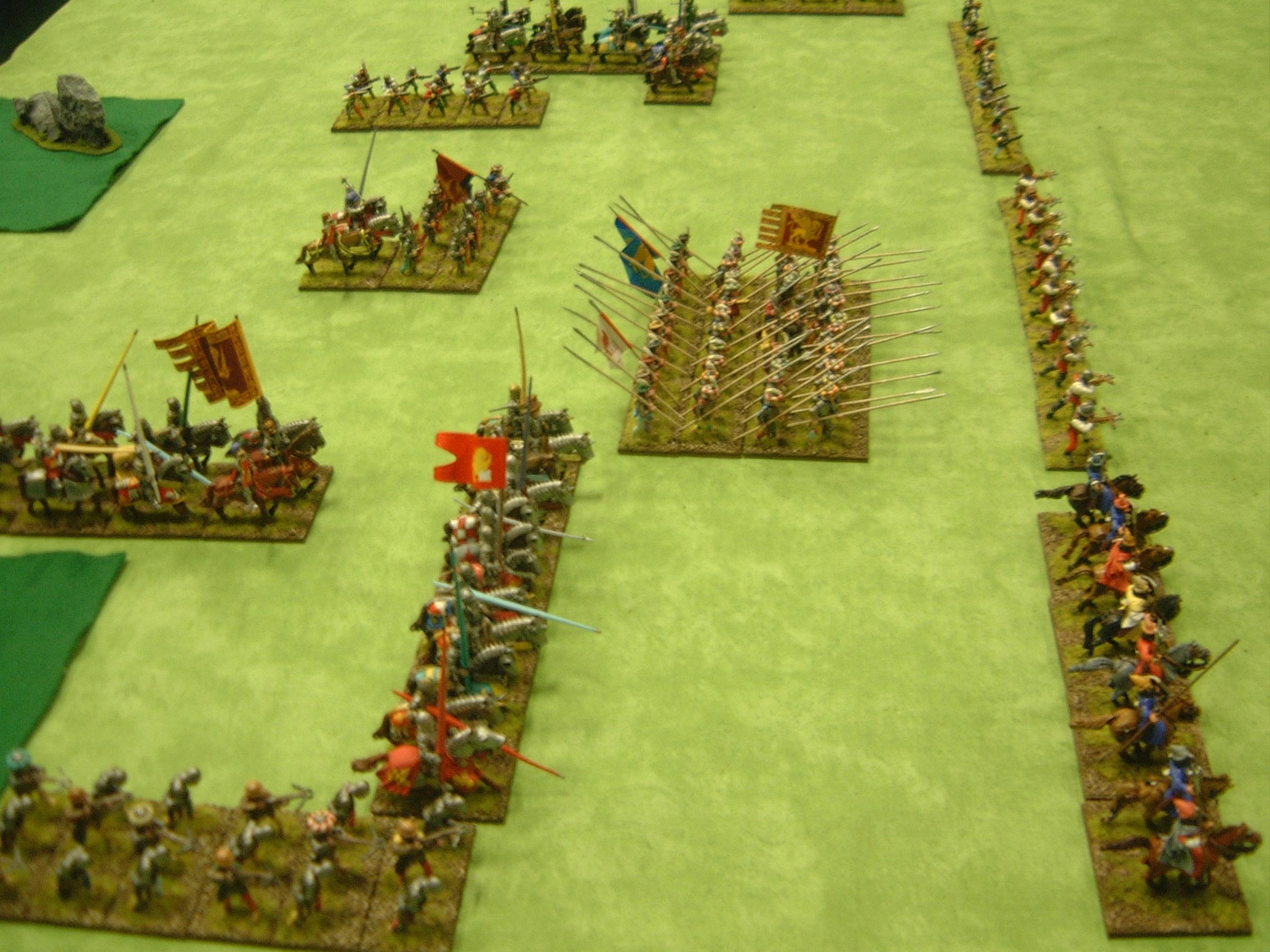 Venetians |
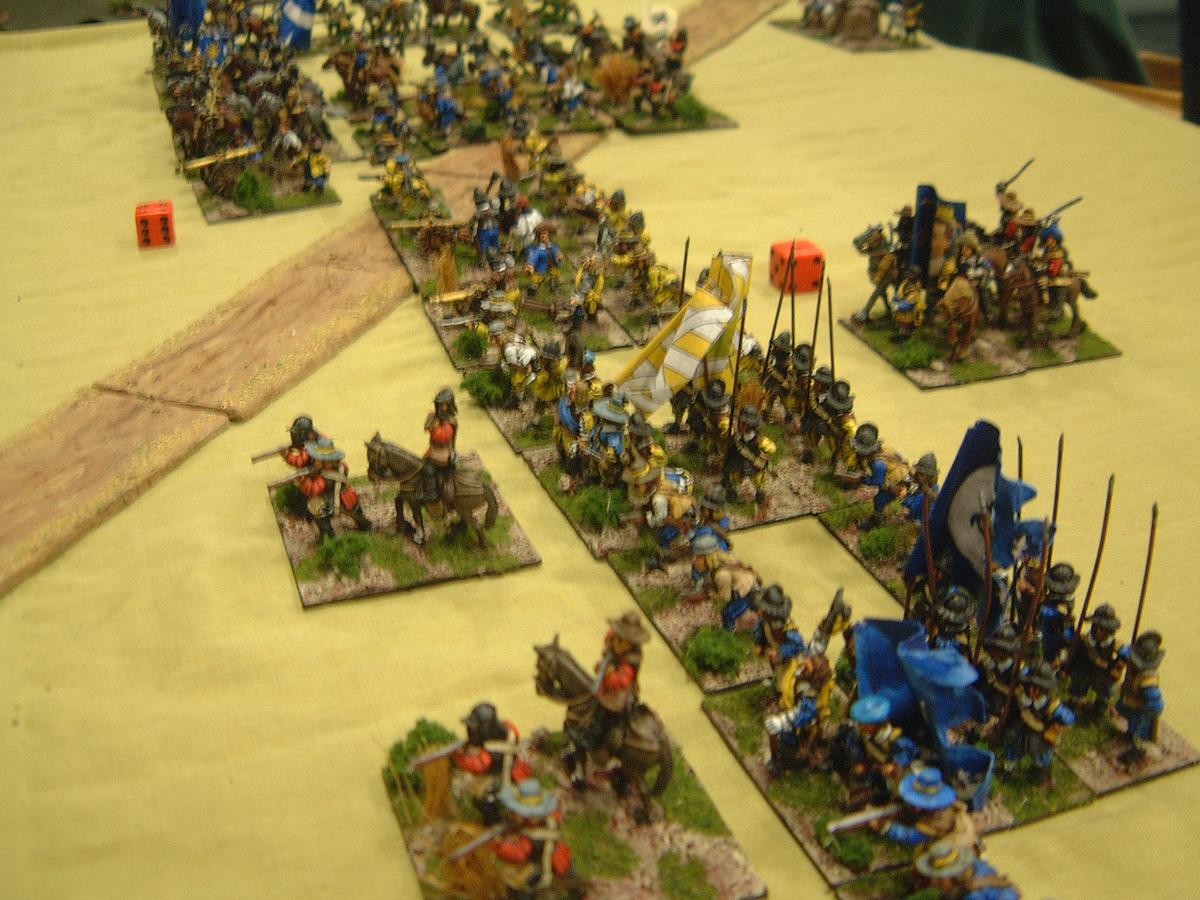 Thirty Years' War Swedish |
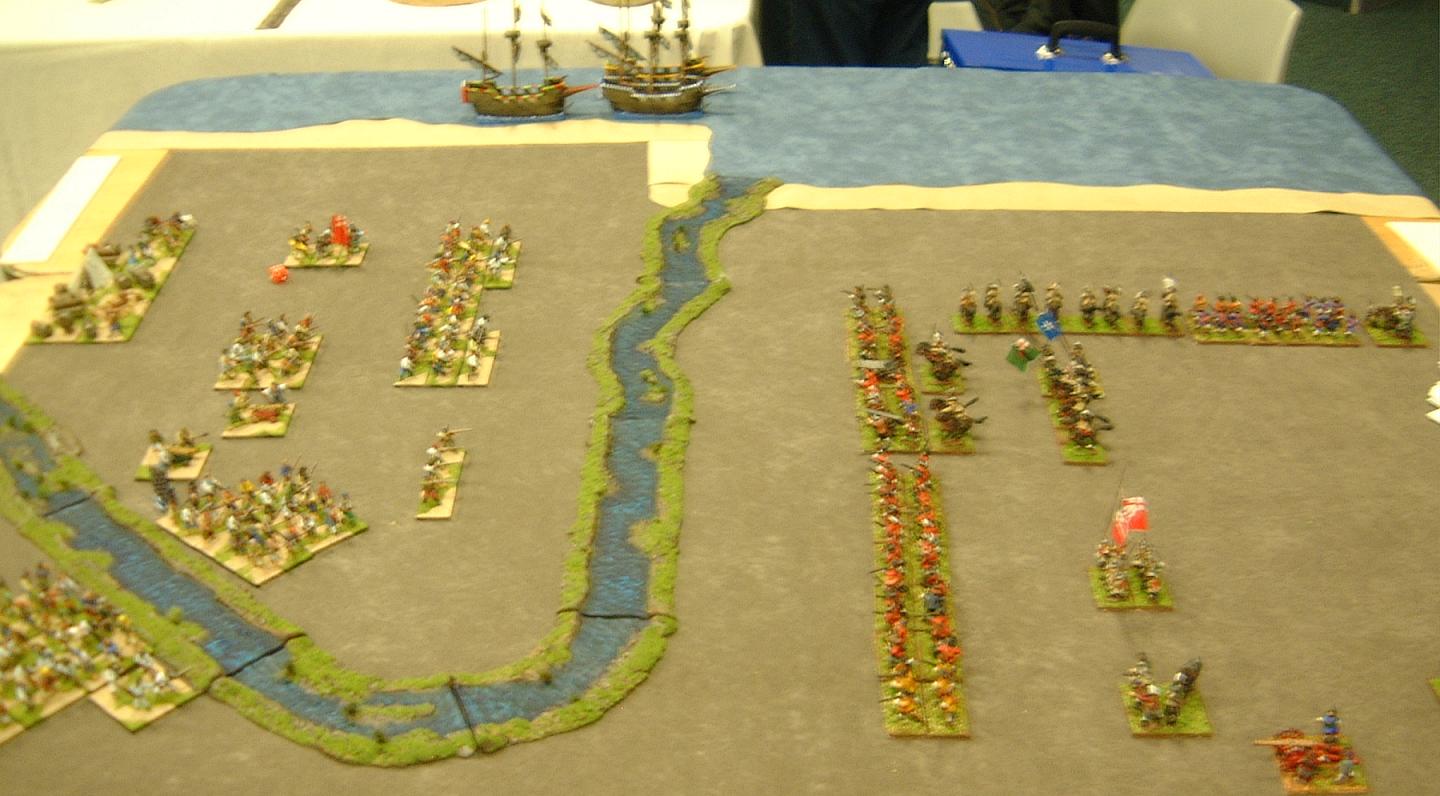 Buccaneers v English Civil War Royalist |
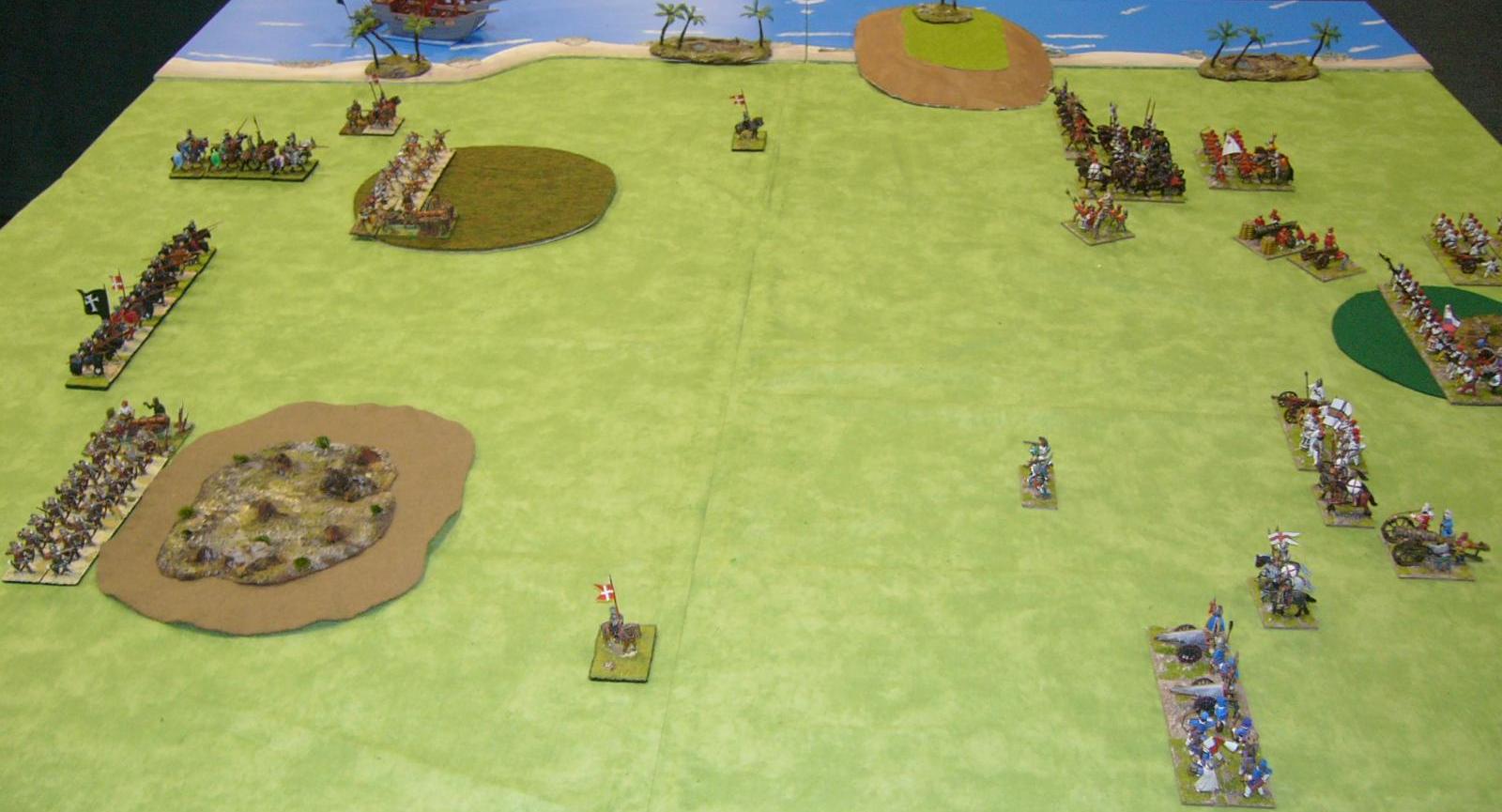 Knights of St John v Tudor English |
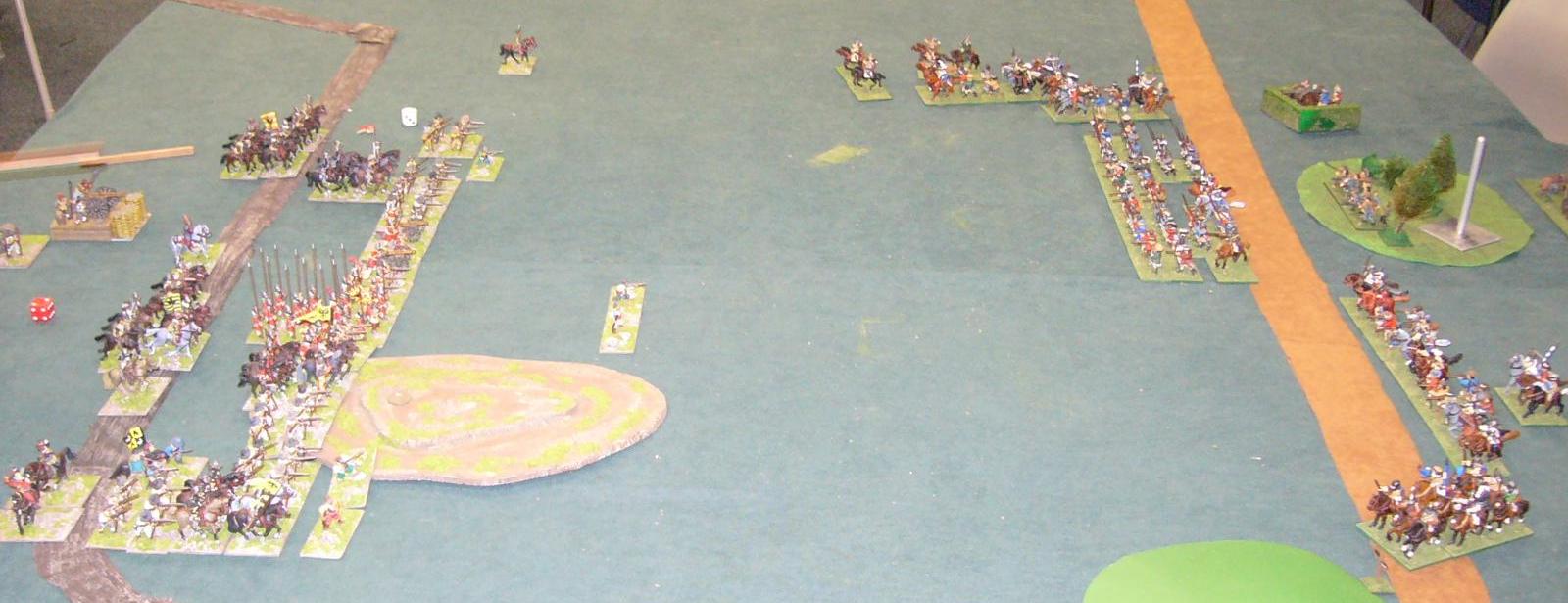 Thirty Years' War German Catholics v Protestants |
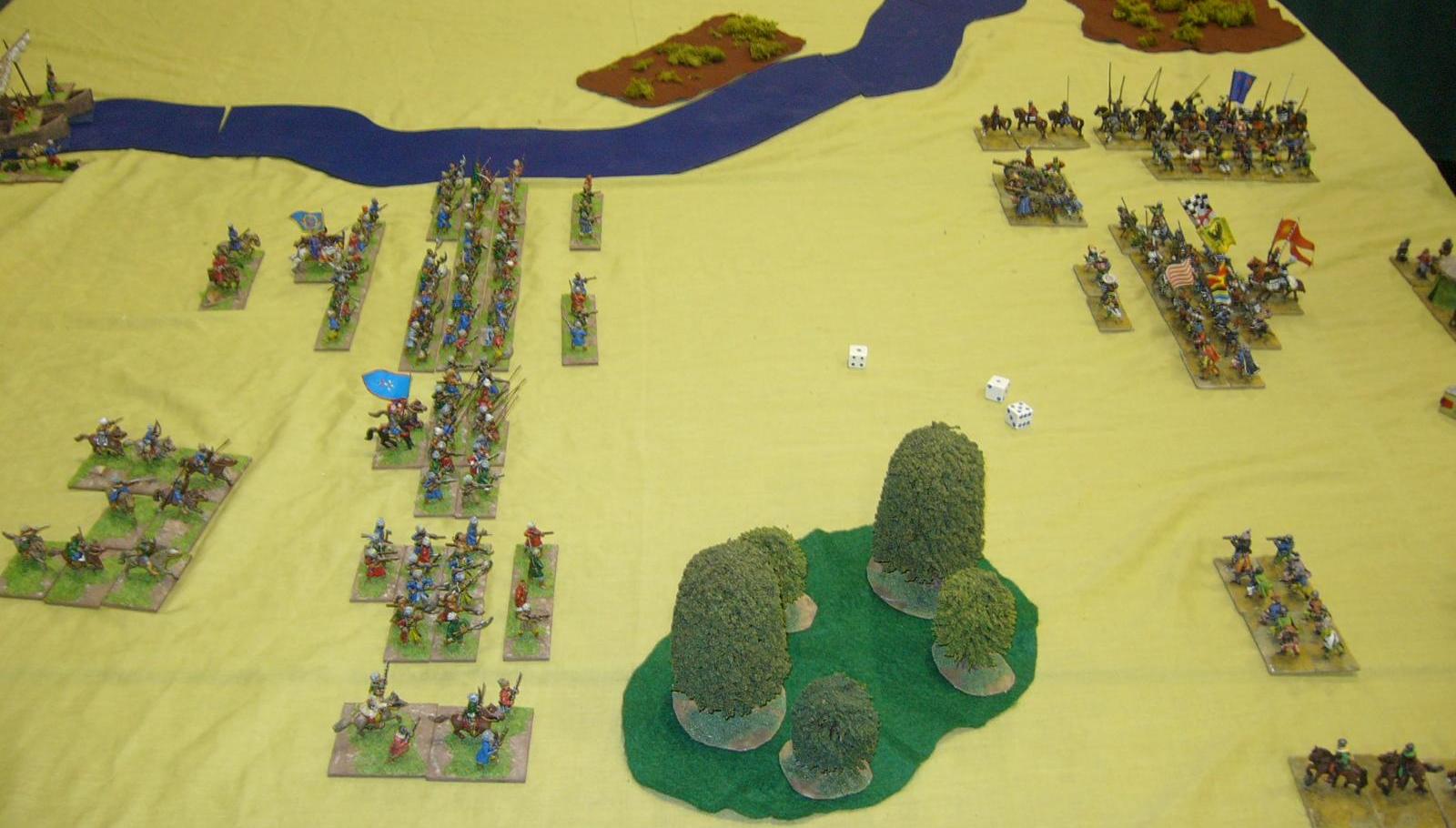 Ukrainian Cossacks v Valois French |
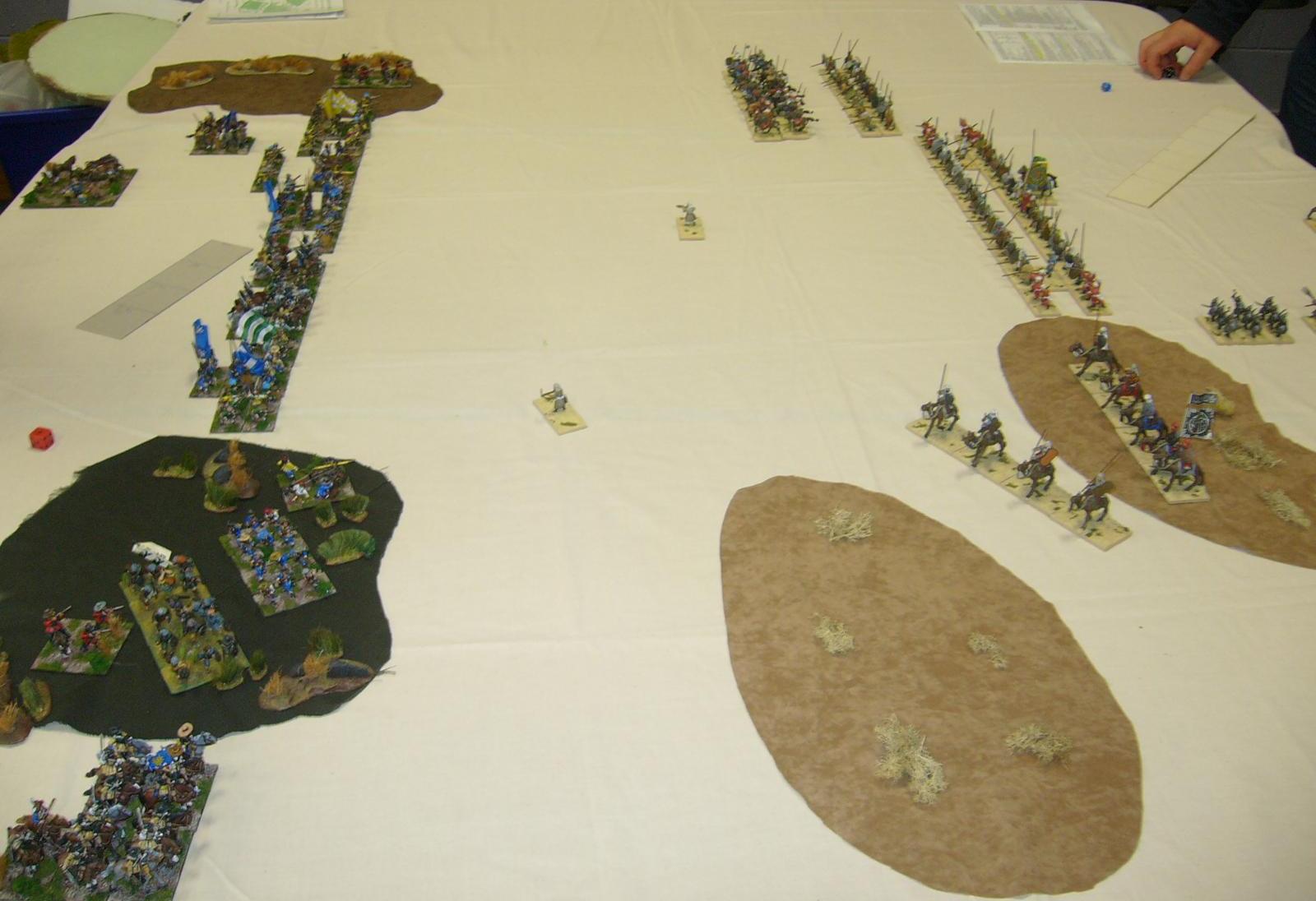 Thirty Years' War Swedish v Omani Arabs |
Nicon 2007
Nicon
2007 was held in Cambridge and like last year had a 25mm competition, this
time attracting a field of 12 players (four returning from last year and eight
new players)
and some brand new armies also made their appearance.
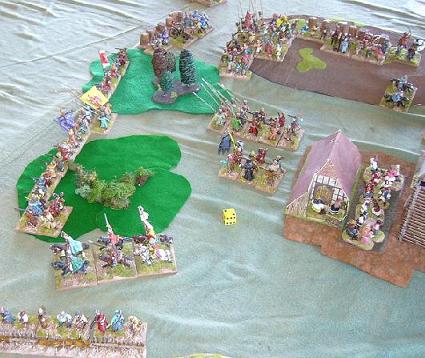 Competition
results:
Competition
results:
1. Grant
Brown Swiss Confederate, 232 points
2. Philip Abela Early Tudor English,
230
3. Danny Wrigley Scandinavian
Union, 228
4. Richard Foster Scandinavian
Union, 125
5. John Way Japanese, 122
6. John Conroy Later Polish, 122
7. Scott Gallagher Later Polish,
121
8. Andrew Hunter Manchu Chinese,
118
9. Patrick Conroy Ottoman Turk, 115
10. Allen Yaxley Russian Conscript,
110
11. John van den Hoven Transylvanian,
110
12. Mark Conroy Free Cossack, 9
Best Painted Army: Free Cossacks painted by Mark Conroy - a vast horde of fast pikes and fast
shot defended by fixed obstacles, with clouds of LH (I) dashing around.
These are the armies as deployed for the first round games, or in a few cases just beginning the first bound with the customary move into the flanks. Click the image to see a larger version.
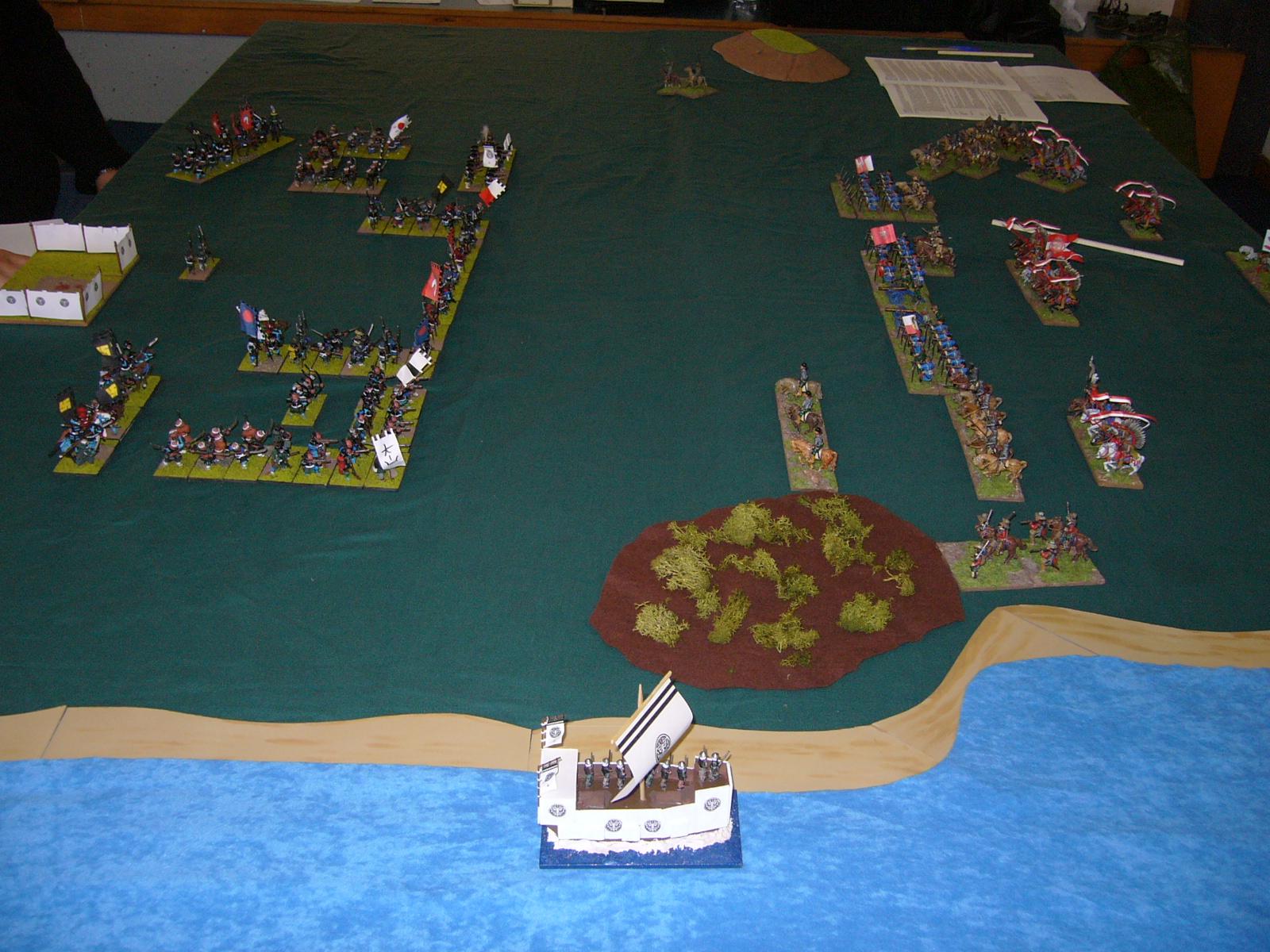 Japanese v Later Polish |
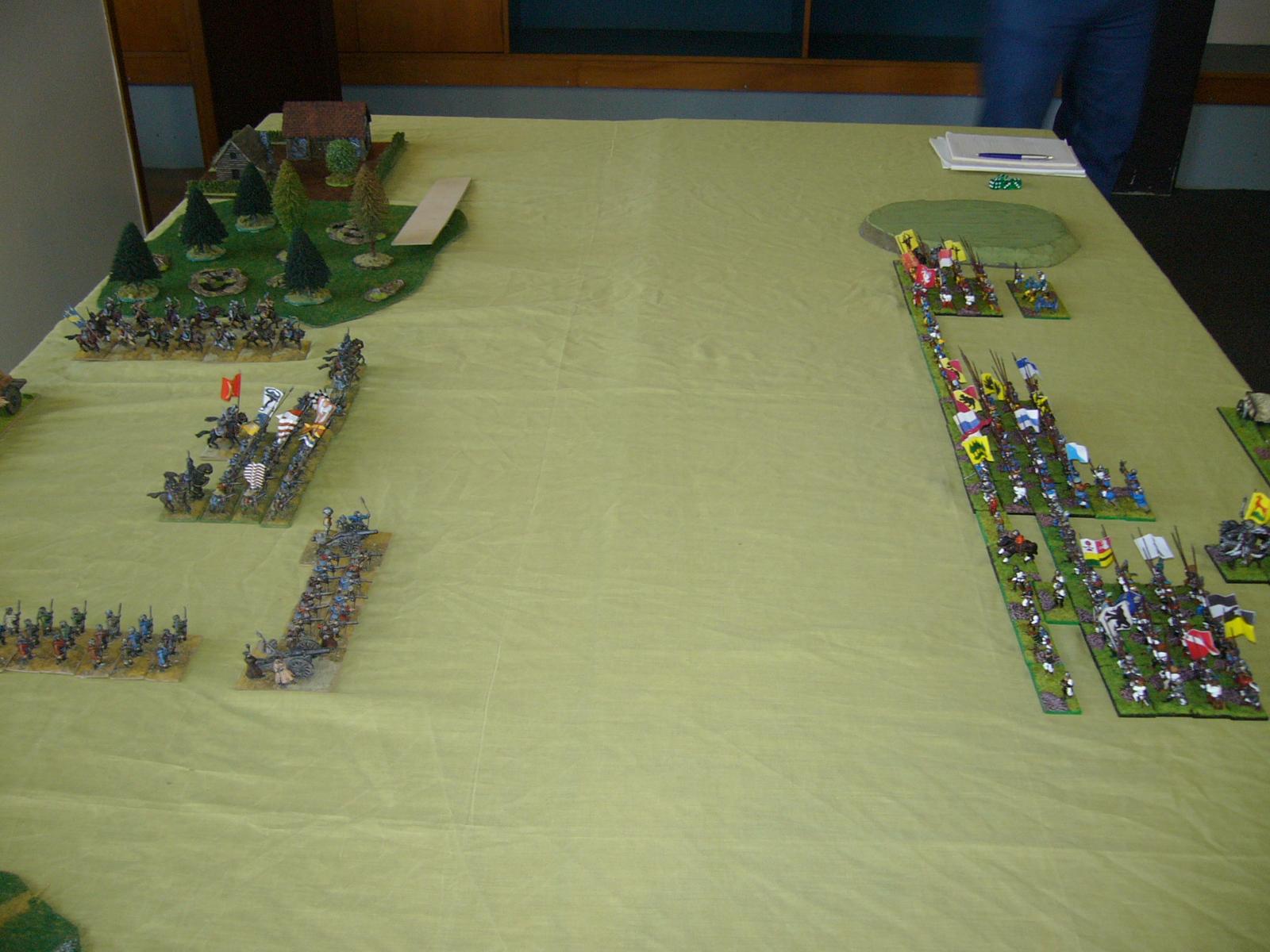 Transylvanian v Swiss Confederate |
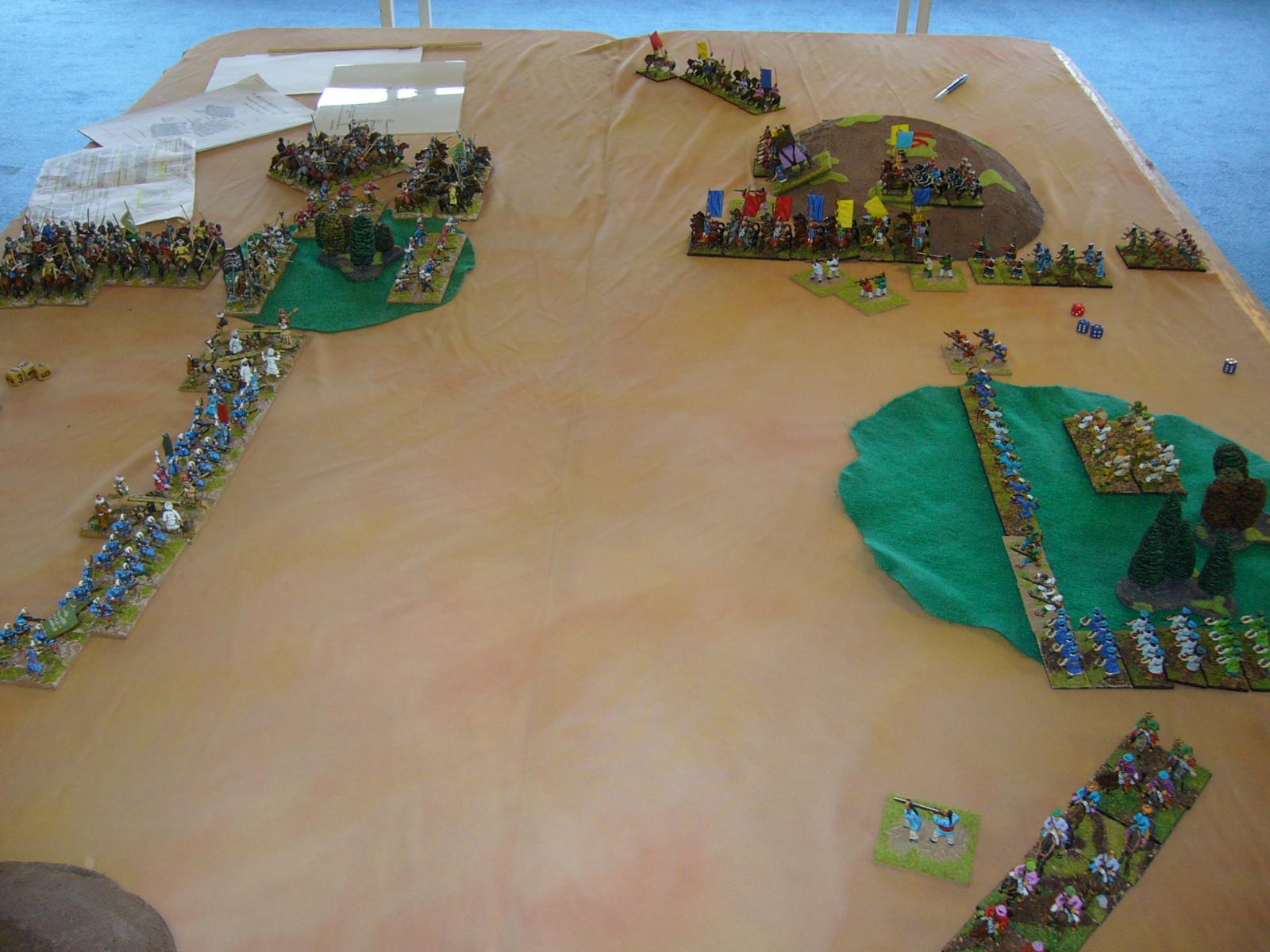 Ottoman Turkish v Manchu Chinese |
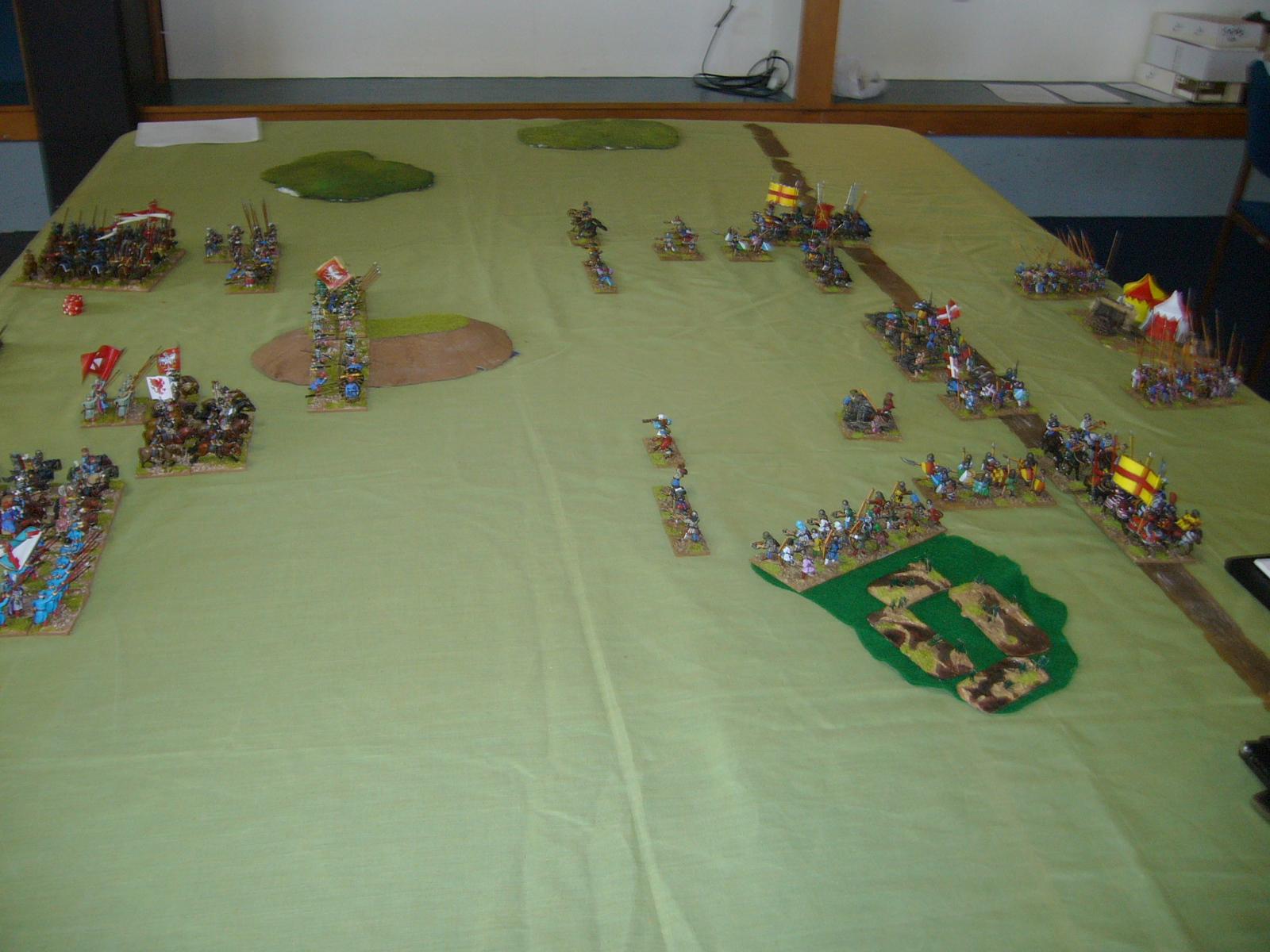 Later Polish v Scandinavian Union |
 Scandinavian Union v Russian Conscript |
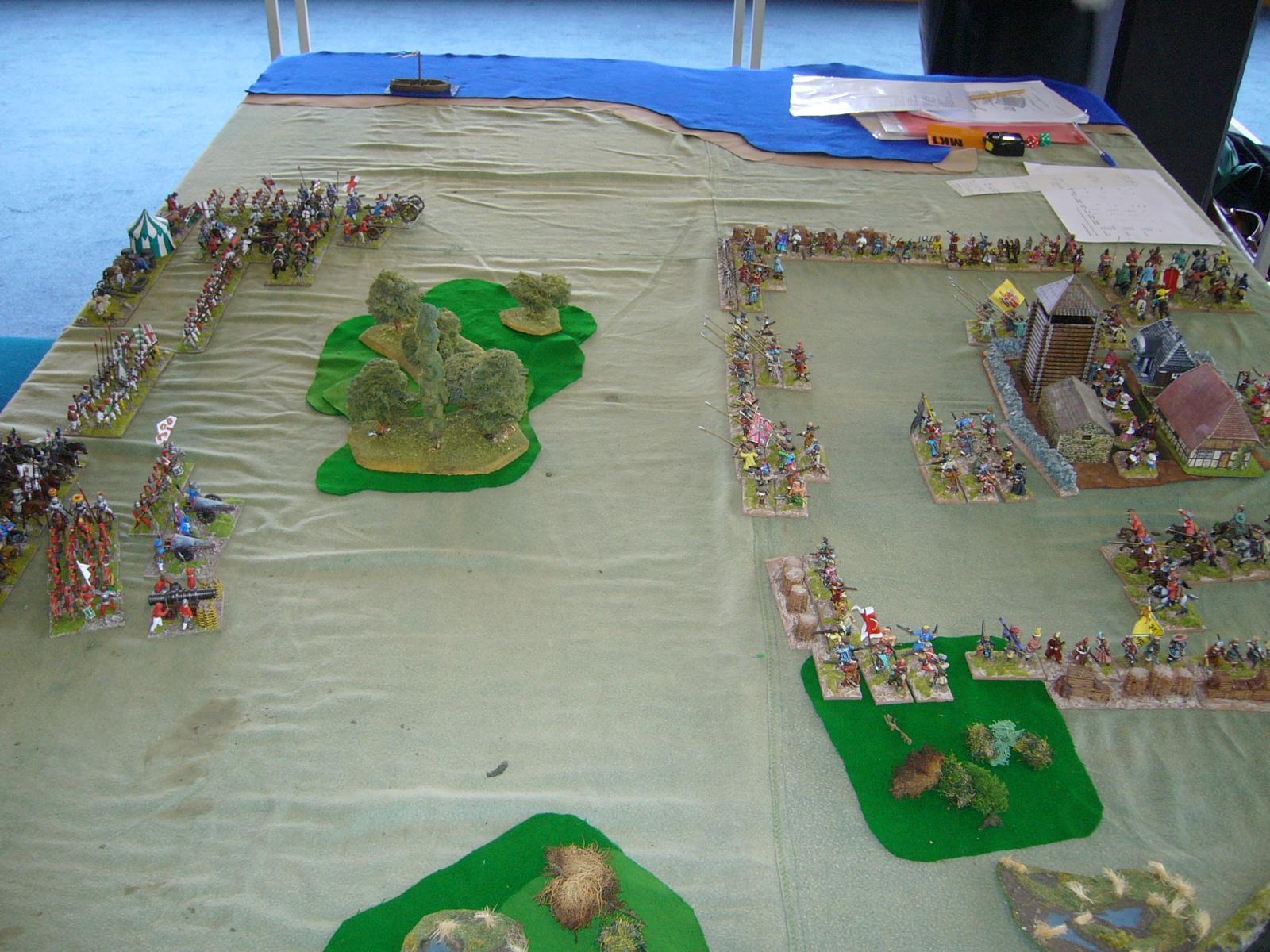 Early Tudor English v Free Cossack |
Nicon 2006
The North Island Convention was held in New Plymouth on 3-4 June, 2006. A
25mm DBR competition was run, perhaps the first 25mm renaissance
competition in NZ since the 1980s.
Results of the 2006 competition
Grant Brown - Swiss Confederate - 335 - 1st place
John Way (Umpire) - Japanese - 330
Andrew Hunter - Manchu - 222 - 2nd Place
Kelly Gay - Muslim Indian - 217
Philip Abela - Early Tudor - 114
Brent Senior Partridge - Moghul - 2
Here are the armies used at NICon 2006. Click the image to see a larger version.
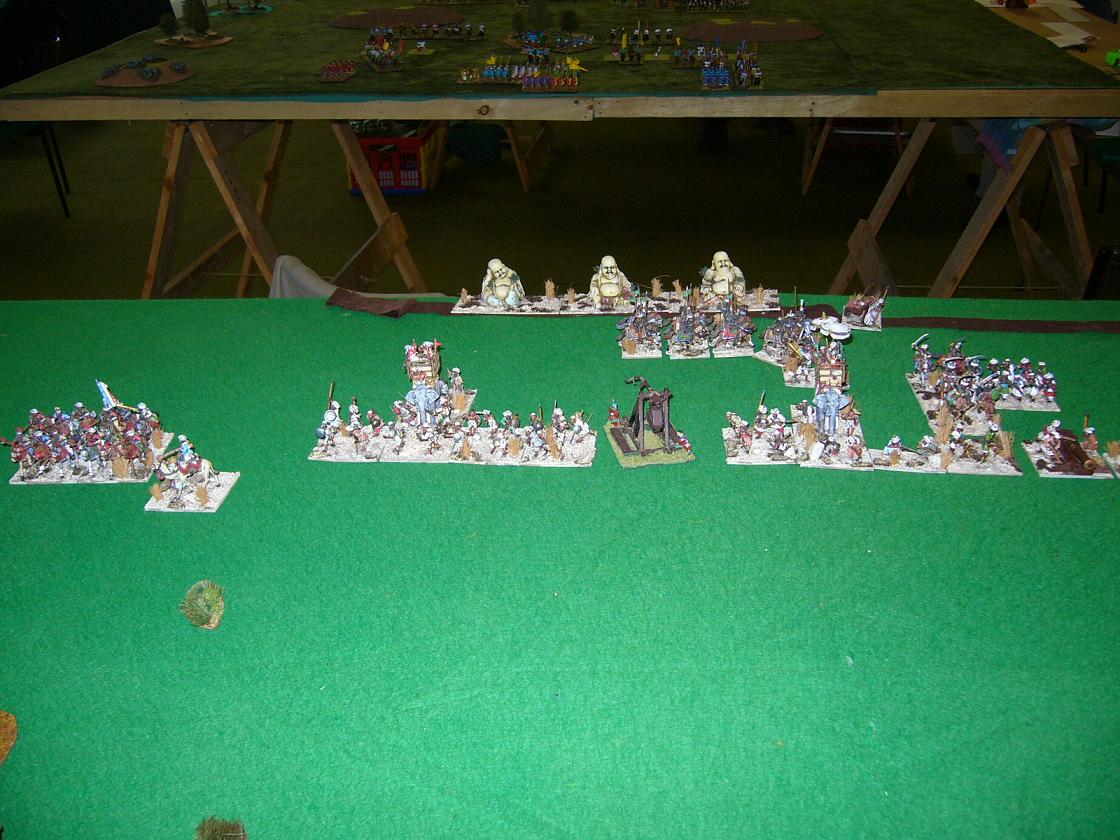 Muslim Indian |
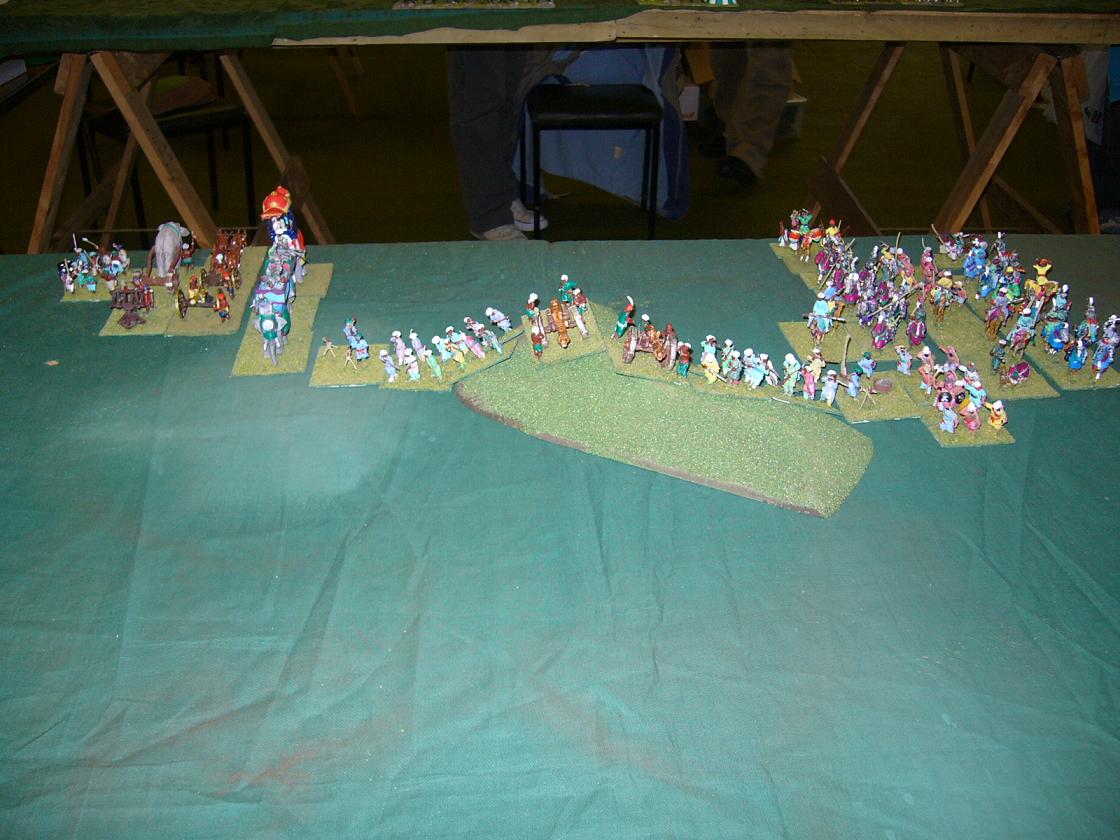 Moghul |
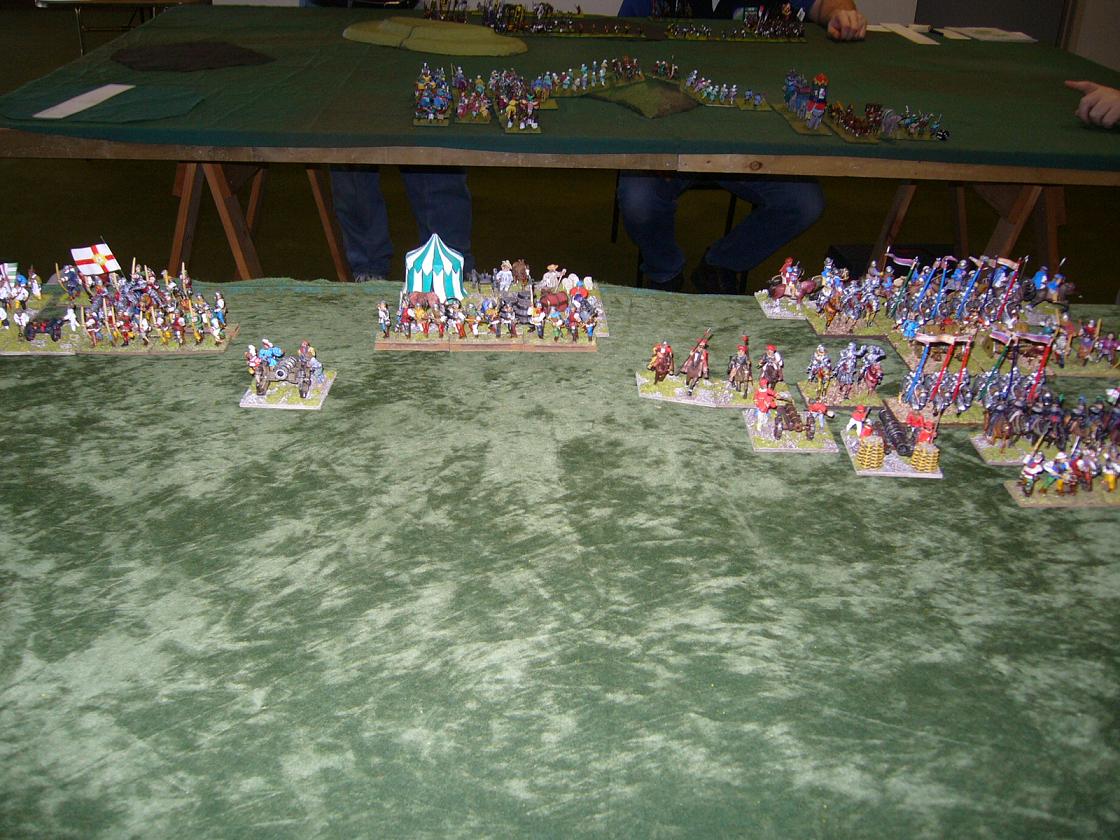 Early Tudor English |
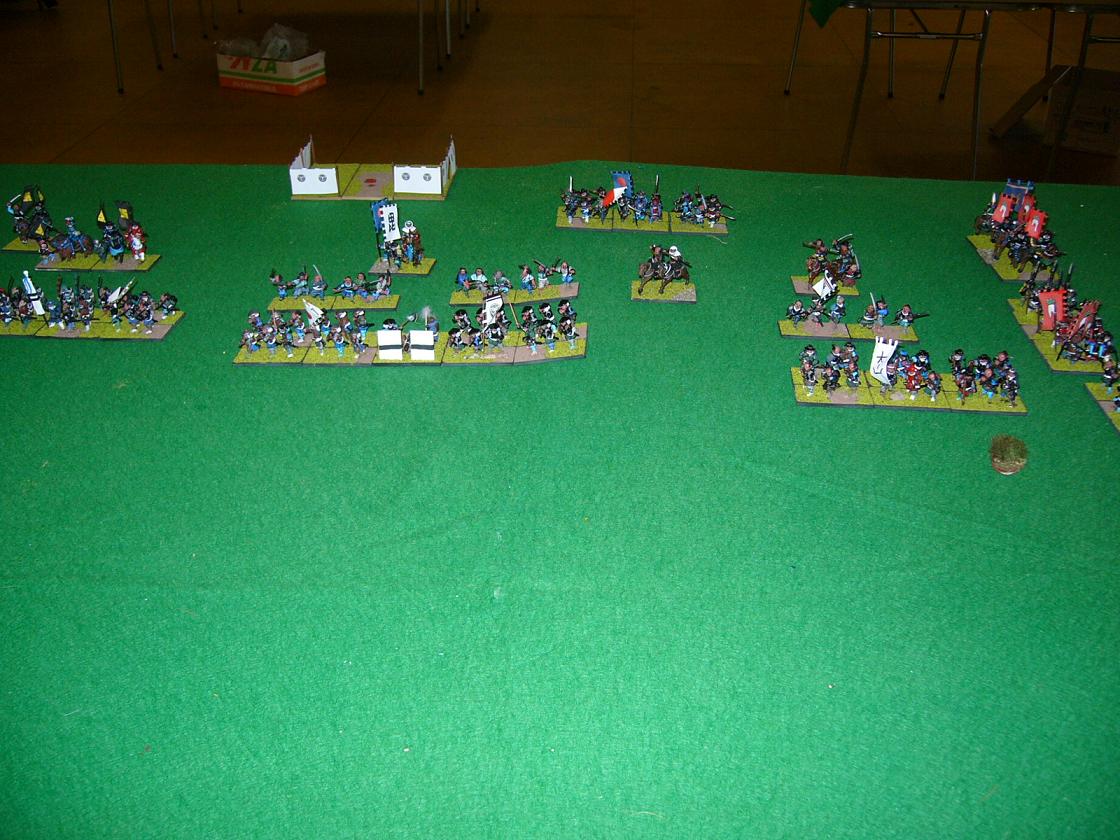 Japanese |
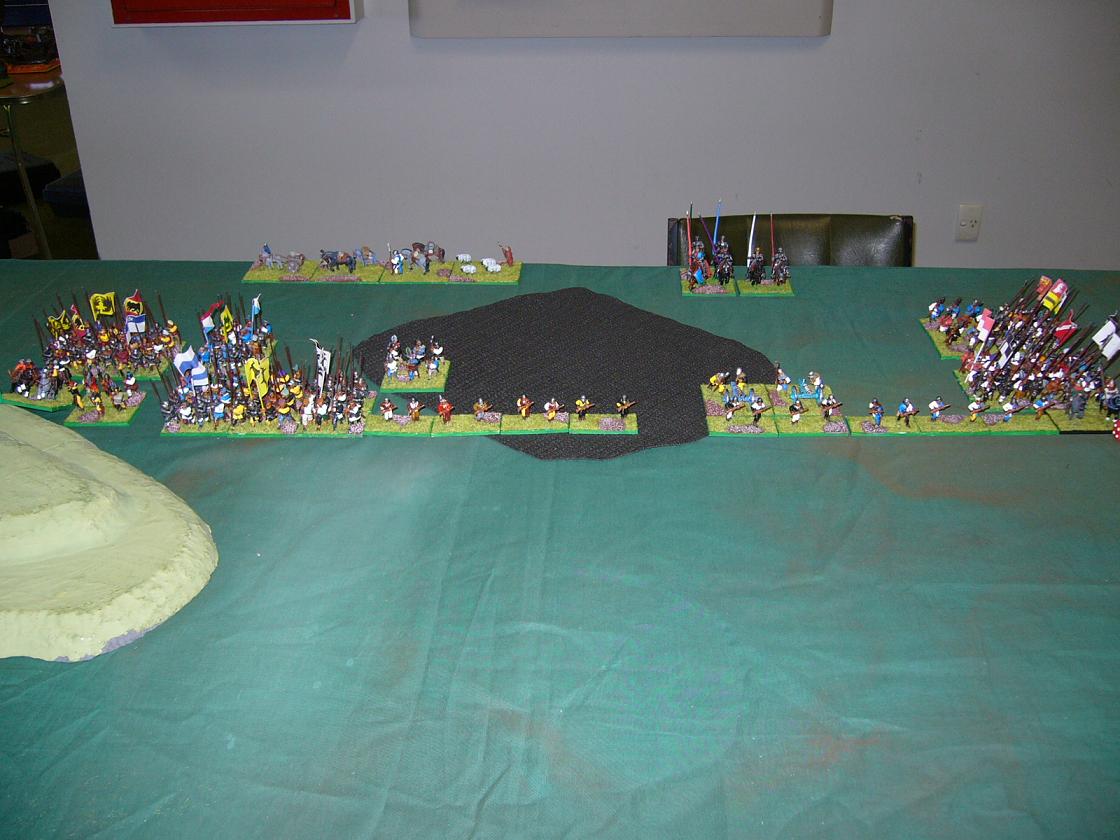 Swiss |
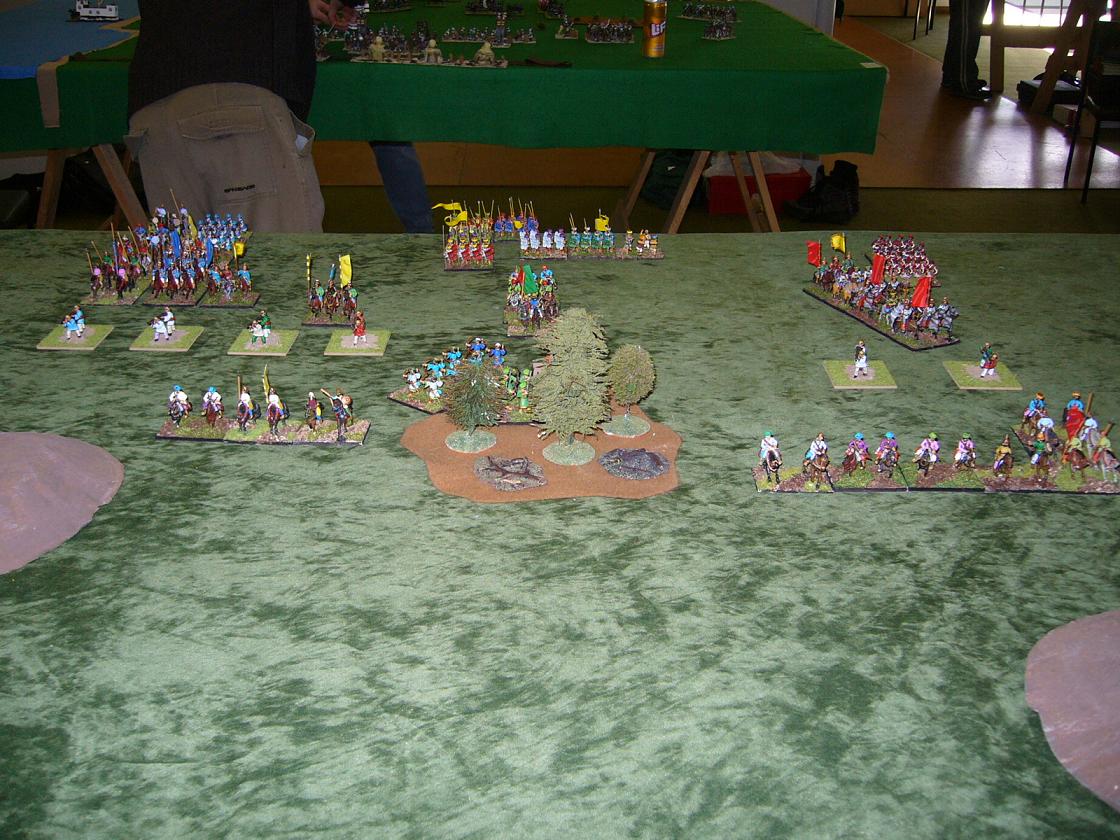 Manchu Chinese |
Below are some pictures from the NICon 2005 convention.
|
|
|
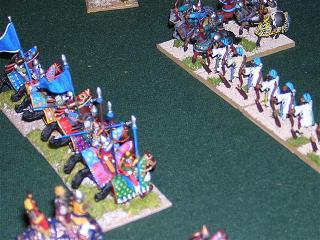
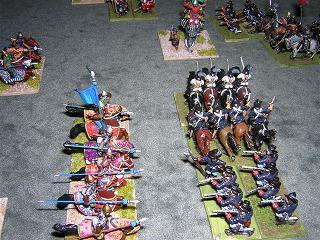
| Top left: Muslim Indians attacking Safavid Persian archers and cavalry. | Top right: Muslim Indian cavalry with an elephant in support in combat with the German Catholic army. |
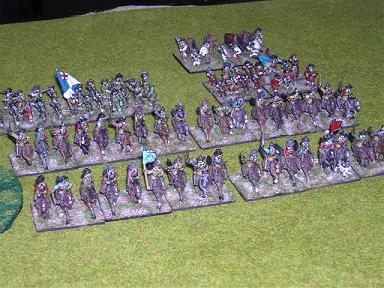
| Lower left: The Royalist Army. Formerly Glen's army now under new management with Bryan from the South Auckland club. | Lower right: Reiters in the service of the Russian army. |
|
|
|
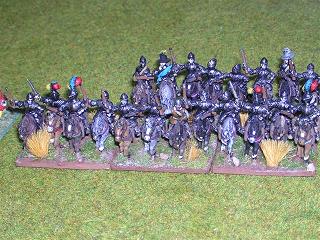
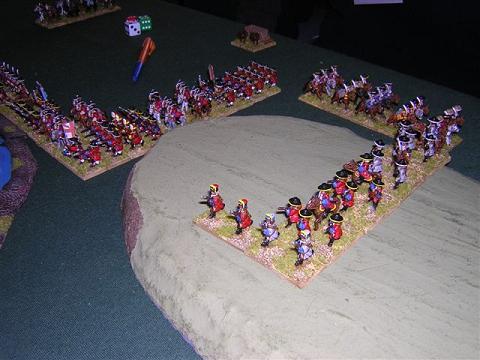
| Right: Another picture from NICon 2005. The Williamite Anglo-Dutch army. In the foreground Grenadiers and Dragoons advance over a hill. Figures by Lancashire Games, painted by Natholeon of Rotorua. |
|
The 2007 NZ Natcon was the first of the annual South Pacific Championships and was won by the NZ national champion Grant Brown. This will be held in New Zealand and Australia in alternating years.
|
1980 D. Richards 25mm, S. Sands 15mm
|
Auckland Wargames Club |
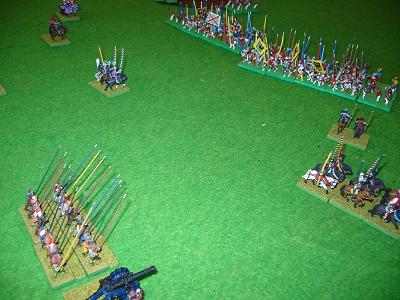
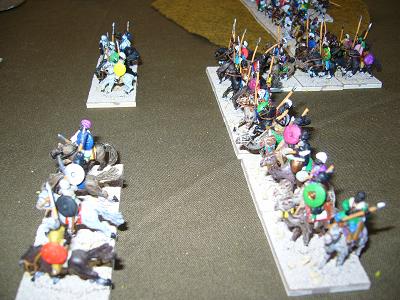
A couple of pictures from Natcon 2006. On the left the Swiss pikes are advancing on Valois French cavalry who are rapidly trying to get out of the way. On the right, the Alwa (Christian Nubians of around 1500 AD), an army that bravely turned up to a renaissance competition without any gunpowder weapons at all.
 In 2004 we hosted the first annual Push of Pike tournament.
In the second tournament we introduced a theme period, the Thirty Years War and English Civil
War. In the following years the themes have been the Great Italian Wars and other armies of that period; African and Asian armies; and most recently armies of the wars of religion from the 1560s to 1590s. In 2008 we used using 500 point lists, and this was a great success and will be repeated in 2009's tournament, the theme of which is armies of the Turkish wars.
In 2004 we hosted the first annual Push of Pike tournament.
In the second tournament we introduced a theme period, the Thirty Years War and English Civil
War. In the following years the themes have been the Great Italian Wars and other armies of that period; African and Asian armies; and most recently armies of the wars of religion from the 1560s to 1590s. In 2008 we used using 500 point lists, and this was a great success and will be repeated in 2009's tournament, the theme of which is armies of the Turkish wars.
Push of Pike 2009 The Turkish Wars
Push of Pike 2008 The Wars of Religion
Push of Pike 2007 Armies of Africa and Asia
Push
of Pike 2006 Early Wars
Push of Pike 2005
ECW and 30YW
Push
of Pike 2004 Open competition
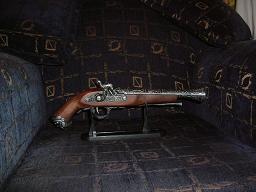
The prestigious trophy of
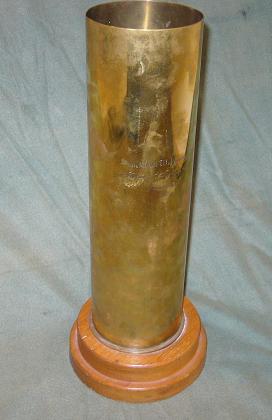
the Push of Pike tournament, otherwise known as the PoP gun,
photographed here on what appears to be a comfy chair. Oh no, not
the comfy chair!
Top
The history of renaissance wargaming in NZ
 "Unfriendly
cover and four enemy units within 150 paces" we used to say to
each other, "Twelve @ four is 24 casualties". Ah, that
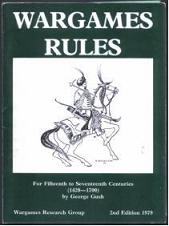
was wargaming. Renaissance wargaming
began in New Zealand in the 1970s using the WRG rules written by George
Gush, but was not played at the North Shore club at that time. The
original Gush rules covered the period 1490-1660, and the second edition
(published 1979) extended the period to 1420-1700. At the time of
publication the WRG ancient rules did not cover the late medieval period.
The rules employed the same game mechanisms as the WRG ancient rules of
the time, with unit orders, simultaneous movement, charts of weapon
factors and tactical factors to calculate casualties, and numerous
reaction tests to determine unit morale. The 2nd ed. had some innovations in wargames rules, including provision
for religious contingents, baggage train and rules for looting.
"Unfriendly
cover and four enemy units within 150 paces" we used to say to
each other, "Twelve @ four is 24 casualties". Ah, that
was wargaming. Renaissance wargaming
began in New Zealand in the 1970s using the WRG rules written by George
Gush, but was not played at the North Shore club at that time. The
original Gush rules covered the period 1490-1660, and the second edition
(published 1979) extended the period to 1420-1700. At the time of
publication the WRG ancient rules did not cover the late medieval period.
The rules employed the same game mechanisms as the WRG ancient rules of
the time, with unit orders, simultaneous movement, charts of weapon
factors and tactical factors to calculate casualties, and numerous
reaction tests to determine unit morale. The 2nd ed. had some innovations in wargames rules, including provision
for religious contingents, baggage train and rules for looting.
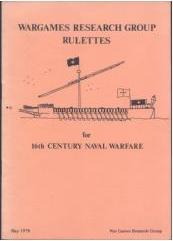 Following
the publication of J.F. Guilmartin's book Gunpowder and Galleys,
WRG published a small booklet in 1978 with rules for 16th century naval
warfare. It had just seven pages of rules. I know of no games played
locally with this rulebook, but who knows, it may yet catch on.
Following
the publication of J.F. Guilmartin's book Gunpowder and Galleys,
WRG published a small booklet in 1978 with rules for 16th century naval
warfare. It had just seven pages of rules. I know of no games played
locally with this rulebook, but who knows, it may yet catch on.
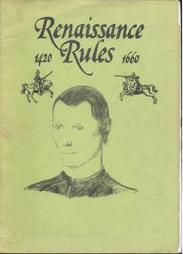
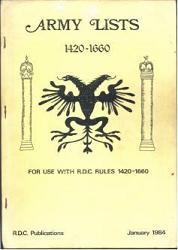 In the early '80s (probably 1981 or '82) a set of renaissance rules was produced in NZ by R.D.C.
Publications (Michael Anastasiadis & Richard Mason). It was based
around the WRG rule mechanisms, but designed to be faster playing. It was
accompanied by an extensive set of 105 army lists for the period
1420-1660, with good coverage of Africa and Asia as well as European
armies. They included a few armies missing from the current DBR lists,
including the Teutonic Knights and the German peasants' revolt. The RDC
rules were used at the 1986 Natcon in Wellington (where the rules were
published), although the WRG 2nd ed
rules were in use again by the time of the '88 Natcon.
In the early '80s (probably 1981 or '82) a set of renaissance rules was produced in NZ by R.D.C.
Publications (Michael Anastasiadis & Richard Mason). It was based
around the WRG rule mechanisms, but designed to be faster playing. It was
accompanied by an extensive set of 105 army lists for the period
1420-1660, with good coverage of Africa and Asia as well as European
armies. They included a few armies missing from the current DBR lists,
including the Teutonic Knights and the German peasants' revolt. The RDC
rules were used at the 1986 Natcon in Wellington (where the rules were
published), although the WRG 2nd ed
rules were in use again by the time of the '88 Natcon.
For a few years, maybe only a year or two, in the late eighties or early nineties renaissance was played using a variant of the then current WRG 7th edition ancient rules. These renaissance modifications to the Ancient rules were used in the 15mm Renaissance competition in the 1992 Nicon in New Plymouth. Many of the army lists were taken from the late medieval army lists including such wonderful troop types as double-armed Venetians with handguns and halberds. Turkish archers had a great time shooting at shieldless enemies! There was at least one competition held on the North Shore - from memory it might have been a Nicon or 'Fire & Sword' convention held at the old Akoranga Rd venue. Shortly afterwards DBA and DBM were on the scene, and 7th edition was abandoned for both ancients and renaissance.
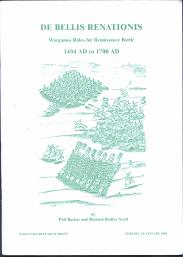 The
renaissance period has been played on the North Shore since the first release of the
DBR De Bellis Renationis rules in 1995.
The DBR rules cover the historical period 1494 to 1700. As
there was some dissatisfaction with the published points system a revised set of
army points values was devised for use in New Zealand games in 1996, and
was used at Natcon in 1997. A revised
version of DBR v1.1 came out in 1997, and the NZ points revisions
were then updated taking into account the changed rules.
The
renaissance period has been played on the North Shore since the first release of the
DBR De Bellis Renationis rules in 1995.
The DBR rules cover the historical period 1494 to 1700. As
there was some dissatisfaction with the published points system a revised set of
army points values was devised for use in New Zealand games in 1996, and
was used at Natcon in 1997. A revised
version of DBR v1.1 came out in 1997, and the NZ points revisions
were then updated taking into account the changed rules.
The second edition of DBR was published early in 2004. A new NZ revision of the points values for DBR version 2 has been used in several conventions since 2005 and is widely used in non-competition games as well.
DBR was first played at Natcon in 1996 in Hamilton. Previous national competitions were played using the Gush rules. DBR has also been played at several other NZ conventions including Battlecry in 1998, ValleyCon, and a one-off renaissance tournament attracting about ten players, held at the Auckland Wargaming Club in (if I remember correctly) 1997. The 2007 NZ Natcon was the first of the annual South Pacific Championships. This will be held in New Zealand and Australia in alternating years.
Most of the DBR competitions have attracted only small numbers of entrants, usually somewhere between 6-12 players. Because of the small numbers of entries, a few competition were cancelled for lack of interest. This in part led to the idea of a dedicated DBR tournament, Push of Pike, which has been hosted by the North Shore club annually since 2004.
The Principles of War rule system also has a renaissance rulebook and with army lists. A few games of it have been played in the several Auckland clubs and perhaps elsewhere as well.
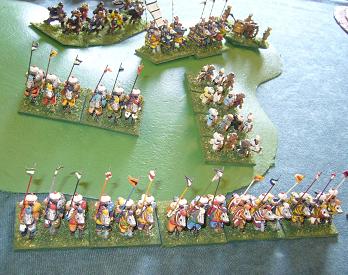 In
the 'eighties Mikes Models were producing several ranges of renaissance
figures in 15mm, including the Ottoman Turks pictured here. These models were distributed locally, and there were a
lot of armies built up with them. There are still several old Mikes Models
armies around, attractively painted and still to be seen in action on
the table. The FreiKorps ranges (Thirty Years' War, English Civil Wars,
Tudor English and Irish wars) have also been distributed in New Zealand,
and a number of armies built from those ranges are also to be seen.
In
the 'eighties Mikes Models were producing several ranges of renaissance
figures in 15mm, including the Ottoman Turks pictured here. These models were distributed locally, and there were a
lot of armies built up with them. There are still several old Mikes Models
armies around, attractively painted and still to be seen in action on
the table. The FreiKorps ranges (Thirty Years' War, English Civil Wars,
Tudor English and Irish wars) have also been distributed in New Zealand,
and a number of armies built from those ranges are also to be seen.
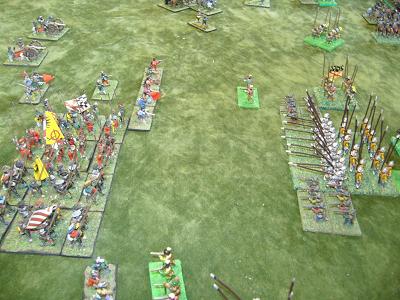 Many
of the current 15mm renaissance armies in use are made up of figures from
Essex Miniatures extensive ranges, covering everything from late medieval
to Eighteenth Century periods. Many of those were new ranges released at
the time of the new DBR rules and lists. The two pike blocks illustrated
here are from Essex Miniatures (with a few Minifigs arquebusiers on the
flanks of the formation). The front two ranks of the Spanish (on the right
hand side) are double-based, with both ranks of figures at the back of the
base, to allow for the length of the horizontal pike. The landsknechts'
centre ranks are double based as a convenience for moving elements, and to
allow space for the colour parties in the middle of the pike block. You
could almost call them doppelsoldners.
Many
of the current 15mm renaissance armies in use are made up of figures from
Essex Miniatures extensive ranges, covering everything from late medieval
to Eighteenth Century periods. Many of those were new ranges released at
the time of the new DBR rules and lists. The two pike blocks illustrated
here are from Essex Miniatures (with a few Minifigs arquebusiers on the
flanks of the formation). The front two ranks of the Spanish (on the right
hand side) are double-based, with both ranks of figures at the back of the
base, to allow for the length of the horizontal pike. The landsknechts'
centre ranks are double based as a convenience for moving elements, and to
allow space for the colour parties in the middle of the pike block. You
could almost call them doppelsoldners.
There is a wide variety of figure manufacturers represented in the new 25mm armies being fielded. This includes not only traditional historical manufacturers but also some of Games Workshop's "Empire" and "Brettonian" figures being adapted for armies of the Italian Wars period.
The first ever renaissance wargames army
"Some time in 1614 the young prince of Spain, later King Philip IV, received a spectacular present: a complete set of toy soldiers made of wood. It included infantry regiments and cavalry companies with their various banners, weapons and equipment; horses and cannon for the artillery; the distinctive shops and tents of the armourers, sutlers and other camp followers; and special materials to construct artificial lakes, forests and pontoon bridges. There was even a toy castle for the 'army' to besiege. This, the first child's 'war-game' known in Europe, reproduced in replica the most famous army of its day: the Army of Flanders, maintained by Spain in the Low Countries.
A special pamphlet printed in Spanish and Latin accompanied the toy because its designer, Alberto Struzzi, intended to educate as well as amuse. 'This army will be no less useful than entertaining,' Struzzi informed the prince. 'From it one may observe the expenditure which is necessary if a king is to emerge victorious, and how if money (which is the sinews of war) fails, the prince's intentions cannot be achieved.' ... Alas, the model army perished in a fire in the royal palace in Madrid in 1884."
Geoffrey Parker. The Army of Flanders and the Spanish Road 1567-1659: The Logistics of Spanish Victory and Defeat in the Low Countries' Wars. Second Edition, Cambridge University Press, 2004. p.1
