
The term night sky refers to the sky as seen at night. The term is usually associated with astronomy, with reference to views of celestial bodies such as stars, the Moon, and planets that become visible on a clear night after the Sun has set. Natural light sources in a night sky include moonlight, starlight, and airglow, depending on location and timing.
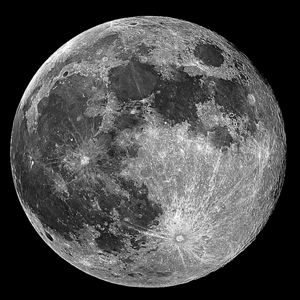
Moon
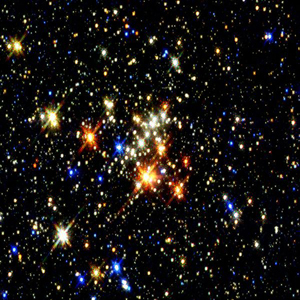
Stars
Facts About Moon
- The surface area of the moon is 14,658,000 square miles or 9.4 billion acres
- Only 59% of the moon's surface is visible from earth.
- When a month has two full moons, the second full moon is called a blue moon. Another definition of a blue moon is the third full moon in any season (quarter of year) containing 4 total full moons.
- The dark spots we see on the moon that create the image of the man in the moon are actually craters filled with basalt, which is a very dense material.
- The moon is the only extraterrestrial body that has ever been visited by humans. It is also the only body that has had samples taken from it.
- The first space craft to send back pictures from the moon was Luna 3 (built by the Soviet Union) in October 1959.
- The moon rotates at 10 miles per hour compared to the earth's rotation of 1000 miles per hour.
- The moon has no global magnetic field.
Facts About Stars
- There are approximately 400 billon stars in the galaxy. With as many as 500 billion galaxies in the Universe, it is almost impossible to count how many stars are there in the Universe.
- The stars do not twinkle. In fact it is the turbulence in the sky that makes the stars appear that they are blinking.
- It seems that most stars are out there by themselves, but they are actually in pairs. These are the binary stars. Some stars appear in 3, 4 and more numbers, creating a beautiful system in the sky.
- The bigger the star, the shorter is its life. This is true because larger stars consume their energy at a much faster rate than the smaller ones.
- When you look at stars you are literally look back in time. This is because the light from the star takes millions of years to reach the Earth. When you look at any star, you are actually looking how it looked thousands of years ago.
- Eta Carinae which is thought to be the most massive star has been around for a few million years only. And Sun which is the smallest of all the stars has been burning bright for billions of years and will continue to do so for many more years.
- A galaxy of typical size, about 100 billion suns produces less energy than a single Quasar.
- Our galaxy has approximately 250 billion stars and it is estimated by astronomers that there are 100 billion other galaxies in the universe.