
EIRENNIA SCOTIA
Information on the Hibernian State ∫ A service of the Ministry of Foreign Affairs
GET INFORMATION







HIBERNIAN CULTURE & VALUES
VISUAL ARTS
Traditional Hibernian painting is respected for its romanticism and beauty. Traditional Hibernian painting reached it's pinnacle from 1890-1970. During this time, artist such as Dean, Mead, and Tremmet set the benchmarks of the discipline. The idealized human form is the most popular subject of traditional Hibernian painting. Notable works include: Maidens (2021), Prudence, (1923), Love and Valor (1892), Birth of Love (1901) and the Fisherman (1971).
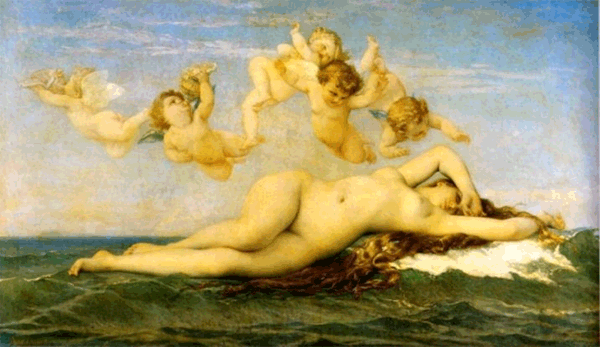
by Mead
Traditional painting remains popular in Hibernia and is by far the most common. Still others exist, for example, the naturalistic landscapes and garden frescos that center on nature and realism.
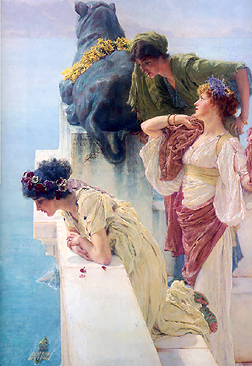
Maidens by Tremmet
Sculpture is another popular visual art in Hibernia. Sculpture became popular in the approximately 550 A.D. and was originally associated with religion. In the 1800s, political and military officers began to commission sculpture in commemoration of achievements. Hibernian Sculpture has changed little over the centuries and commemorative sculpture remains popular to this day. Similar to Hibernian painting, the human form is the center of Hibernian sculpture. Hibernian sculpture is emotional, expressive and dynamic. However the face is often serious and most expression is revealed in the body posture. Close attention is given to an attenuated system of proportion, realism, and scale. The free standing contrapposto sculptures are usually nude and carry an expression of self confidence and certainty or a dreamy tenderness.
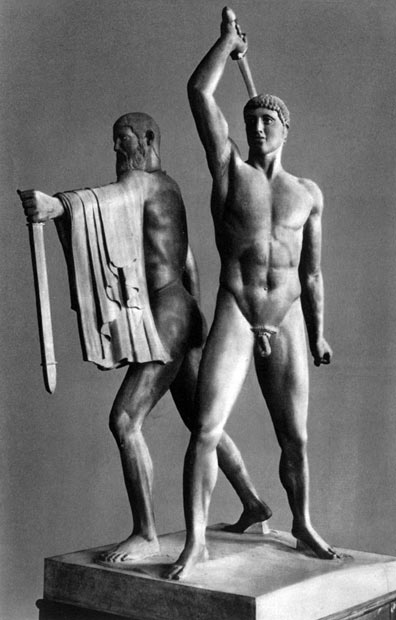
An early sculpture of two warriors
Another popular sculpture style is architectural sculpture. These sculptures usually commemorate an event and actually tell a story. The public fountains are the most obvious architectural sculptures in Hibernia. The public fountains serve as both a practical and social cornerstone of every Hibernian city. Public fountains have long been a central part of Hibernian life. The first public fountain of artistic value was commissioned in 1030 by Henry Mac Brine, a powerful land owner and politician in the early city state of Avalon.
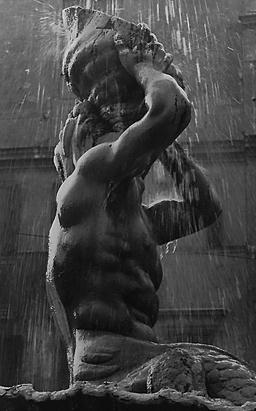
Sculpture detail from the Fountain by the Sea in Ave Marias
Hibernians have always appreciated artistic achievement. Artistic patronage is a common political maneuver within Hibernian politics. In the past, local military and political leaders would have artistic monuments, beginning with standing stones and developing into grand public fountains, arches, and columns, to commemorate victory or achievement.
To this day sculpture remains a public interest. In recent times, painters are being commissioned for private works more and more often. However, despite the growing private interest in art, the museums remain the nucleus of the Hibernian visual arts.
The State of Independence