Musical Period: Romantic
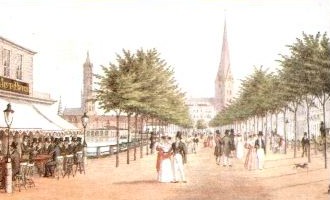
Birth Place: Hamburg, Germany
Major and Famous Works:
|
a) Symphonies b) Overtures c) Chamber Music d) Concertos |
e) Piano Pieces f) Voice and piano g) Choral h) Incidental music |
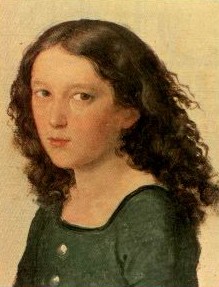
Felix Mendelssohn was born with all the advantages yet none of the disadvantages usually associated with the poor genius struggling for recognition. His grandfather, Moses, was a self-made man of letters and campaigner for Jewish rights. His father, Abraham, was a banker who made his fortune breaking Napoleon's trade embargo with England in 1810. Shortly after Felix's birth in 1809, the family fled Hamburg and the French occupying troops and settled in Berlin.
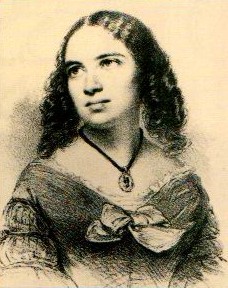
One of five children, Felix showed promise at an early age, as did his elder sister Fanny, who in more liberated times would have become a composer in her own right. Instead, she xerted a great influence over Felix. He received his first piano lessons from his mother, Lea, herself an accomplished pianist. But soon he was sent to tutors who could develop his great talent. The legendary teacher, Carl Zelter, a former stonemason, arranged to introduce the talented nine-year-old Mendelssohn to Berlin society.
The writer, Johann Goethe, then 73, met Felix when he was 12. They struck up a remarkable friendship. During visits to Goethe's home, Felix learned to appreciate classical literature. In return, he fostered a love of music in the old man, although he could never persuade Goethe to like the works of the composer, Beethoven.
But Felix was no workaholic, forever wedded to the keyboard and composer's chair. Although he was writing score after score by his early teens, Felix found time to play in the rambling gardens of his friend's home.
In 1822, the family embarked on a tour of Switzerland, an event which marked a turning point in Felix's life and which was to influence much of his music. Not only was he deeply moved by the beauty and magnificence of the Alps, but it also awakened a passion in him for travelling which he indulged in at every opportunity in later life.
Meanwhile, Felix's energy for composition was startling. Piece after piece flowed from his pen as he became more ambitious in his writing. His String Octet in E flat, composed in 1825, cemented his reputation as a true genius. Still only 16, even his idol Mozart or the prolific Schubert had not composed such a mature work at such an early age.
In 1827, at the age of 18, Mendelssohn won a place at Berlin university to study Aesthetics - the appreciation of all art forms - but music was his all-consuming interest. In 1829, he revived Bach's long forgotten St Matthew's Passion, causing a stir in the music world. The tickets sold out minutes after going on sale and audiences were so moved that they wept openly.
Now 20 years old, Mendelssohn began to establish his formidable reputation throughout Europe. A concert tour of England was wildly successful, while his first visit to Scotland, in 1829, sowed the seeds of his famous ‘Scottish' Symphony and ‘Hebrides' Overture, also known as ‘Fingal's Cave'. Eventually, he moved on to Italy, where the vitality and depth of historical colour inspired his ‘Italian' symphony.
The young Mendelssohn loved England, however - especially the glittering social life of London. Society was full of gaiety there, in contrast to the stiff formality of Berlin. When commitments allowed, he rode in his carriage through Hyde Park, delighting in the open-air concerts there. He attended balls almost nightly, entertaining charming young society ladies, who were attracted to the tall, handsome German. England fell in love with him, too. He was fêted everywhere he went, not only for his talent but also for his perfect manners.
On his many visits abroad, he wrote intense, almost passionate, letters to his sister Fanny, revealing to her his innermost thoughts. Her marriage to the painter Wilhelm Hensel in 1829 did not dim their attachment. His own marriage, to Cécile Jeanrenaud in March 1837 was a love-match that produced five children.
However, his life had not been without sadness and frustration. He mourned the death of his two mentors, Goethe and Zelter, in 1832. His failure to get his old teacher's job, as director of the Berlin Singakademie, did not upset him unduly. But his organisation of a music festival in Düsseldorf in 1833 was not the success he had hoped for.
In 1834, he took over the orchestra in Leipzig and spent ten happy years there, promoting the city as the cultural centre of Europe. Here, in 1839, he conducted the first public performance of Schubert's ‘Unfinished' Symphony.
Mendelssohn was invited to become musical director of Berlin in 1840. But he found the bureaucratic red tape suffocating and gradually eased himself out of the job. He returned to Leipzig and found the famous music school there. He made several more visits abroad.
All this frantic activity had a harmful effect on Mendelssohn's health, but the worst blow came in May 1847, when Fanny died suddenly from a stroke. Felix was shattered, and his already fragile health now began to decline rapidly. He himself suffered a mild stroke in October and died on 4 November at the early age of 37.
Mendelssohn was unique. With his exclusive upbringing, he could have confined his talents to the parlours of the rich and titled. He chose instead to find centres of musical education and to compose colourful, imaginative music which was - and still is - loved all over the world.