|
The
medieval period, often thought of as the “dark ages,” is actually a
natural progression of the intellectual development of man.
Christianity (for our purposes) replaced the polytheistic culture of the Greeks, and
the fear of idolatry had a great impact on statuary and painting.
In some cases the depiction of “immortals” was permissible,
providing that the purpose of the piece was to educate and illustrate
tales which would the aid the primarily illiterate citizens in
memorization of a particular lesson or fable.
The
Renaissance, hailed as the rebirth of the creative and intellectual mind,
placed focus on exploration of the individual, the emotional and on nature
as a deity in and of itself.
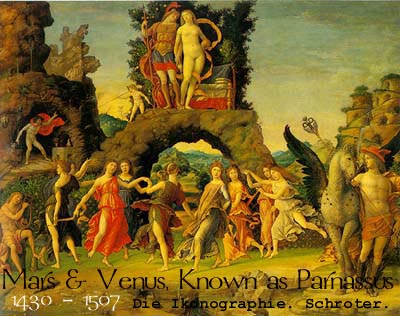
“Mars
and Venus known as Parnassus” (1430 - 1507) depicts the Nine Muses
dancing underneath Mars and Venus. Hermes, is identifiable by his winged
shoes and staff, and Pegasus and little cupids are scattered through the
air.
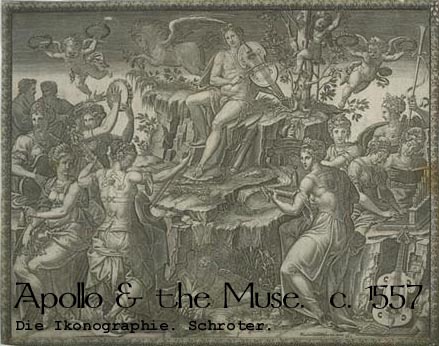
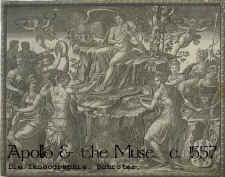
"Apollo
and the Muses," painted in 1557, depicts Apollo presiding over a
festival where the Muses dance and sing. Again, Pegasus is flying in the
background. The exquisite
detail and volumptousness of the figures is typical of the Romantic and Renaissance styles of painting.
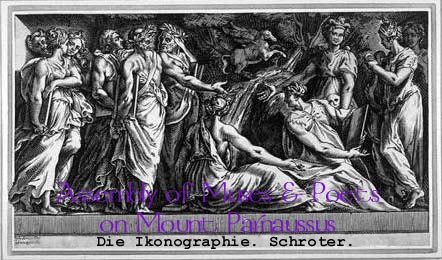
"The
Assembly of the Muses and Poets on Mount Parnassus" (16th- 17th century)
is a drawing reminiscent of the flowing relief sculpture of the Greek Hellenistic period.
Pegasus is present once again.
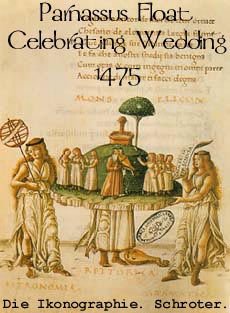
The
"Parnassus Float Celebrating Wedding" (1475) in honor of
Prince Pesaro's wedding is rather esoteric.
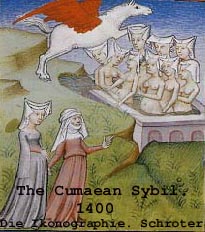
“The
Cumaean Sybil and Christine de Pizan with the Muses”
was painted in 1400, the advent of the Renaissance.
The Sybil was a Greek prophetess of Apollo who led Aeneas through Hades in the Aeneid, & Christine De Pizan was a 15th
century French writer. The Sibyl may be guiding de Pizan, who, as a writer,
draws her inspiration from the Muses. Pegasus is flying above the
Muses.
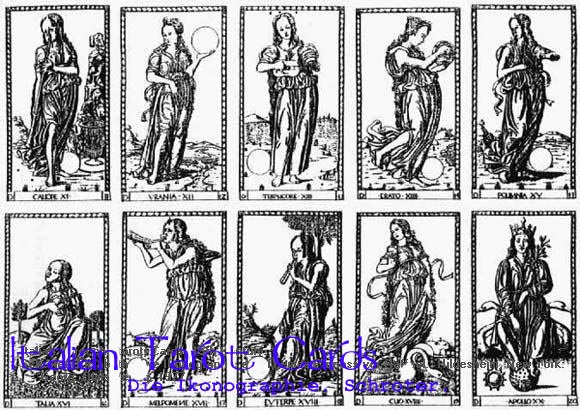
The
15th century Italian Tarot cards are an excellent
representation of the time of each individual Muse.
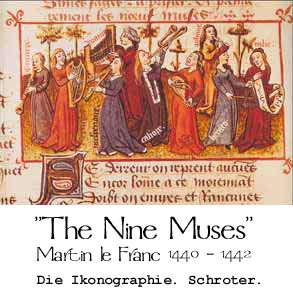
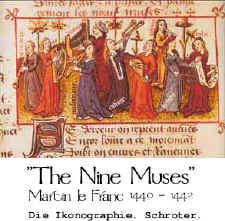
The
painting by Martin Le Franc entitled “The Nine Muses” depicts the
sisters playing their musical instruments.
References:
Croix, Gilbert, & Schroter.
|
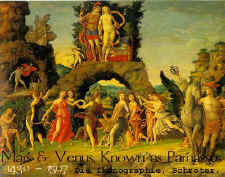
Mars
& Venus, Known at Parnassus
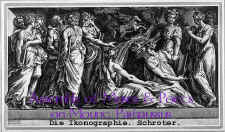
Assembly of Muses & Poets
on Mount Parnassus.
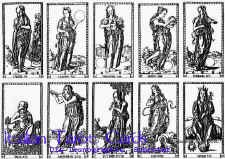
Italian Tarot Cards.
Tell me now, Muses / Who live
on Olympus - for you are / Goddesses, and are present, / And know all
things, while we / Hear only reports and know nothing - "
Iliad 2.522
|