|
From the end of the Renaissance until the mid 1700s,
a period considered "early modern," artists generally related their work to the church and state.
Monarchs were glorified by representing mythological figures, such as Henry
IV of France who often was artistically likened to Hercules. In the seventeenth century, sensual scenes in art were justified
because they were considered symbolic rather than realistic; artists were focusing on
the creation a poetic atmosphere in their works.
This idea can be compared and
contrasted to later artist's emphasis on the emotional aspects of
mythological paintings.
Nineteenth century, or modern, mythological works were closely related
to those from the early modern period, progressing only slightly in
their
intellectual complicity. Works took a Romantic tone, which appealed to the
emotions and called for a return to the ways of the past and the
preeminence of nature as a nurturing force. This
period is famous for the poetry of Byron, Shelley, and Keats, all of whom
used Classical Greek themes and characters in their works, like in Percy
Bysshe Shelley's Prometheus Unbound.
Artists often narrated mythological scenes and
used the Greek & Roman gods to depict spiritual entities. The roles of the characters in these myths explained the origins
of otherwise inexplicable events and beings. For example, pictures of Orpheus
explore the theme of "artistic creation and of the poet's role in a hostile
society," referring to how Orpheus was brutally killed by the maenads.
The twentieth century brought about a large emphasis on "universal themes", such
as life versus death. Sigmund Freud and Carl Gustav Jung, significant
minds of the twentieth century, introduced the idea that the different myths portrayed in art represent psychological aspects.
However, as art styles became increasingly expressionistic & abstract,
identifiable icons of past eras grew less popular, and are employed
primarily by throwbacks to earlier styles rather than by true
"modernists."
The period of time
encompassing the nineteenth and twentieth centuries was clearly a time of
re- definition of personal identity and the search for meaning in art, thought, and
expression. The exploration of ancient themes and characters is essential
for understanding human progress, likenesses, & fallibilities.
References:
Turner.

Image descriptions:
#1) modern drawing of Calliope for the comic strip "Calliope." (i forgot to put the
book on the pic. this pic is from "The Sandman: Dream..." something or
other i dont remember the rest of the name, but its the first one i listed
on the last email.)
#2) abstract sketch of Calliope for the comic strip
"Orpheus." (this one is also from the same book as #1.)
#3) short excerpt
from the comic strip "Orpheus" which features Calliope as Orpheus' mother.
(this pic is from the second comic book i listed..."The Sandman: Fables
and...")
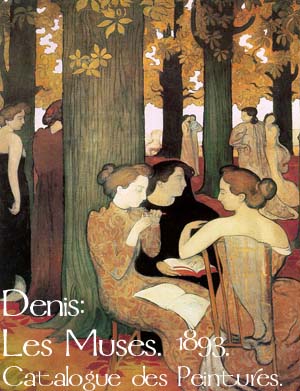
#4) "Les Muses,"
1893. Maurice Denis.
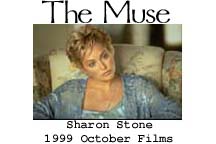
#5) In 1999, Sharon Stone was cast as a muse in The Muse. Her character had
the ability to make wishes come true, as do the muses of ancient mythology.
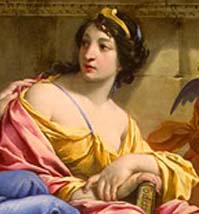
#6) Detail of "The Muses Urania and Calliope," 1634. Simon Vouet. (bib info: Seymour, Charles. Art
Treasures for America: An Anthology of Paintings & Sculpture in the Samuel
H. Kress Collection.
|