
|
Robertson VS Alana: A FeudIn four parts1. Introduction 2. An Outline of the Main Horrors 3. Alana's Potiki Posters & her Drawings of Mrs Robertson 4. Alana's poem, her draft essay and her final essay. IntroductionIt all began in 2001 (6th form) when Alana, Andii, Butops, Kim & I were all in the same English class.Uh oh. Whatever teacher drew the short straw and ended up with us was sure to encounter some difficulties. Mrs Robertson must have owed someone a pretty big favour. First I will begin with describing Mrs Robertson. She must have been at least 80 years old, and she has been a teacher since the Middle Ages, I believe. Scary. She wears a lot of purple, often cape-type-dealies, and unpleasant shoes that look like witch shoes. Kim and I would often entertain each other by saying: Which bootie? WITCH BOOTIE! I've believed for a while now that Mrs Robertson could have her own Mastercard ad. Purple cape? $1 from Thrift Store. Hideous shade of mauve lipstick? $5 from Farmers. Which booty? WITCH BOOTY! Priceless. Man, good times. An outline of the main horrors:
Then there was the artwork. Alana's Draft Potiki Posters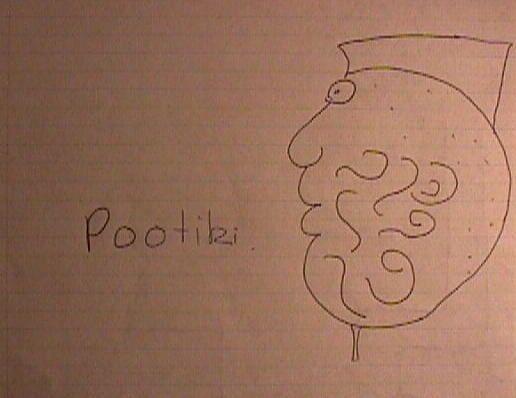
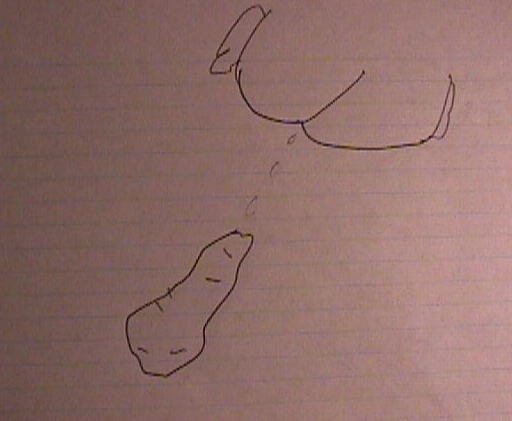
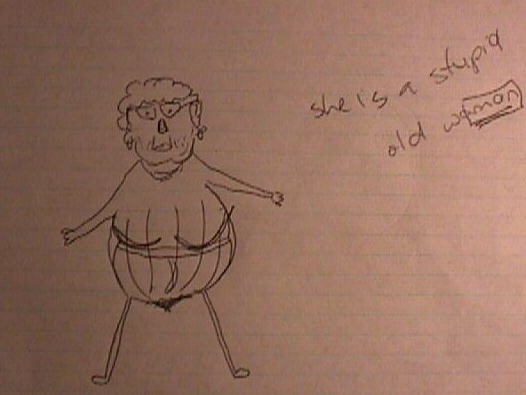
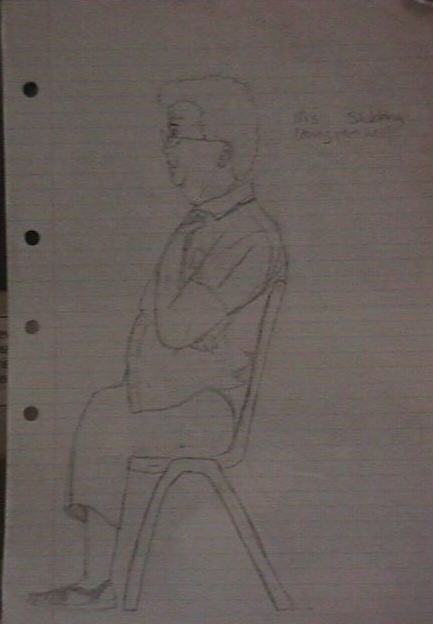
Alana's Drawings of Mrs Robertson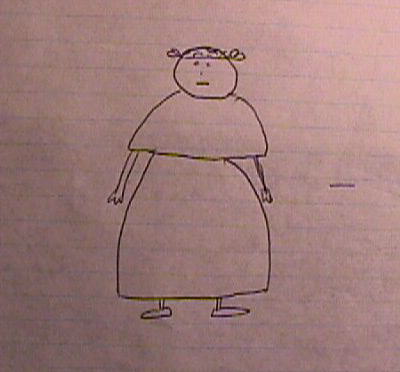
The Journey of PinknessA poem she wrote about Bushfire eating marshmallows. I think she scored quite well, Mrs Robertson would always give you good marks for using metaphors.Squishy, pink and large One by one they enter the red head cave of doom As they are comfortably placed into the overcrowded opening They are squashed and claustrophobically encountoured upon one another As the cave of pinkness becomes unbearably jammed They fly, oh how they fly One by one like a row of marching ants they leave their squashed experience, and lay crumpled and alone at the feet of the torture herself. Just laying there alone Finally they feel all is over, but no wait! The gargantuous flood of dribble coats them and washes them to a deserted place where no soul will ever tread upon them Squish. The red heads anguish stomps upon them to finish them off. Now they lay there, squashed, dead, alone. Potiki: A Draft Essay By AlanaThis year in English we read the novel Potiki by Patricia Grace. Three topics that the writer feels were important were people�s rights, should we respect other people�s cultures, should money be more important than land/people�s values/beliefs? These issues are the basis of Potiki they created the scene, they created the plot and most importantly created the story.Peoples rights. For years, men and women have been separated into parts. One for decisions and the other for housework. Women were never taken seriously and were unable to make important decisions. All this was changed, we now have a woman prime minister and women running the country. Peoples rights was an important issue in Potiki. My favourite part? Potiki had nothing to do with sexism. Potiki: An Essay By AlanaAnd here is the best part of the whole feud. Alana's final essay. The one that she developed from the draft. The one that she wrote, handed in, and received 30% for. You might wonder how.In the novel we studied written by the New Zealand author Patricia Grace, Potiki. This book or �novel� deals with the �issues� of taking land special to people.Some of the issues the writer will discuss are money verse landrights, cultures, and people�s rights. Money verse landrights. �The land does not belong to the people, the people belong to the land� This example shows the Maori people�s thoughts and feelings. To give land away for money is wrong when it is not your property to give. This topic of interest was shown in Potiki, when �The Dollarman� wished to buy their land. If the Maori people given in, it meant losing respect and dignity, like a pig being a sheep dog. The Maoris had no interest in money, though they could use it, they had no interest. Land was of a higher treasure. For example, pirate movies. The pirates always want the treasure but never suceed in getting any. This is the like �The bollarman� (The pirate) seeking the land (the treasure) he is persistent in getting it, but never actually does. Culture, there are many cultures around the world. There are many in New Zealand. Culture is what makes people special and unique. It shows a bind between people. It shows how they live, their morals, their way of life. �The Dollarman� didn�t understand this. He thought land, history could be sold off for money. Although the Dollarman�s view could create jobs, scenic views and tourist attractions, it would destroy history and cherished memories. They yearned to learn about the city life but at the same time were happy with their life styles. People�s rights. There has always been issues with rights. Women�s rights, unable to vote. The black people�s rights, forced to be slaves. The Jews, were killed.People always have the right to make a correct judgement, and have an opinion. In Potiki their opinions and judgements were not cared for. They were tossed aside like a bag of rotten onions. There were thought of as less because they did not have formal jobs. The Dollarman thought they were stupid, and that if he bothered them for long enough that they would reconsider selling up, but they didn�t. They stood by their rights, until the end. They were loyal to the land. The write doesn�t feel racism was an �issue� in this book, more that �The Dollarman� didn�t understand their way of life. He never fully recognised that his way of living may not be the correct way or is the only way of living. He tried to bring new development and oppurtunity but failed. In �conclusion� the writer feels that Potiki is a �book�. It concludes the equation of persistence doesn�t equal success. There were many wrong doings by �The Dollarman�. The maoris fought for their land and ultimately they one. What is special to you, is always more important than money. Always. |