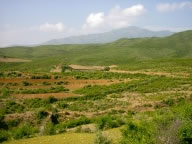
Malakand Agency lies at a strategically important
position as it acts as a Gateway to Swat, Dir, Chitral and Bajaur.
It is in the lower Swat region amidst high mountains thick with
evergreen olive and pine trees. It stands at the exit of a pass
known as Malakand Pass or Darrah Malakand; now much less difficult
to cross than before as one travels from Peshawar to Swat. In
history the name has appeared as Malakhand or Mulah Khandao. The
name is stated to have been derived from the words Mullah Khandao.
It is the combination of two words; Mullah and Khandao. Mullah
means a religious saint and Kandao means a lofty place. Nowadays
it is known as Malakand, and the name has been adopted in the same
form by many other villages in the Swat and Dir districts. The
area surrounded by Malakand -- on the south till Sakhakot board,
on the north Chakdara bridge and towards the east till Landakay
comes in the limits of Malakand. In papers the area is still an
agency known as Malakand Agency but full fledged district
government has been established which is headed by the District
Nazim Engineer Mohammad Hamayun Khan. A part of Malakand is
occupied by the Uthmankhel clan of Pukhntoons (Pathans), while
towards the south, at the bottom of Malakand Pass, live the
Ranizais known as Sam Ranizai. Those living beyond the pass
towards Swat are Swat Ranizai.This is also evident in the
administration division; where one is called the Swat Ranizai and
the other as Sam Ranizai.
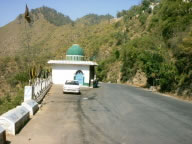
The road in the pass has many turns and zigzags
and appears to have been scientifically designed. Being a key
route to Swat, Dir, Buner, Shangla and Chitral districts the
Malakand pass has remained for years the target of foreign
invasions. Before the British occupation, it represented Pukhtoon
grandure. It was inhabited by prominent Pukhtoon Sardars
particularly Ranizais division of the Yousafzai Pathans. The chief
town of Ranizais was Dheri Allahdand, where there is the tomb of a
holy man, Mian Allahdad, a dervish, held in great reverence by the
Pukhtoons of these parts. Malakand today is vastly different from
the land of yore. After partition major changes have taken place.
The distinctive characteristic of the land is that it serves as a
gateway for trade to the other districts in the Malakand Division.
(Now divisional status has been abolished and district governments
are set up in all the districts coming in the limits of Malakand
Division). The Malakand Pass is the shortest and safest route for
trade caravans going towards Swat, Dir, Bajaur, Buner, Shangla and
Chitral Districts. The soil of Malakand is loamy and moist, and is
irrigated by the Swat River which flows from Swat, through
Kohistan and joins the river Kabul near Peshawar. The average
rainfall is not enough, therefore the soil requires artificial
irrigation. There are rare scenic places and tourist resorts in
Malakand like Jabban and Malakand hydro-electric project. Water
passes through a three-mile long tunnel, and has a natural fall of
350 feet. The main income- generating source in Malakand is the
two power houses at Dargai and Malakand Khas. There are about 11
other suitable sites for construction of Small Hydel Power
Projects that needed investors attention. Malakand as already
mentioned is surrounded by high mountains rich with mineral
resources which are yet to be exploited. However, deposits of
chromite iron, china clay and fuller earth have been found in
Malakand. There are vast chances of mineral exploration but due to
poor status of the local denizens they are not in a position to
invest and exploit the mineral resources in Malakand.
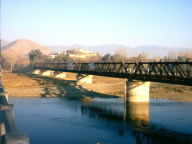
If investors from the other districts and
provinces diverted their attention towards mineral wealth they can
find and get vast mineral treasures. Archaeologically, Malakand
has a separate history. The land had remained a seat of Gandhara
art culture. It has a large number of ancient relics still
unexplored. Buddhism also has roots in this land and places like
Penjon, Magoshah, Haryankot, Hati Darrah, Sakhakot, Batkhela etc.
After the imposition of Devolution Plan in the country, District
Government has been established in Malakand. Engineer Mohammad
Hamayun Khan, son of the former federal minister Mohammad Hanif
Khan (Late) is the District Nazim of Malakand. With him Syed Ahmad
Ali Shah Bacha works as Naib District Nazim and Abdul Jalil Khan
is the existing District Coordination Officer of Malakand. The
High court extended its jurisdiction to this area in 1974 and
district and civil judges work here ever since. Brief History:
Historic ruins, founded at different places in the agency,
indicate that this area was part of Ghandara civilization and
Buddist peoples lived here. The last Buddist ruler, Raja Gira,
seems to have ruled over here about 900 (Nine Hindered) years ago.
Sultan Mahmood of Ghazni, a Muslim ruler, came here from
Afghanistan through Bajaur and defeated the Buddist ruler, Raja
gira. Later, another Afghan ruler, Muhammad Ghauri, invaded this
area and Islam began to spread here.
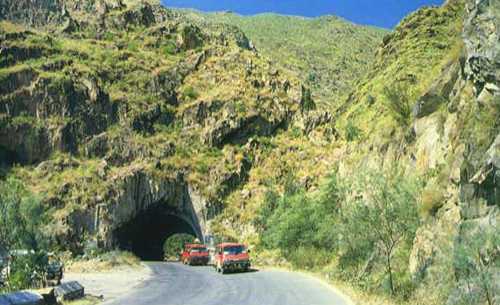 The Yousafzai Pathan tribe came to inhabit
this area is the wake of the invasion. About 400 years ago, successive
Mughal rulers attemped in vain to capture this area. After the
fall of the Mughals, Sikh rulers tried to conquer this area but
we repulsed. The British had always looked at this area with covetous
eyes but dared no venture to flirt with it openly. In 1882, The
British approached to the elders of Malakand Agency with the request
to allow the passage of post to Chitral, which was then in the
Administrative sphere of Gilgit. With the common consent of Aslam
Khan and Inayat Khan of Thana, Saadat khan of Alladand and Sarbiland
Khan of Palai, the postal runners were allowed through the Agency
in exchange for a considerable amount of money to be paid yearly
to each. In 1885, the Chitral relief expedition however necessitated
the British intervention in this area. British officer and troops
had been besieged in Chitral by Chitralis under Sher Afzal in
association with Umara Khan of jandol. To reinforce their forces
there, they needed a route to Chitral as the Gilgit-Chitral road,
the only route at that time, was covered with snow and they had
no option left except to pass through Malakand Agency. The British
therefore, laid siege of the Malakand pass. The people fought
bravely and offered stubborn resistance to the enemy. The British
artillery particularly proving more than a match for the old and
rusty guns and swords of the natives. To fortify their position
and ensure the safety of the strategically Important Chitral road,
they constructed two forts at Malakand and Chakdara with many
piquet overhead the surrounding hills. One of them Churchill piquet,
was name after Lt. Churchill who later on became the Prime Minister
of Britain. Since then the British intervened in the politics
of the area. A political Agent was stationed at Malakand to mediate
between the British and the people of the Area.
The Yousafzai Pathan tribe came to inhabit
this area is the wake of the invasion. About 400 years ago, successive
Mughal rulers attemped in vain to capture this area. After the
fall of the Mughals, Sikh rulers tried to conquer this area but
we repulsed. The British had always looked at this area with covetous
eyes but dared no venture to flirt with it openly. In 1882, The
British approached to the elders of Malakand Agency with the request
to allow the passage of post to Chitral, which was then in the
Administrative sphere of Gilgit. With the common consent of Aslam
Khan and Inayat Khan of Thana, Saadat khan of Alladand and Sarbiland
Khan of Palai, the postal runners were allowed through the Agency
in exchange for a considerable amount of money to be paid yearly
to each. In 1885, the Chitral relief expedition however necessitated
the British intervention in this area. British officer and troops
had been besieged in Chitral by Chitralis under Sher Afzal in
association with Umara Khan of jandol. To reinforce their forces
there, they needed a route to Chitral as the Gilgit-Chitral road,
the only route at that time, was covered with snow and they had
no option left except to pass through Malakand Agency. The British
therefore, laid siege of the Malakand pass. The people fought
bravely and offered stubborn resistance to the enemy. The British
artillery particularly proving more than a match for the old and
rusty guns and swords of the natives. To fortify their position
and ensure the safety of the strategically Important Chitral road,
they constructed two forts at Malakand and Chakdara with many
piquet overhead the surrounding hills. One of them Churchill piquet,
was name after Lt. Churchill who later on became the Prime Minister
of Britain. Since then the British intervened in the politics
of the area. A political Agent was stationed at Malakand to mediate
between the British and the people of the Area.
 DISTRICT GOVERNMENT,
MALAKAND.
DISTRICT GOVERNMENT,
MALAKAND.