 |
 |
| Mark Sargent, CA |
 |
 |
 |
 |
| Introduction
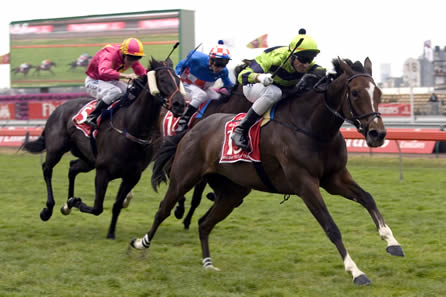
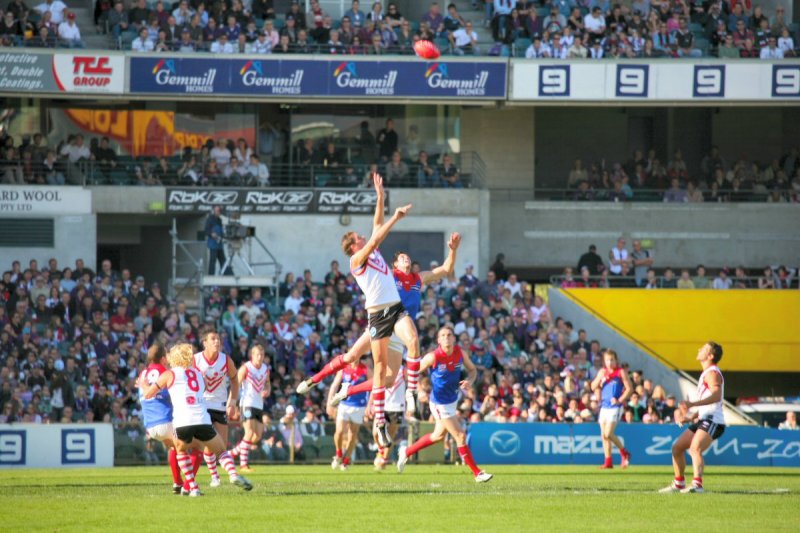
Mark John Sargent, aka Sarge, was born in Australia in 1963. After school, he completed a Bachelor of Business majoring in accounting. He became a Chartered Accountant and started his own firm in 1994. Mark has held many and varying leadership roles over the past twenty years, including football coach in 1989-90 for Murdoch University, partner in accounting firm between 1990 and 1994, and foreman of a racing stable in Ireland. He is currently an assistant coach of his son�s under fifteens football team and a partner in Sargent, McCleay & Fry Chartered Accountants in Busselton, Western Australia. |
| Born or Developed?
Mark believes that leaders are developed using personality qualities used to inspire people to want to follow. He does not believe in the idea of �born to rule� and believes people who lead �from the heart� illustrate the characteristics of true leadership. Mark is naturally sensitive, but has specifically had to develop his leadership traits. Mark is an assiduous learner and has a �real thirst for knowledge� which started from training horses. This is one of his keys to developing his leadership abilities. |
 |
| Style
Mark describes his leadership style as authorative in the work environment and participative when coaching football or training horses. He recognises the need to adapt his style dependent on the situation and the different types of people he leads. He tries to �lead by example� and would never expect anyone to do something he would not be prepared to do in the workplace. He acknowledges the importance of admitting when he is wrong and is always prepared to do so, sooner rather than later. Mark has the natural ability to inspire people by doing what needs to be done and by open communication. Kurt Lewin concluded that good leaders utilize all leadership styles depending upon the situation, and �that participative (democratic) leadership is generally the most effective leadership style� (Miner, 2005). |
| Traits
Mark has many strong personality and task related leadership traits. He is self-confident, assertive, yet not aggressive, shows warmth, and is very trustworthy. He is passionate, courageous, and adaptable, which assist him when dealing with various clients� expectations and situations (Dubrin, 2006). He had some difficulty with bullying issues as a child, so is now a lot more selective of friends and whom he gives his trust. He values the close friendships he has and is �good� to his close friends. Dubrin (2006, p42) explains, �Problem solving and intellectual skills are referred to collectively as cognitive factors.� It was clear that Mark possesses these and other cognitive traits. He was a lot more artistic when he was younger; however, he still has a creative facet when it comes to cooking. Mark has a vast knowledge of business and is very aware of people�s emotional states. He has a strong sense of what is right and wrong, is immensely loyal, and a good judge of character. |
| Inspiration
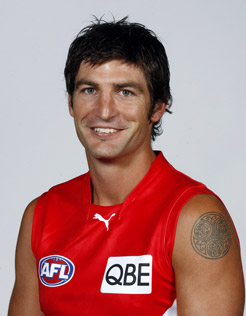
Mark acquired his inspiration from a few key people, most importantly, his father, who was a very well respected man. Brett Kirk from the Sydney football club and the Noble Peace Prize winning Nelson Mandela have inspired Mark through their leadership skills and courage. |
| Ethics
Ethics are extremely important to Mark in all aspects of his life, not just concerning leadership. He believes that his ethics came from his parents at birth and from watching his father. Mark is very clear that he does not want anything to do with unethical people and has no time for them. Different people and cultures have contrasting views on what is moral or ethical which emphasises the need to be open and considerate of other views (Dubrin, 2006). |
| Vision
Mark actually �fell� into accounting initially and believes �there is nothing like hunger to make you succeed�. His vision when starting the firm was to ensure he could place his personal stamp on it to ensure the culture was right. Mark has a vision for his and the firm�s future, which include stopping full time work at fifty, and spending more time with his family. |
| Coaching
At football training, Mark is aware of the players with and without leadership traits. The ones that do show signs will be helped to fulfil their leadership potential both on and off the field. He believes that empowering others can accomplish more than by individual achievement and tries to give �ownership� to others. It has been disappointing after spending considerable time and effort into developing staff that were neither loyal nor possessed any leadership desire or ability. This may not be sufficient in getting the most out of his staff because �As a leader, you need to make the time to help people grow and get better at what they do� (Brodie, 2008). |
| Communication, Tact & Diplomacy
Mark has excellent written and oral skills, exudes self-confidence, and is good at modulating his message to the person he is trying to communicate with. Mark does need to control himself when frustrated, become flexible in different situations, and show more respect to his younger, less experienced partners in the firm. Mark needs to improve when it comes to active listening. He recognises that he lacks tact and diplomacy, because he believes in the �tell it like it is� approach and will often use inappropriate language when doing so. Improving these skills will help develop his inspirational and communication skills according to Dubrin (2006). |
| Decision Making & Discipline
Mark is good at making decisions under pressure and when he is focused on something challenging he can �separate the wood from the trees�. All family decisions Mark makes are done equally with his wife, and most of the important business decisions are made after consulting with her. This shows an understanding of collaboration techniques that have proven to be very effective in leadership (CMOE, 2005). |
| Future
Mark�s future leadership goals focus toward nurturing relationships with clients and employees. He looks ahead and aims to focus his energy on growing the firm and the people working there. By seeking to �let go� of the control he will be able to relax more and spend the additional time with his family that he desires. With an eye on the future, sensible risk taking, and a visionary perspective, Mark�s leadership abilities have fundamental entrepreneurial traits to them (Stodder, 1999). |
| Conclusion
From the report, it is clear that Mark has developed most of the theoretical traits that are considered necessary for effective leadership. Mark has a good �locus of control� because he has a high level of self-confidence, which gives him faith in his capacity to take control of events that occur in business and outside the firm (Johnson, 1984). He has also developed some ideals that he tries to live which include: � Leading by example � Generosity to employees is generally returned two-fold � Loyalty is a two-way street � People will do more for you if they like you � Always admit when you are wrong Mark says he needs to stop trying to �bulldoze his point across� and is �aware of his faults�. This shows his internal focus of control is good; however, the decision to take action to help correct these shortcomings is not currently a priority (WikEd, 2005). It was clear after completing the interview that mark is a highly articulate and intelligent man, with a surprising insight and knowledge of many leadership theories. Twenty years of leading has seen the continuing development of his unique style from situational to now becoming transformational, with the goals mentioned earlier. �A leader encourages, leads by example, cares about the team and gives regular feedback� (Owens 2007). |
 |
 |
 |
| To help maintain trust, integrity, and the faith of people in different aspects of his life, Mark has rules he follows. With clients, he is always honest, and always admits when he is wrong sooner rather than later. When it comes to employees, he believes that they need to be paid well and made to feel like an important member of the team. |
Of real importance to Mark�s vision is the reputation of the firm, which he believes can be taken from good to great. He wants to ensure the quality of work keeps improving, and enhance the fee-paying structure. This will happen when he stops underrating the quality of the work that is done for clients while at the same time maintaining a social conscience. �It is my (leader�s) job to build the people who are going to build the firm� (Maxwell, 2003). Mark and his partners are currently working on their vision for the future through collaboration. The expert power Mark exudes comes from his twenty years experience and his excellent memory. His ability to influence others with his various traits also shows that he has a high level of referent power (Gehrke 2008). |
 |
| Courage
Mark started his own accounting firm and ran it for seven years on his own when he had no money and a very young family to provide for. A very recent time when Mark showed courage was when he commenced the partnership he is in now. He had the option to leave with a fortune, but the thought of building a successful firm with two young and less experienced accountants was enough to stay. Mark spoke at his little sister�s wedding as proxy for his father, which was very emotional and took extra courage. Mark regrets not taking an opportunity to enter into property development with a client. |
 |
| Mark carried out the role of a situational leader where he simply made the decision to lead based on what was going on in each particular situation, and then modifying his style to try to achieve the best outcome. Mark, through collaboration with his partners, is endeavouring to transform the firm to make it more profitable and differentiate it from the pack, by offering even better quality services to clients. |
| Mark has some discipline issues especially concerning time management and organisation. He believes in behaviour modification, which principle relies on the �law of effect�; when the persons� behaviour leads to a good outcome, it will be repeated. Mark is strong believer in positive reinforcements, and likes to provide surprises such as staff lunches and bonuses (Dubrin, 2006).
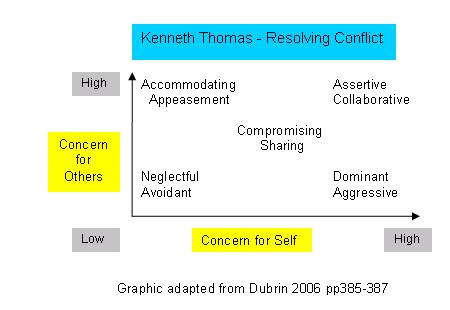
Mark has shifted his focus from being dominant and aggressive in the past to trying to be more assertive and achieve a �win-win� result. This approach is not as simple; however, the long-term results have been much better. He has a healthier understanding of other people�s feelings and desires (Treslan, 1993). |
 |
 |
| References
Dubrin, A. & Daglish, C. & Miller, P. (2006). Leadership (2nd ed.). Milton: John Wiley & Sons Australia, Ltd. Brodie, D. (2008). 5 Essential Attributes in Leading Others [Electronic version]. Ezine Articles. Retrieved 3 May 2008, from http://ezinearticles.com/index.php?5-Essential-Attributes-in-Leading-Others&id=1006854 C.M.O.E. (2005).Collaboration: An Important Leadership Development Skill [Electronic version]. Buzzle.com � Intelligent life on the Web. Retrieved 10 May 2008, from http://www.buzzle.com/editorials/10-28-2005-80080.asp Gehrke, J. (2008). 3 Sources of Leadership Power [Electronic version]. Ezine Articles. Retrieved 3 May 2008, from http://ezinearticles.com/?3-Sources-of-Leadership-Power&id=426537 Goleman, D. (1995). Emotional Intelligence. New York: Bantam Book Johnson, A. L., & Luthans, F., & Hennessey, H. W. (1984). The Role of Locus of Control in Leader Influence Behavior [Electronic version]. Personal Psychology. Retrieved 3 May 2008, from http://www.blackwell-synergy.com/doi/abs/10.1111/j.1744-6570.1984.tb02247.x Luthans, F., & Stajkovic, A. (1999). Reinforce for performance: the need to go beyond pay and even rewards [Electronic version]. The Academy of Management. Retrieved 9 May 2008, from http://pages.stern.nyu.edu/~wstarbuc/mob/luthans2.htm Logo - Chartered Accountant. Retrieved 9 May 2008, from http://www.icaa.org.au/ Logo - AASB. Accounting Australia Standards Board. Retrieved 9 May 2008, from http://www.aasb.com.au/publications/other_index.htm Logo - Murdoch University. Retrieved 9 May 2008, from http://www.murdoch.edu.au/ Maxwell, J. C. (2003). Quote by Mark Twain from The 21 Irrefutable Laws of Leadership [Electronic version]. Perspective Book Reviews. Retrieved 10 May 2008, from http://perspective.org.au/book/202/executive-summary-the-21-irrefutablelaws-of-leadership----john-maxwell Maxwell, J. C. (2003). The 21 Irrefutable Laws of Leadership [Electronic version].The Practice of Leadership. Retrieved 10 May 2008, from http://www.thepracticeofleadership.net/2006/09/17/book-review-the-21irrefutable-laws-of-leadership/ Miner, J. (2005). Organizational Behaviour: Essential Theories of Motivation and Leadership. Armonk: M.E. Sharpe Inc. Owens, J. (2007). Leadership for Project Managers. Free articles [Electronic version]. Retrieved April 26, 2008, from http://www.freearticles.com.au/launch/26-02-2007Leadership-for-Project-Managers.htm WikEd. (2005). Locus of control [Electronic version]. WikEd.com. Retrieved 10 May 2008, from http://wik.ed.uiuc.edu/index.php/Locus_of_control Photo � Trotting. Retrieved 9 May 2008, from www.hairtestlab.com.au Photo � Football. Retrieved 9 May 2008, from http://www.pbase.com/chillmanafrica/image/67889846 Photos � Horse Racing. Retrieved 9 May 2008, from http://www.puntersparadise.com.au/ Photo � Surfing. Retrieved 9 May 2008, from http://www.boardfolio.com/surfers/un_2002.12.07_nezzy_01.html Photo - Nelson Mandela. Retrieved 9 May 2008, from http://nobelprize.org/nobel_prizes/peace/laureates/1993/mandela.jpg Photo � Surfing. Retrieved 9 May 2008, from http://timesonline.typepad.com/surf_nation/images/2007/07/24/pots_pipe.jpg Painting of Luca Pacioli - Attributed to Jacopo de' Barbari. Retrieved 9 May 2008, from http://en.wikipedia.org/wiki/Accounting Photo - Brett Kirk. Retrieved 9 May 2008, from http://www.sydneyswans.com.au/TheClub/Players/PlayerProfile/tabid/8472/Default.aspx?playerid=14531&typeid=2 Stodder, G.S. (1999). Goodbye, mom & pop - entrepreneurs of today will only be satisfied by conquering the world [Electronic version].Bnet.com. Retrieved 10 May 2008, from http://findarticles.com/p/articles/mi_m0DTI/is_5_27/ai_54546042/pg_4 Treslan, D. L. (1993). Achieving Effective Conflict Management [Electronic version]. Memorial University of Newfoundland. Retrieved 10 May 2008, from http://www.mun.ca/educ/faculty/mwatch/vol1/treslan.html |
 |
 |
| by David McCleay |
| The following work is an analysis taken from an in-depth interview, carried out on the 8th of May 2008, with Mark on the topic of leadership. It consists of a brief history, the characteristics and the experiences that have enabled Mark to become a successful local leader, and some weaknesses in his leadership effectiveness. |
| Football Player / Coach in 1989-90 for |