 |
 |
 |
| LEADERSHIP THEORIES CHAPTER 4, 5 & 7 |
| TRANSFORMATIONAL LEADERSHIP
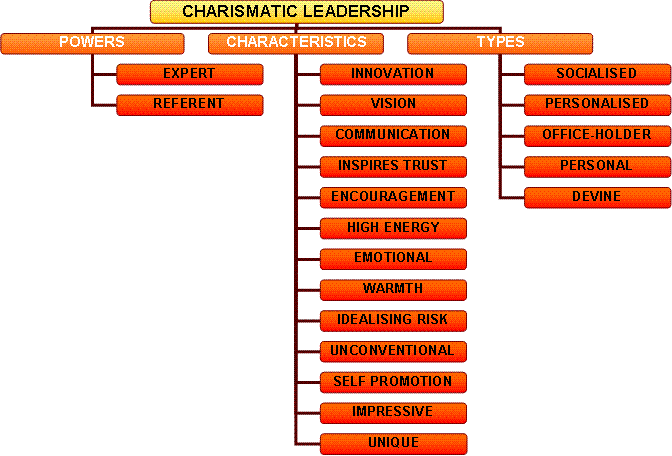
Transformational leadership is concerned with leading people through change by aligning the leader�s values, purpose, vision and morals with that of the followers. "A transformational leader is one who brings about positive, major changes in an organisation" (Dalglish, Dubrin, & Miller, 2006, p. 97). Two types of transformational leadership are charismatic and breakthrough. Transformation occurs (Dalglish, Dubrin, and Miller, 2006, pp. 106-108) by raising awareness, focussing and understanding the need for change, portraying benefits, creating a sense of urgency, gaining commitment and developing long-term outcomes. Dalglish et al. (2006, p. 108) states key qualities desirable for transformational leaders are charisma, inspiration, innovative problem solving and individualised consideration. CHARISMATIC LEADERSHIP Charismatic leaders inspire and influence followers through power, determination and charismatic effects. According to Dalglish, Dubrin, and Miller (2006, pp. 101-102) charismatic leaders communicate to different target groups through use of metaphors, analogues and anecdotes. Charismatic leadership is developed (Dalglish, Dubrin, and Miller, 2006, pp. 102-104) by creating vision, having passion, positivity, determination, persistance, inspiration, honesty, courage and committing to memory people�s names. Dalglish, Dubrin, and Miller (2006, pp. 111-112) state concerns for charismatic leadership as leadership polarity, social responsibility, and its necessity in bringing about change. |
 |
 |
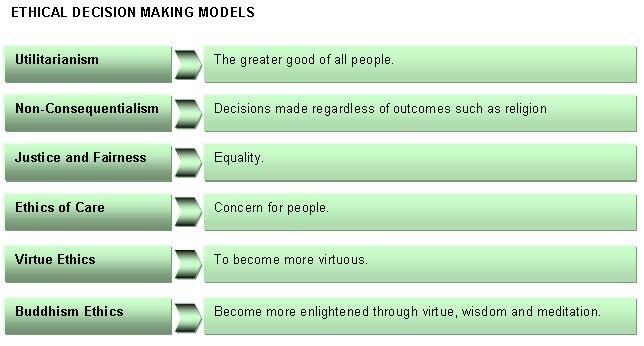
ETHICAL LEADERSHIP Ethics "involve the investigation and application of morals and values" (Dalglish, Dubrin, & Miller, 2006, p. 144) through consideration of others as opposed to self-interests. Ethics vary between individuals and groups due to influences of morals and cultural values. According to Dalglish, Dubrin, and Miller (2006, p. 127) values are beliefs that model our behaviour and are influenced by early caregivers, education, religion, peers, media, experience, books, and social cultural and professional environments. Dalglish et al. (2006, p. 128) describes morals as indicators of right and wrong that are taken seriously and cannot be influenced by authority. Ethical behaviour is encouraged in organisations through a system of values and shared purpose and is promoted in the professional environment by self-confidence and commitment (Dalglish, Dubrin, and Miller, 2006, p. 142). Dalglish, Dubrin, and Miller (2006, pp. 135-140) describe ethical issues facing organisations today as professional reputation, social and environmental responsibility, globalisation and global responsibility. * Reputation is based on people�s perception of you as a moral person and leader. Organisations with good reputations encourage other organisations to follow. * Social and environmental responsibilities persuade organisations to be more considerate of society and the environment. Four types of social responsibility are legal, ethical, economic and philanthropic. * Globalisation and global responsibility involve decision making that take into account consideration of differing cultural values. The following diagram summarises the different ethical decision making models as described in Dalglish, Dubrin, and Miller (2006, pp. 129-134). |
|
 |
CONTINGENCY & SITUATIONAL LEADERSHIP Contingency and situational leadership examine different leadership styles or behaviour used should be based on the situation and/or follower characteristics. Examples of contingency and situational leadership are Fielder�s contingency theory, House�s path-goal theory, cognitive resource theory, Hersey-Blanchard model and the normative Decision model of Vroom, Yelton, and Jago. Fielder�s contingency theory "states the best style of leadership is determined by the situation in which the leader is working" (Dalglish, Dubrin, & Miller, 2006, p. 199). The leadership styles are relationship-motivated and task-motivated. Once a leader knows his style, the leader can then make their situation more favourable to control. According to Dalglish et al. (2006, pp. 177-181) task-motivated leaders perform well in high and low control situations and relationship-motivated leaders perform well in situations of moderate control. The theory is complex although it is widely used. House�s path-goal theory "specifies what the leader must do to achieve high productivity and moral in a given situation" (Dalglish, Dubrin, & Miller, 2006, p. 200). The four main leadership styles are directive, supportive, participative and achievement-oriented. According to Dalglish et al. (2006, pp. 182-184) directive is formal and structured; supportive encourages and considerate to followers; participative is consultative; and, achievement-oriented sets goals and has high expectations. Cognitive resource theory "describes how a leader's intelligence and experience can influence performance under stress" (Dalglish, Dubrin, & Miller, 2006, p. 200). According to Dalglish et al. (2006, pp. 194-195) experienced leaders are more favourable in stressful situations, as intelligent leaders can be distracted from the task, and intellegent leaders are more favourable for creative thought, as experienced leaders can become habit in thought. The theory's disadvantage is that it does not take into account leaders who are experienced and intelligent. Hersey-Blanchard situational leadership model "explains how to match leadership style to the readiness of group members" (Dalglish, Dubrin & Miller, 2006, p. 200). The two types of behaviours are task and relationship. According to Dalglish et al. (2006, pp. 185-188) relationship behaviour should be used when group members require less direction. Dalglish (2006) also states that leaders with high task and low relationship behaviour are likely to be autocratic and leaders with high relationship and low task behaviour are likely to be participative. The normative decision model of Vroom, Yelton, and Jago (Dalglish, Dubrin, and Miller, 2006, pp. 199-193) suggests all decisions are different and thus decision-making should be based on its importance and level of commitment from followers. An illustrative decision tree guides you through the decision-making process pinpointing decision-making styles to use. The decision styles are classified into groups under autocratic, group or consultative. |
|
|
| Created by Tenille Bosley, David McCleay, Sharon Spouse & Michael Sullivan |
| REFERENCES Daglish, C., Dubrin, A. J., & Miller, P. (2006). Leadership: 2nd Asia-Pacific edition (2nd ed.). Australia: John Wiley & Sons Australia, Ltd. |
 |