 |
 |
 |
| LEADERSHIP THEORIES CHAPTER 1, 2 & 3 |
 |
|
|
|
| Nature & Importance of Leadership
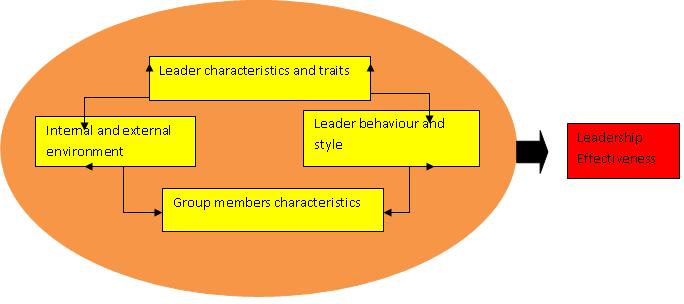
Leadership is a long term relationship between the leader and their followers. This should be regarded as a partnership where the balance of power is approximately equal. The 4 main aspects necessary for this to be successful include: 1. Exchange of purpose. 2. Right to say no. 3. Joint accountability. 4. Absolute honesty (Dubrin et al, 2006 page 4). There is a distinct difference between leadership and management, although leading is a function of management they are 2 very different roles. Leadership deals more with people and interpersonal aspects such as motivation, inspiration and change. On the other hand management deals more with the administrative aspects. There are 9 roles of leadership that have been identified and are a subset of Henry Mintzberg�s study of managerial roles (Dubrin et al, 2006 page 9). These include: 1. Figurehead 2. Spokes person 3. Negotiator 4. Coach 5. Team builder 6. Team player 7. Technical problem solver 8. Entrepreneur 9. Strategic planner There are many positives and negatives to a position of leadership and the motivation behind striving for this position depends on the individual�s view of how they weigh up against each other. Leaders often experience 7 sources of satisfaction: 1. A feeling of power/prestige. 2. A chance to help others grow and develop. 3. High income. 4. Respect and status. 5. Good opportunity and advancement. 6. A feeling of �being in on� things. 7. Opportunity to control money and other resources. Each individual�s decision to accept a leadership position can depend on whether they believe that the satisfactions are worth facing all of the frustrations they have seen other leaders endure. These frustrations stem from 7 main problems: 1. Too much uncompensated overtime. 2. Too many �head aches�. 3. Not enough authority to carry out responsibility. 4. Loneliness. 5. Too many problems involving people. 6. Too much organisational politics. 7. The pursuit of conflicting goals. A framework for understanding leadership can be seen below. This states the leadership effectiveness is dependant on 4 main variables including the leader�s personality and traits, the environment (internal and external), group members� personalities and traits and the leader�s behaviour and style. |
 |
| Skill Development
There are a number of different techniques that can help you develop valuable leadership skills. The first one is conceptual knowledge and behavioural guidelines. It can be developed by reading leadership texts. It is also important to learn about different leaders and how they have become either effective or ineffective. Furthermore you must personalise and link this conceptual information to yourself, for example by making self assessment and taking leadership quizzes. In order to become a successful leader it is important that you use this information to improve your skills and be able to adapt to different situations understanding what is required. A successful leader will also seek feedback and constructive criticism therefore identifying weak areas that may need more focus. Most importantly all of this theory must be put into practice in natural settings in order to develop experience and improve skills. Trait Theory of Leadership There are certain personality traits that have been observed in leaders that contribute to leadership effectiveness. These include: 1. Sense of humour. 2. Warmth. 3. High tolerance for frustration. 4. Self confidence. 5. Trustworthiness. 6. Extroversion. 7. Assertiveness. 8. Emotional stability. 9. Enthusiasm (Dubrin et al, 2006 page 28-29). These are general personality traits that are shown in and outside of the work environment, although there are also a number of task-related traits that make up this theory: 1. Passion. 2. Courage. 3. Locus of control. 4. Flexibility and adaptability. 5. Emotional Intelligence. Emotional intelligence is the leader�s ability to recognise emotion in others and also being able to regulate emotion in themself. Also having good social skills and being empathetic towards others can help you become a more successful leader. Motivating Factors The motivation behind a successful leader can generally be placed on their desire for power and responsibility and control of others. Leaders with a high power motive act with determination trying to influence others and alter their behaviours. The personal standing and power motive can be either for personal motives or for helping others (socialised power motive). Another motivation is through drive and achievement. This is where leaders find satisfaction and joy in setting goals and accomplishing them. Other motivation factors include tenacity, a strong work ethic and the value of hard work. Gender Differences Today there are many more females in leadership roles as there has been in the past therefore it is important to understand the differences in style compared to that of men. It is argued that women have a more participative, nurturing style of leadership and are therefore more comfortable interacting with people (Dubrin et al, 2006 page 47). On the other hand men have a more autocratic style. These 2 different styles are discussed in more detail later. Evaluation of the Trait Theory of Leadership There is evidence that successful leaders show different characteristics than non leaders and less effective leaders (Dubrin et al, 2006 page 49-50). Understanding these traits acts as a good guideline when going through the process of selecting a leader and also when trying to prepare yourself for a certain position. Although the main limitation of this approach is that these traits do not guarantee success as different situations will require different traits. Servant Theory of Leadership The next theory of leadership we will discuss is the Servant theory. A servant leader acts on behalf of his/her followers in order to achieve their needs and goals and not the leaders own goals or aspirations. They strive to serve the followers, teaching them and trying to better them as people. This unselfish style of leadership is very unique and some examples of this type of leader includes Mother Teresa, Nelson Mandela and the Dalai Lama. Key aspects of a servant leader include: 1. Place service before self interest. 2. Listen first to express confidence in others. 3. Inspire trust by being trust worthy. 4. Focus on what is feasible to accomplish. 5. Lend a hand. 6. Provide tools. Leadership Styles Participative leadership is where the leader works closely with the group members and share decision making and responsibility. There are 3 subtypes of participative leaders including; the consultative leader, consensus leaders and democratic leaders. Consultative leaders confer with group members before making a decision, although still making the final decision on their own (Dubrin et al, 2006 page 75). A consensus leader will make a decision based on what the majority of the group agrees with, determined by group discussions. A democratic leader will take a vote on a matter and therefore has no authority as to the decision made. The participative style encompasses teamwork and works well with modern business professionals who seek responsibility and expect to be involved. On the other hand this style of leadership can often be very time consuming as the leader finds themself dealing with every little issue even trivial non important ones that should be handled independently by management or team members. Alternatively leaders who preserve most of their authority are autocratic leaders. These leaders will take little notice of the attitudes of group members and will make decisions confidentially. Then they provide assertive orders and instructions on completing tasks. This is very much like the military style of leadership and is very task orientated. Many leaders who found and operate a business use a similar style of leadership. This is charactorised as the Entreprenuerial style of leadership. Usually these leaders have a large amount of drive and are very task orientated. This stems from their personal characteristics and the situation of being self employed (Dubrin et al, 2006 page 84). A number of other behaviours include: 1. Strong achievement drive and sensible risk taking. 2. High degree of enthusiasm and creativity. 3. Tendancy to act quickly when opportunity arrises. 4. Constant hurry combined with impatients. 5. Visionary perspective. 6. Dislike of hierarchy and bureaucracy. 7. Preference for dealing with external customers. 8. Eye on the future. |
| Created by Tenille Bosley, David McCleay, Sharon Spouse & Michael Sullivan |
 |