

RESUME:
Name: POPESCU
First name: VIOREL-MIHAI
Birthday: the 6th of September 1962, BUCHAREST
Country: ROMANIA
Marital status: married, 2 children
Address: 272 Street Calea Mosilor, Bloc 16, Sc C, Ap 74, Bucharest 2
Mob.:(+)40720-741265 Tel.: 011-4021-2123346 or 011-4021-6193705
E-mail: [email protected] [email protected] [email protected]
Schooling: The Polytechnic Institute from Bucharest the Automatics Department,
Microprocessor section, graduates of July 1987.
Experience:
Operating System:
MS-DOS, Windows 2000, Windows XP, Windows NT 4.0(server and workstation), Windows 95-98, UNIX, Linux ReadHat Slackware
Hardware platforms: Intel PC.
Languages:
Basic, Pascal, Fortran, SQL, Cobol.
Programming Object Oriented:
Progress, Visual Basic.
DBMS:
xBase ( FoxPro, dBase ) versions DOS and Windows, Progress, MS Access.
Network:
Novell NetWare 3.12, Windows for Workgroups 3.11, Windows NT, XP.
Other:
ProCom Plus, MS Word 8.0, MS Excel 8.0, MS Mail (ability in using Windows application), Windows SDK, MS Access.
Training course:
- I graduate System Engineer refresher course at "Centrul de Pregatire in Informatica" with Microsoft certification.
- I obtain Hewlett Packard DeskJet, Professional DeskJet, Business LaserJet, Color LaserJet, OfficeJet Family & Workgroup certification (HP Pin number: 1100011094).
Present: System Engineer at the System PLUS firm a Hewlett Packard dealer.
PhD candidate in opto-electronics: I send you the results of an experiment that I accomplished and which may be realized in laboratory.
Abstract
The experiment is based on the vibration of the atomic center in the crystal metallic lattice of a mercury sample, which is transferring over bonding electron orbital. If the atom is excited using the resonance phenomenon the link between the atomic center and electron can be broke and the conduction electron will make alternating current. Resonance frequency is 233nm (2331.1 Angstrom) that make enable breaking the binding between the atomic center and bonding electron by photons of Louis de Broglie associated wavelength.
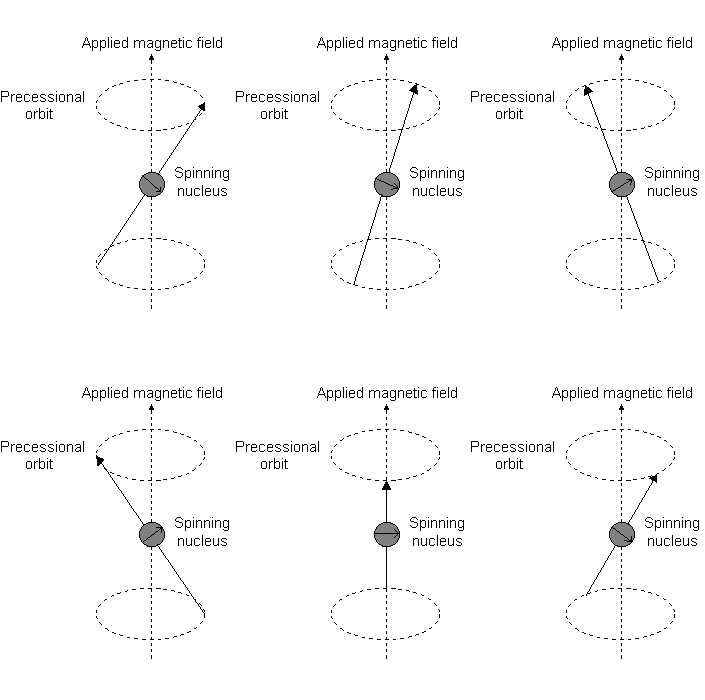
The Potential Energy of the nuclear precession is:
E= - mB cos θ
(θ is the angle between the direction of the applied field and the axis of nuclear rotation.)And the nucleus energy is:
E= g h B/2p
The constant, g, is called the gyromagnetic ratio and is a fundamental nuclear constant which has a different value for every nucleus. h is Planck's constant and B is the strength of the magnetic field at the nucleus.
From tables Hg (201) g = 1.7686·107 rad T-1 s-1 ;
and B2 = 4.2 ·1014 Tesla the magnetic field in the nucleus. And
the total energy (in Joule) is: E = g B2I (1-I) h /2p respective E = ga B2
I (1-I) h where
I is the magnetic spin momentthe intensities of nucleus magnetic field. For eV we have to multiply with
6,24·1018
we obtained E= 3,68·106 eV= 3,7 MeV for Hg(201) and E= 3,3 MeV for Hg(199) E= 3,3 MeV for Pb(207) E= 3,9 MeV for Sn(117) E= 6,62 MeV for Sn(119) E=6.92 MeV..
The calculation of the amount of energy generated is obtained from the energy released from the nuclear spin magnetic moment for I = 3/2 to Hg201= (3.685371) ~ 3.68 MeV (13.2% natural abundance) (Hg199) (3.32789) ~3.33MeV and I = 1/2 (16.8% natural abundance). We obtain that E = N· (3.68MeV·0.132 +3.33MeV·0.168) · 1.6·10-19 C => E = 5.091·1011 J (where N is the number of atoms in a 1 kg of Hg). With Avogadro’s number, 6.022 · 1023 atoms are contained in a mass of 200.59 g with a density of 13600 Kg/m3, and 3.0022·1024 atoms in a 1 Kg of Hg.The mass that have this energy is E= Nmc2 according with Albert Einstein formula, where m is the equivalent mass, for Hg. With Loschmidt number ( Avogadro constant ): 6.0225·1026 atoms have a mass of 200.6Kg and a density of 13.6 Kg/cm3 we obtain 3.013·1024 atoms into one Kg of Hg we obtain for E = 5.09·1011J the mass is m=0.0024·mn of the neutron mass very close to mass defect. Because this frequency is in UV we must realize a quartz cylinder filled with mercury like this (dimensions in millimeters):
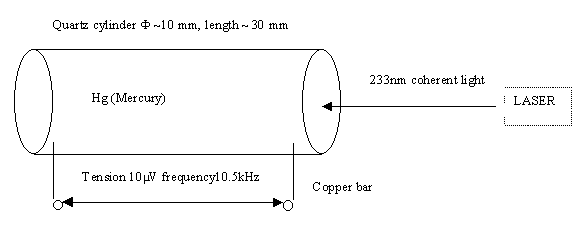
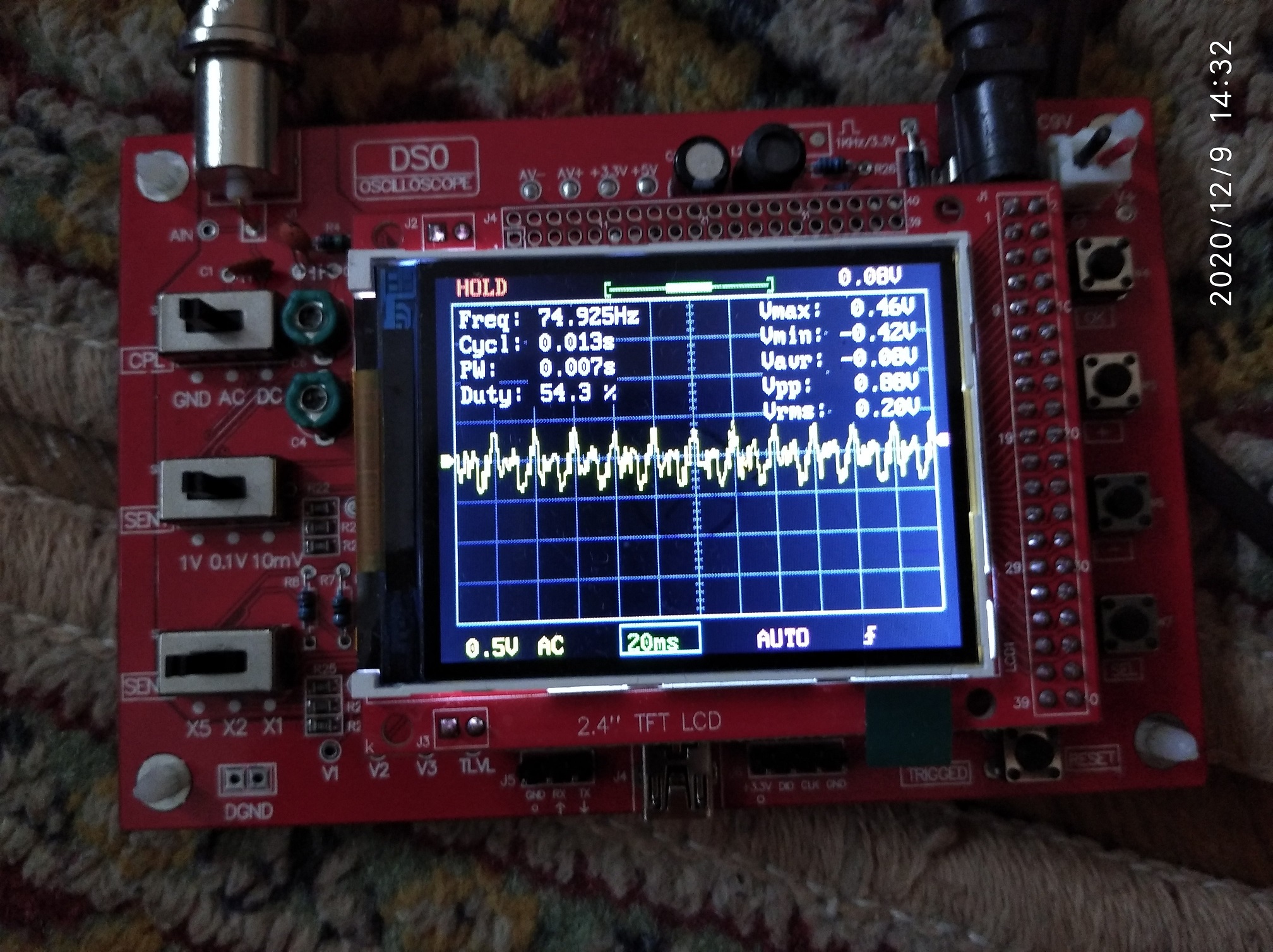
With an lamp of 75W light power in the UV range I obtained a tension of 10μVolt sinusoidal of frequency ~10.5kHz, very stabile, using an interference philter of 233nm with a bandwidth of 2nm,but it is essential to have coherent light (LASER). With LASER is possible to have a gain of power (the electrical power of laser will be less than the one produced by the instrument (greater than 10 times) but it is essential to have bigger power. The stability of the frequency of the electric sinusoid which produce in copper conductor a resistance of ~60 times less than the usual resistance realizing a relative superconductivity at normal temperature (~240 C). I tried to reproduce the same frequency with a electric oscillator but the phenomenon didn’t appeared that make me think the stability is with several order greater (~1000 times) and only at that precise frequency the superconductivity appears.
For tin alloy in a eutectic mixture of 61.9% tin and 38.1%, the scheme is like the Hg one with a 337.5nm wavelength, and the amount of energy released from the nuclear spin magnetic moment is: E = 3.9 MeV for Pb207 (22.1% natural abundance) and E = 6.62 MeV for Sn117 (7.68% natural abundance) and E = 6.92 MeV for Sn119 (8.59% natural abundance) we may approximate Sn (117+119): (16.6% of medium energy E=6.78MeV), E = N1· 0.166 ·6.78MeV ·1.602·10-19 C + N2·3.9MeV· 0.221· 1.602·10-19C = 1.1·1010 J for 1Kg of tin alloy (N1 = 4.75·1022 is the number of Sn (117+119) atoms within 1Kg of alloy and N2 = 2.3·1022 is the number of Pb atoms). The problem is that the frequency is different than 10.5kHz and the superconductivity will not appear; but the stability is the same with the Hg and may be changed using the resonance compartment waves into a frequency that can realize a relative superconductivity at normal temperature (~240 C).
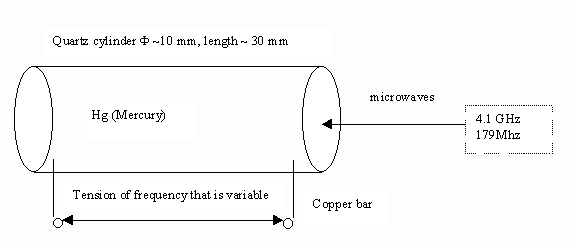
The experiment can be made with microwaves of frequencies of about15GHz-20.5GHz the most probably between 16GHz to 19GHz but in that case the amount of energy is much less. In that case the stability of the frequency of the electric sinusoid that we obtain is not suitable for the superconductivity in fact is quite variable in the range hundreds of Hz to dozens of KHz. The microwave oven works with the frequencies of about 1.4GHz and the power of about 700W-1000W at the price of less than 100$ so is a cheep solution of energy with a factor of multiplication of a few dozens to hundreds. In that case the phenomenon is based on the resonance between magnetron and the thermal particle according to the Quarks Informational Theory and will appear for those metals at different frequency respectively at ~20GHz mercury and ~19.6GHz thin alloy.
According to QIT the other frequency of interaction of the thermal particle and magnetron is 150MHz-210MHz and the magnetron is interacting with the mercury and tin alloy and the frequency's are more easy to obtain the most probably between 170MHz to 200MHz(179MHz for Hg and 189MHz for SnPb).
I have a lot of ideas; here are 4 of them:
-1: to realize microchip of frequency 2-10 GHz by exposing silicon circuit to LASER diode of frequency 760nm of powers over (5mW+1mW/mm2 of the surface of silicon) in a technology of 0.01- 0.07 microns that contain 200000000 - 900000000 of transistors in slice. The whole computer can be made in one microchip (microprocessor, motherboard, video card, network and sound card) with the advantage that the data and address buss can work at higher frequency (performance at low cost).
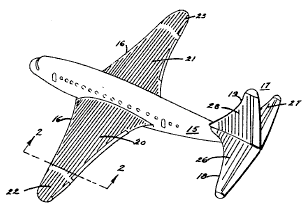
-2: to use the Corona phenomenon for decreasing up to 10 times the friction with the air by creating a cushion with ionize air. These will appear with a tension up to 3000000V will work up to 5000000V but is better over 9000000V. (A.C. or D.C.) The entering angle into the atmosphere of rockets will rise from 2.5 degree up to 10 times and the speed limit up to 3 times with this tension. In the image bellow a US Patent of tension applied to the wings....
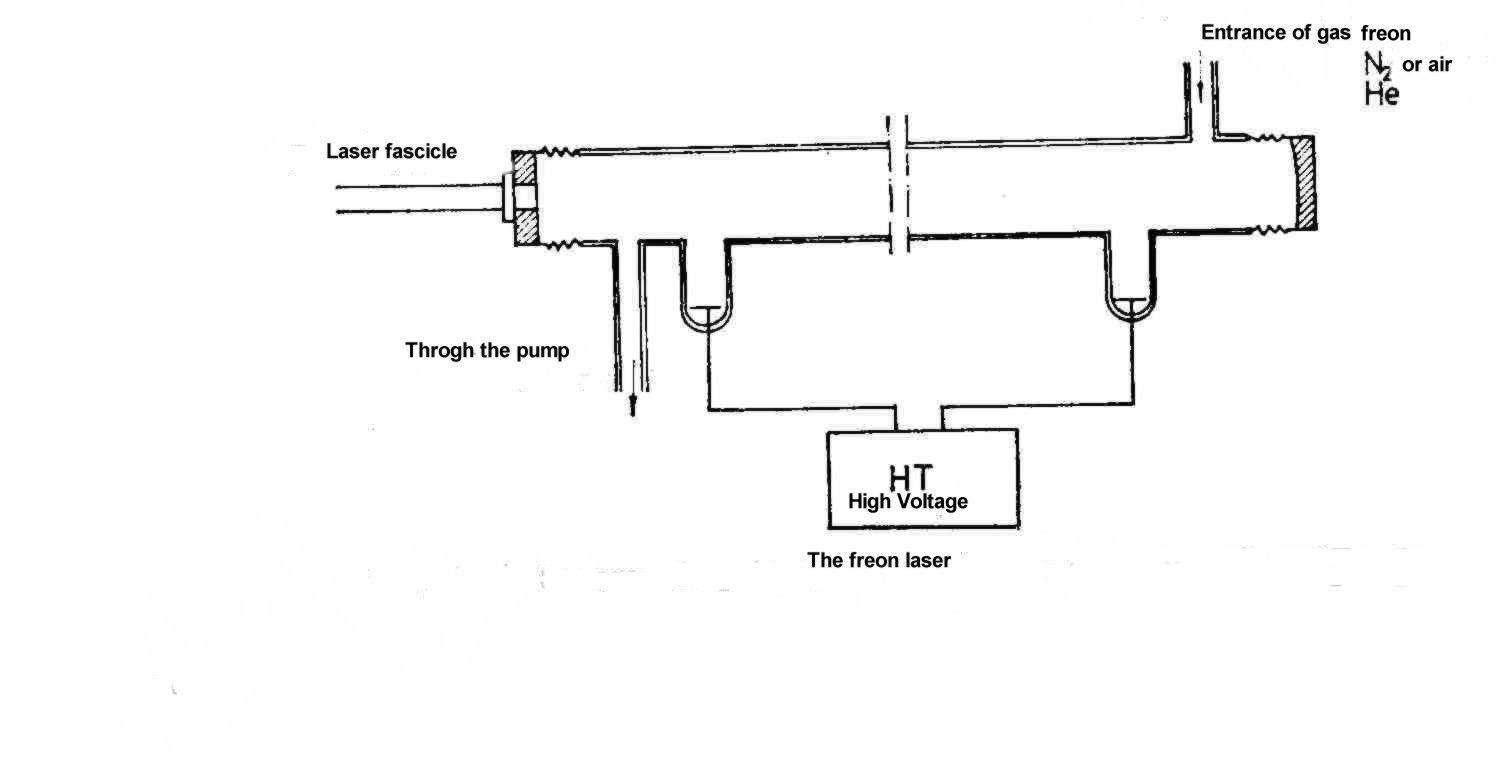
-3: to realize anti-gravity with a ~ 31 Angstrom (30.8 Angstrom) laser-beam in range of: +/- 1% of the frequency placed perpendicular to the earth in the direction of a small object. The apparition of the phenomenon is also available for a ~381 nm (3804.3 Angstrom) laser-beam in range: 380.43nm +/- 1% of the frequency which is more easy to obtain with a new LASER, based on freon (CFC chlorofluorocarbon Cl2F2C ) & He (any element of the 8th group He, Ne, Ar, Kr, Xe, Rn). By changing the 8th group element you can modify the wavelength in range ~250nm-500nm (for freon + He the wavelength is ~350nm and the frequency will growth by the increasing the element of the 8 th group). You must change the frequency in this range till the phenomenon appears and it is based on the resonance between the photon and the graviton; the laser-beam must be in the opposite direction of the gravity and must have a minimal intensity per surface depending of the mass.
-4: the stopping of the time for a discreet part of the space. According to the Quarks Informational Theory it is possible to interact with the quark Time with an elementary particle that contains this quark: photon, phonon and SD-Ray particle. The easiest way to achieve this is the photon with LASER and the two frequency's are ~ 313.5nm(3135Angstrom) and 27.5Angstrom but a higher intensity than the previous case. For the power of the laser beam that is necessary we appreciate that is at least 35mW/gram (for a watch of 20g the power is over 700mW). So the experience is to put a small watch completely covered by the laser beam and modify the wavelength in the range of 313.5nm +/-1% until the watch stopped (either a electronic or a mechanic watch). The energy of the photons is E=hn and the Temporal Ionized Energy is ET1= 3.95eV and ET2 =450.8eV.
The Ondusculaire theory is referring to elementary particle with no mass and witch are moving with the light speed and acts as wave and particle: phonon, particleT, photon, graviton, magnetron, particleM etc…and particle that have mass and a speed smaller than light (atoms nucleus, positron, electron…). The Ondusculaire equation can be obtain starting from the generalized relativistic Onduscular formula:

Eq. (1) where m is the moving mass, V is the speed, f is the wave function E0 is energy in Rydberg unit of energy, l is the azimuthally magnetic number \epsilon vacuum permittivity and the normed Plank constant... respective for particle graviton particulaT magnetron, photon, phonon where m0 =0 :
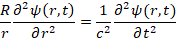
According to the Graviton's
Equation Document the Neutrino is the graviton, and the amplitude
in polar coordinates is: 
where k , _c1 < 0 , R > 0 are real constant and c is the speed of light. And with Dirichlet condition the equation of graviton a(2R,t)=0 is:
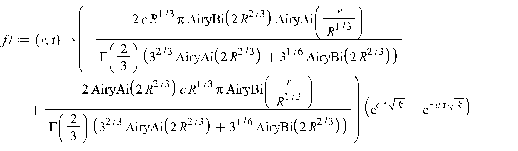
Newton law of gravity plot with R=37, c=3 the amplitude for graviton in png format.
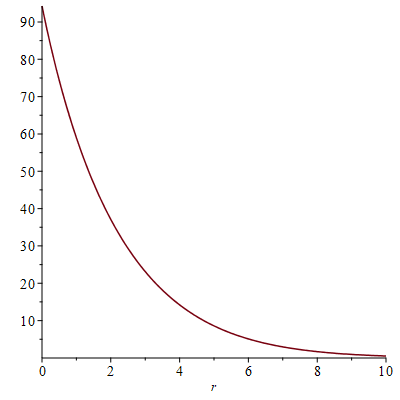
the amplitude of the photon in Cylindrical coordinates Photon.pdf is:
The proton will decompose into neutron and an positron and will generate a Neutrino which make the gravity and will interact with other nucleus ...the light could stop the reaction from the nucleus if it will absorb a certain amount of the energy E=h ν;
And the atomic reaction generate the Neutrino is: 11p + t -> 10n + 01e+ n + MuonNeutrino
The Electronic Neutrino is responsible for the attraction of mass and the process will repeat whenever the proton will be hit by tau neutrino.
And the neutron and tau neutrino will regenerate a proton, electron and a Electronic Neutrino: 10n+ t -> 11p + 0-1e + n
The nucleus is vibrating into orbital and absorption of the energy of E1ω=402.5eV will become Gravitonic Ionized h ν= Eω -> ν=402.5/4.1345·1015 Hz=9.74·1016 Hz ->λ~30.8 Angstrom and the energy for the frequency of 380.43nm is E2ω = 3.259eV the other state Gravitonic Ionized.
The calculation of the power needed to sustain 1 g of substance is based on
the assumption that the light ionizes all the atoms of the substance but does
not penetrate more than several microns into the substance, farther propagation
taking place by the photonic scattering coupled with a sort of photovoltaic
phenomenon in which the incident photon gravitonically ionizes the atom which,
through stimulated emission, produces a particle with the same characteristics
as the incident photon, that Einstein described in the well-known reference,
a particle that he always referred to as photoelectron.
Concerning the interaction between the Earth and another body at its surface,
considering the diameter of the Earth of about 12742 Km and the fact that the
interaction is traveling with the speed of light of about 300000 Km/s, we evaluate
the total interaction time of about T = 4.25·10-2 s, subsequently being
able to calculate the power required for sustaining one gram of mercury, which
thus allows us to approximate the same quantity as required for aluminum.
Since the gravitons that might be stopped to travel through the Earth to the
contact point and its antipodal point, it is obvious that, for a time delay
of about 4 hundredth seconds, the gravitons must be blocked from their journey
through the Earth, therefore, the power of the laser beam must set up to be
proportional with the diameter of the Earth.
Similarly, if the experiment would take place on the Moon, we would need 0.8
W/mol, because the diameter of the Moon is 3472 Km so is about a quarter of
that of the Earth, and not one-sixth, as the gravity of the Moon equal to about
1.6 m/s2 is, for that of the Earth. That should be verified directly by an experimental
setup on the Moon, which I quantitatively detail below.
Considering Brossel's double resonant method 'Investigating Atomic Energy Levels'
for Hg (mercury), described in reference, where the transition from the excited
to the unexcited state is of about 4 ·10-7 s, the above interaction
time in our experimental setup is, according to reference, about the same t
= 4·10-7s.
According to the description of gravitonic antipodal points above, the laser
must provide enough power for the photons to block the gravitons such that the
body be in equilibrium, after about several time quanta equal to N=(T)/t, which
is about N = 105. Thus
E_atom=3.26[eV]·1.602·10-19 [C]=5.22·10-19 [ J]
P_atom T/t[W·seconds]=E_atom [J]
N=T/t=1.0625·105
and approximately
Patom = 4.912·10-24 W/atom
By Avogadro's number for 1 g of Hg, we calculate that 6.022·10-726 atoms/mol
are contained in a mass of 200.6 kg with a density of 13600 Kg/m3 we obtain
3 · 10 21 atoms in a gram of Hg. Thus the needed light power is
PHg(gram) = 0.491·10-23·3·10 21J/s
(per g) = 14.74·10 -3 J/s (per g)
For 1 gram of Hg, we need a light power of about 0.01474 W/g (14.7mW/g), and
for a mole of Hg substance, we multiply by the atomic mass equal to 200, thus
obtaining about 2.948W/mol. Therefore, for a gram of Al, we calculate the needed
light power by dividing to the atomic mass, which is equal to 27, and thus that
PAl(g)= 109.2 mW/g, the phenomenon being nevertheless more complex.
A new LASER, with the same power as CO2 one, in U.V. range 250nm - 500nm which is based on freon (CFC chlorofluorocarbon Cl2F2C) & He (any element of the 8th group He, Ne, Ar, Kr, Xe, Rn) can be made with similar parameter. Meaning that the LASER has the same basic function as the molecular N2 . The CO2 is similar with CFC and He (any element of 8th group)and by changing the 8th group element you can modify the wavelength in range ~250nm-500nm.
Conditions to achieve laser action to function for Cl2F2C
and He are accomplished:
(i) There must be an inverted population i.e. more atoms in the excited state
than in the ground state.
(ii) The excited state must be a metastable state.
(iii) The emitted photons must stimulate further emission
There are 6-informational quarks that mean: mass (M), magnetic (Mg), electricity (E), gravity (G), light (L) & time (T). A particle is always consisting of three informational quarks. Two particle may interact if both have the same quark regardless the value of it but nonzero. The informational quarks corresponds with the known quarks as follows:
Light = Up Quark; Magnetic field = Down Quark
Gravity = Charm Quark; Electricity= Strange Quark
Time = Top Quark; Mass = Bottom Quark;
|
Particle: |
M |
Mg |
E |
G |
L |
T |
|
Electron |
1 |
1838 |
-1 |
0 |
0 |
0 |
|
Positron |
1 |
-1838 |
1 |
0 |
0 |
0 |
|
Neutron |
1838 |
1.913 |
0 |
-1 |
0 |
0 |
|
Proton |
1836 |
-2.793 |
1 |
0 |
0 |
0 |
|
Thermal Particle |
1 |
2.793 |
0 |
0 |
1 |
0 |
|
Magnetron |
0 |
1.913 |
1 |
-1 |
0 |
0 |
|
Graviton = ν neutrino |
0 |
-1838 |
0 |
1 |
1 |
0 |
|
PaticleS |
0 |
-6.703 |
0 |
-1 |
1 |
0 |
|
PartileM |
1 |
0 |
0 |
-1 |
1 |
0 |
|
Phonon |
0 |
0 |
0 |
-1 |
-1 |
1 |
|
Photon (Light) |
0 |
0 |
0 |
-1 |
1 |
1 |
|
Particle Time = τ neutrino |
0 |
0 |
0 |
1 |
1 |
1 |
|
Particle Gamma-γ ray |
0 |
0 |
0 |
1 |
1 |
-1 |
The meaning of negative magnetic field is that the magnetic field is opposite to the spin.
The meaning of positive time is that the propagation speed is the light speed (3·10 8 m/s) and the negative time means that the transfer is instantly. The communication with Gamma-ray are instantly and are suitable for long distance between planets.
The meaning of positive gravity is attraction and the negative gravity is rejection.
The meaning of positive light is emission and the negative light is absorption.
The mass is always positive in the local universe.
Here are the interactions between Graviton and other micro particle that can produce anti gravity with the specifications that the value must be at list 6 or 10 digits exactly and the stability the same as laser:
|
Graviton – Photon |
30.8A |
380.4nm |
|
Graviton – Phonon |
460Hz |
48KHz |
|
Graviton – Particle Time |
474Hz |
48KHz |
|
Graviton – Magnetron |
165MHz |
20.45GHz |
Conclusions:
-The onduscular theory includes
Newton's laws and Einstein's general relativity,
-The Theory of Information (Quarks) includes the main fundamental particles
of Standard Model also the gravity, which gives another informational perspective
and understanding of quarks.
-The theory incorporates the classical-quantum theory and the equation of the
Quantum Torsion Field gives the solution for a unique formula for all known
particles.
-Explain all the known forces from the atomic level to that of the Local Universe
and the mechanisms of operation of the particles corresponding to these forces.
Please send your opinion by E-mail: [email protected] and [email protected]
For latest update see Web Page http://www.geocities.ws/michaelvio
Curriculum Vitae in PDF format.
Quarks Informational Theory in PDF format.
Onduscular Theory in PDF format English Language.
Onduscular Theory in PDF format Romanian Language.
Synchronous Field Theory in PDF format.
Graviton and PartT equations in PDF format.
Graviton, Electron and Photon equations in Maple 2019, Rar format (archive).
Graviton's Eqation Document in PDF format.
Quantum Torsion Field Theory Document in PDF format.
The change of variable fom Schrodinger to QFT Document in PDF format.
Schrodinger's and onduscular equations inference document in PDF format.
The inventions are protected by international law see Web Page http://www.osim.ro
The Photo Album is available at Web Page http://photos.yahoo.com/michaelvio
Last update 17June2009; Version: 8.5.2 https://orcid.org/0000-0003-2358-489X
actualized 2022
