
EM - Enterprise Manager
Companies today are installing Enterprise applications built using Sun's Java J2EE technology or the Microsoft .NET technology. A typical enterprise application consists of several servers and are typically distributed among several machines. A typical example being - Weblogic EJB Server, Search Server, Reporting Server, Apache Web Server, JMS Server, Oracle Server etc. These servers might be distributed among several machines with diverse OS (NT, Solaris, Linux etc). Thus, there is a need for an Enterprise Server Manager (ESM) which controls the many servers of an Enterprise application, without the knowledge of the application itself.
- Control the servers of the Enterprise Application from a completely different machine than the servers.
- Start/Terminate the servers of the application. Start/Terminate individual servers.
- Dependencies between servers are respected. If server A depends on Server B, then B is started before A - and so on.
- Automatic startup of the application servers when the machines are turned on.
- Ability to auto start the servers in case of server crash or freeze.
- Report status changes of the servers in the form of dynamic updates to ESM User Interface administrator Email.
- Plugin capability to extract information from the individual servers.
- Ability to customize for different Operating systems. Solaris and NT are supported right now.
- A Swing user interface to control the servers
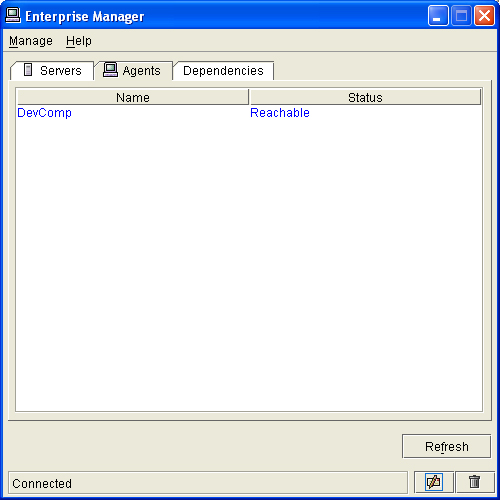
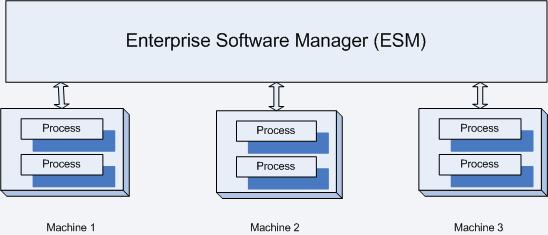
ESM works with several XML configuration files which specify the servers, machines and their dependencies. The diagram below shows the several broad components in the system. The ESM in this case is controlling the servers distributed among 3 machines. Below are some snapshots of the Enterprise Server Manager tool.
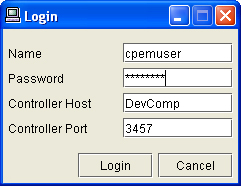
- Login Screen
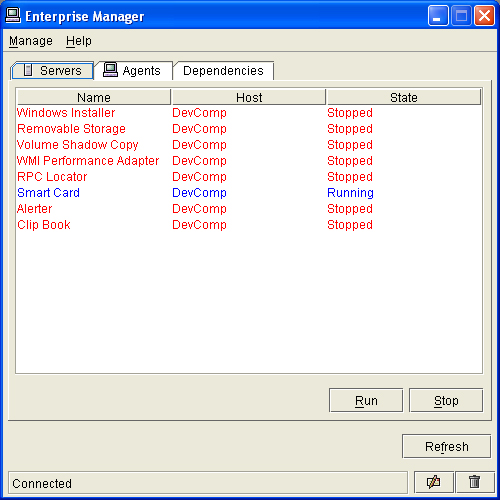
- Main Window with all servers
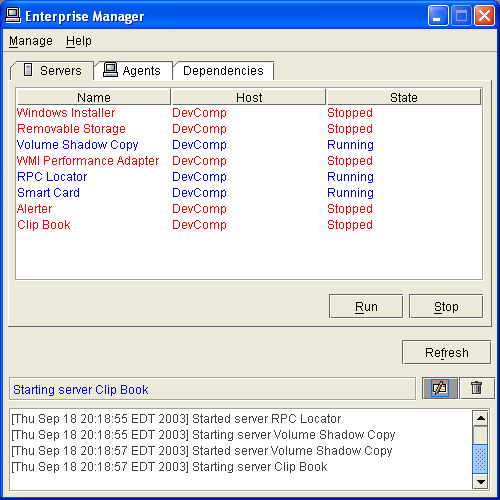
- Main Window with log panel
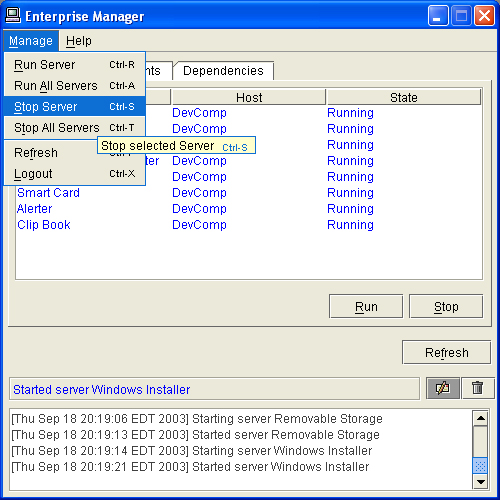
- Main Window with options
- Agent Window Panel
- Architecture of ESM Software
For more information, contact us at [email protected]